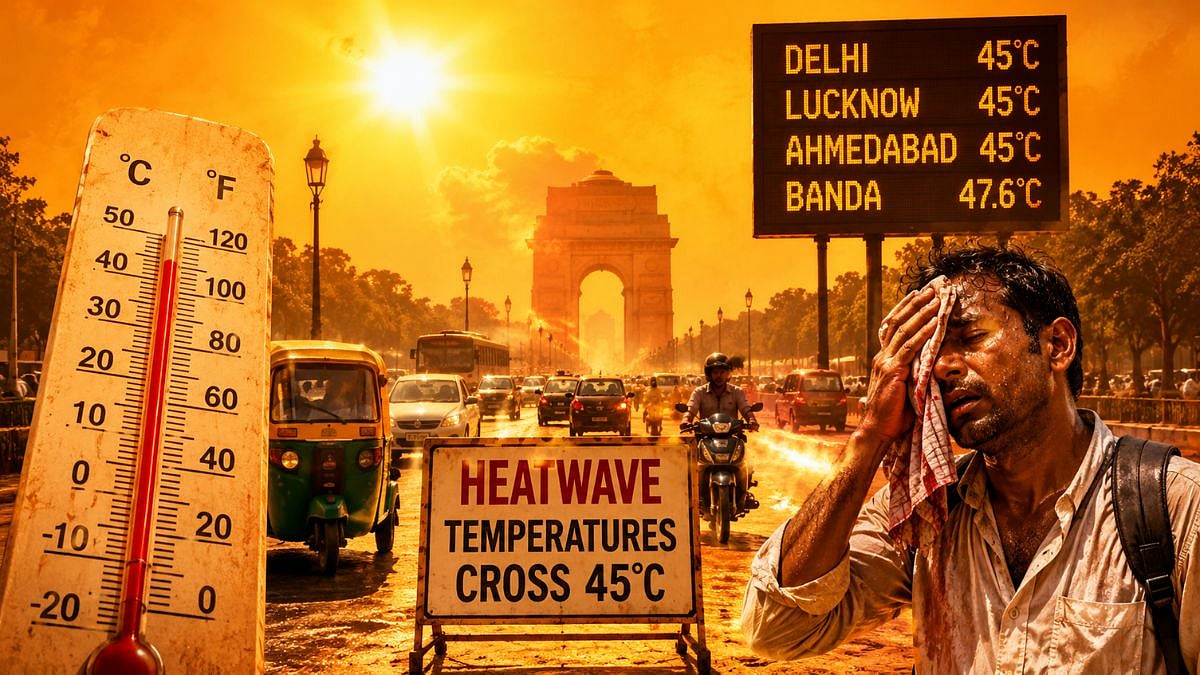
Lucknow, May 23: Human-induced climate change intensified India’s severe heatwave, pushing temperatures in several major cities to over 45 degrees Celsius and exposing around 44 million people and $341 billion worth of economic activity to dangerous heat conditions, according to a new analysis by ClimaMeter.
The study found that events like the April 2026 heatwave are now occurring in an environment that is up to 2 degrees Celsius warmer than in previous decades due to human-driven climate change, significantly increasing the likelihood and severity of extreme heat across the country.
Climate change identified as dominant factor
The study found that natural climate variability played only a secondary role, while the dominant factor behind the warming trend was human activity, particularly the burning of fossil fuels.
Researchers said the findings reinforce growing scientific evidence that climate change is altering the background conditions in which heatwaves develop, making them more intense and widespread.
India witnessed one of its harshest early summer spells between April 24 and 28, with temperatures soaring across north and central India.
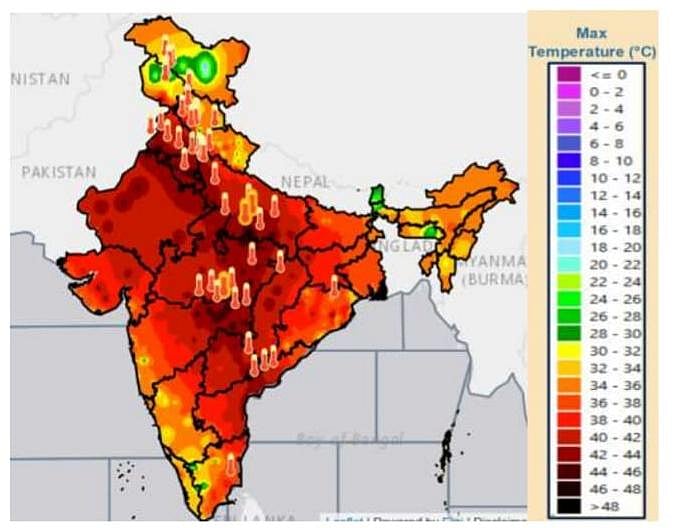
According to the India Meteorological Department, Banda in Uttar Pradesh recorded 47.6 degrees Celsius on April 27, while Delhi, Ahmedabad and Lucknow touched around 45 degrees Celsius. In several regions, temperatures remained up to 8 degrees Celsius above seasonal averages.
The trend continued in May as several regions in north and central India continued to reel under severe heatwave conditions this week, with temperatures crossing 45 degrees Celsius in many areas. Banda in Uttar Pradesh recorded 48 degrees Celsius, among the highest temperatures in the country this season.
At the same time, night temperatures in many cities and towns remained unusually high, hovering close to 30 degrees Celsius and offering little relief after sunset.
Heat stress and health concerns rise
Authorities issued heatwave alerts as electricity demand surged to record levels due to increased cooling needs. Health systems also came under strain, particularly in Uttar Pradesh, where Lucknow reported a 30 to 40 per cent rise in heat-related illnesses, including cases of heatstroke and sunstroke. Reports of deaths linked to extreme heat also emerged from some regions.
The ClimaMeter analysis compared the April 2026 heatwave with similar historical weather events and concluded that natural climate variability played only a secondary role, while the dominant driver behind the rising temperatures was human-induced global warming caused largely by fossil fuel emissions.
The report said the heatwave unfolded against a backdrop of rising baseline temperatures, which are making extreme weather events more frequent and intense across India. Researchers noted that warmer average conditions combined with persistent clear-sky weather patterns amplified the severity of the event.
Meteorologists explain weather patterns
Meteorologists said the current spell has been triggered by uninterrupted hot northwesterly winds blowing from the desert regions of Pakistan and Rajasthan across north and central India.
“In the absence of any weather system over the Indian mainland, hot northwesterly winds from the desert of the adjoining Sindh region of Pakistan and Rajasthan are penetrating deep into the country. The uninterrupted flow of these winds for the last three to four days has been pushing the mercury, resulting in heatwave to severe heatwave conditions,” said Mahesh Palawat, Vice President for Meteorology and Climate Change at Skymet Weather.
He said the lack of pre-monsoon activity has also contributed to unusually high night temperatures.
“When the days are hot and there are no pre-monsoon activities in the evening, these high temperatures are also reflected in higher nighttime temperatures,” he added.
Warmer nights emerging as major risk
Scientists warn that warmer nights are emerging as one of the most dangerous aspects of India’s changing heat pattern. According to data by the Council on Energy, Environment and Water, 35 out of 36 Indian states and Union Territories are witnessing rising night-time temperatures. India’s average night temperature is increasing by around 0.21 degrees Celsius every decade.
Experts said the inability of the human body to cool down during the night increases heat stress, especially among elderly people, children, outdoor workers and those living in poorly ventilated homes.
Climate scientists say human-driven global warming is intensifying heatwaves by raising baseline temperatures. According to the World Meteorological Organization, the last decade has been the warmest on record globally, with temperatures nearing 1.44 degrees Celsius above pre-industrial levels.
India too has recorded rising temperatures. The country’s annual mean land surface air temperature in 2025 remained 0.29 degrees Celsius above the 1991-2020 average, making it among the warmest years since records began in 1901.
Humidity and urbanisation worsen conditions
Humidity levels are also increasing across the country, making heatwaves more oppressive. India’s average humidity rose from 67.1 per cent during 2015-2019 to 71.2 per cent during 2020-2024. During the same period, compound hot-humid days increased sharply from 14,086 to 16,970.
Experts say high humidity prevents sweat from evaporating effectively, reducing the body’s natural cooling process and increasing the risk of heat-related illnesses.
“India’s heatwaves are no longer being driven by temperature alone. What we are witnessing today is a dangerous convergence of rising temperatures, warmer nights, increasing humidity and rapid urbanisation, all of which are amplifying heat stress across the country,” said Aarti Khosla, Founder and Director of Climate Trends.
Urbanisation is further worsening the crisis. Researchers say Indian cities are increasingly acting as heat traps because of dense construction, shrinking green cover, asphalt roads and waste heat from vehicles and air-conditioners. Studies show the urban heat island effect can raise temperatures in Indian cities by 2 to 10 degrees Celsius compared to nearby rural areas.
Concerns over Himalayan warming
Climate scientists also point to rapid warming in Himalayan regions as another emerging concern.
Raghu Murtugudde, Emeritus Professor of Atmospheric and Oceanic Science and Earth System Science at the University of Maryland and visiting professor at IIT Kanpur, said high-altitude regions are warming faster due to declining snow cover and pollution.
“High altitudes are warming faster because reduced snow cover lowers reflectivity and allows the land to absorb more heat. Pollution, especially black carbon, is accelerating snow and ice melt,” he said.
He added that warming over the Middle East is altering wind patterns over the Arabian Sea, bringing more warm and humid air towards northwest India and the western Himalayas, increasing both heatwaves and extreme rainfall events.
Also Watch:
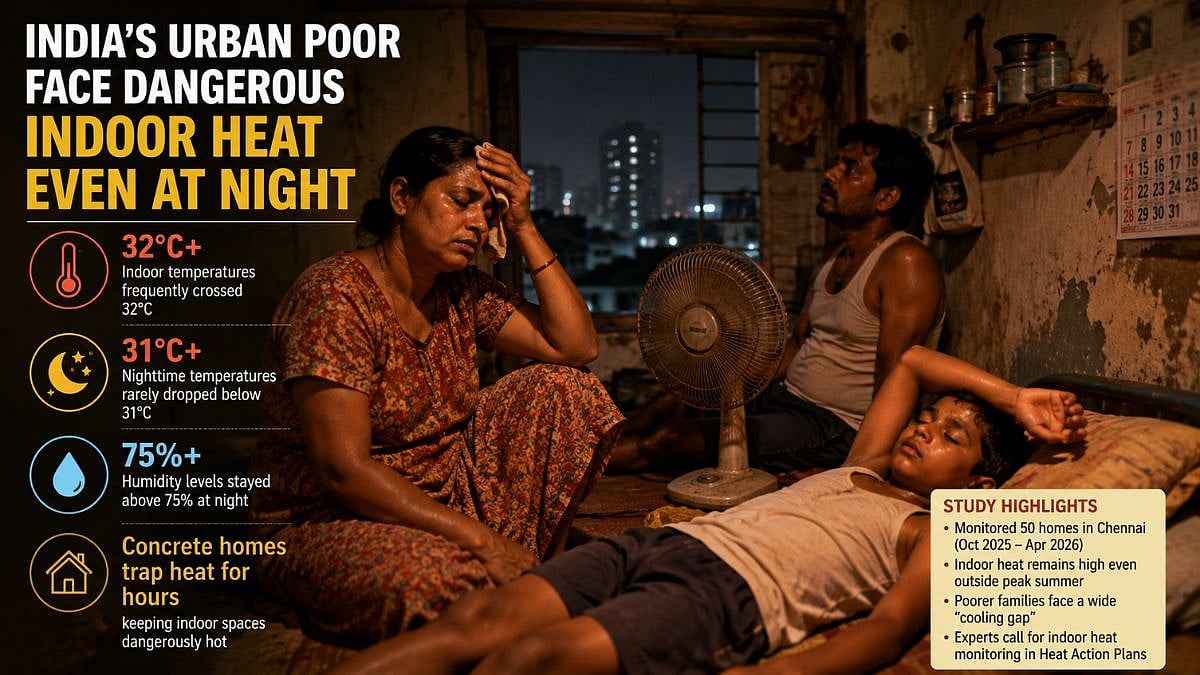
As India faces another summer of extreme temperatures, experts warn that the country’s heat crisis is rapidly evolving into a major public health and climate challenge, with millions exposed to longer and more dangerous periods of heat stress.

