
India summoned the US Charge d’Affaires Jason Meeks for the second time this week. The summons came after the US conducted a military strike on another vessel, the M/T Jalveer, in the Gulf of Oman with 20 Indian seafarers on board. This is the third incident this week where vessels carrying Indian crew members on board have been attacked. On June 8 and June 10, the Palau-flagged tankers M/T Marivex and M/T Settebello were attacked. The attacking party in the Settebello lost three Indian sailors, while the crew of the Marivex were rescued safely.
An MEA press release was posted post the summoning of the US Charge d'Affaires, which stated that India had lodged a “strong protest” with the US Charge d'Affaires regarding the “continuing attacks” by U.S. naval forces on commercial vessels carrying Indian mariners. The MEA release also stated that India had voiced its “deep concern.”
Former diplomats confirm that the correct protocol had been followed in the summoning. Being the Deputy Chief of Mission, Meeks had been appointed the Charge d'Affaires, thereby becoming the representative of the US mission in Delhi in Ambassador Gor’s absence. He was summoned by the Additional Secretary (Americas) Nagaraj Naidu, who is senior in rank to a deputy chief of mission and therefore the right person to issue a summons.
What was of concern to some of them was the US’s actions and the language used by India when it summoned the US official. As a senior diplomat pointed out. “The fact that India had to summon the Charge d’Affaires twice is a worrying development because it suggests that the Americans have shown complete indifference to the first summons. It should be seen as a harsh rebuff to India.”
While the US reaction to the second summons is still awaited, diplomats believe there is little reason to expect Washington to take this summons seriously. The reason is because of the language used by the MEA. A senior diplomat said that the use of the words “strong protest” and “deep concern” are mild terms in diplomatic language and the stronger words such as “deplore” or “condemn” should definitely have been used when Indian nationals have been killed. By using words like “strong protest," India is using the mildest form of diplomatic speak to express concern.
The mild language indicates that New Delhi is preferring to adopt a cautious line on the matter with Washington. Diplomats believe that CENTCOM’s statement on X stating that all three vessels “violated the blockade by attempting to sail to an Iranian port and Settebello attempted to transport Iranian oil" suggests the US is not inclined to listen to anything India would have to say on the matter. They added that the US Charge d’Affaires would most likely have pointed this out to the Indian side.
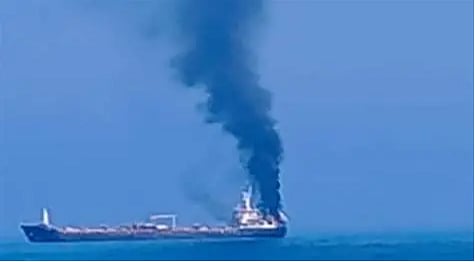
The US reaction leaves few diplomatic options for India to workwith,h and what makes things worse for New Delhi is that none of these tankers are India-flaggedtankers,s thereby ensuring that India has little control over Indian seafarers who are on vessels in the Strait of Hormuz or in the Gulf of Oman. Therefore, there is very little India can do to protect them. Diplomats believe that this may be one of the reasons for the mild language, as using stronger language will not help.
India may be hoping for a statement of regret or a condoling message from Washington on the issue, but senior diplomats believe this is unlikely. “A statement of regret is issued when a country has done something wrong. Israel has issued regrets from time to time when it attacked aid or medical workers and stated it was attacking Hamas or Hezbollah,” said a senior diplomat. “In the US’s case, they believe they are right, so the matter is closed,” said a senior diplomat.

