India has strongly criticised Pakistan at the United Nations for state-sponsored disinformation by labelling terror groups operating inside its own territory as ‘Fitna al-Hindustan.’
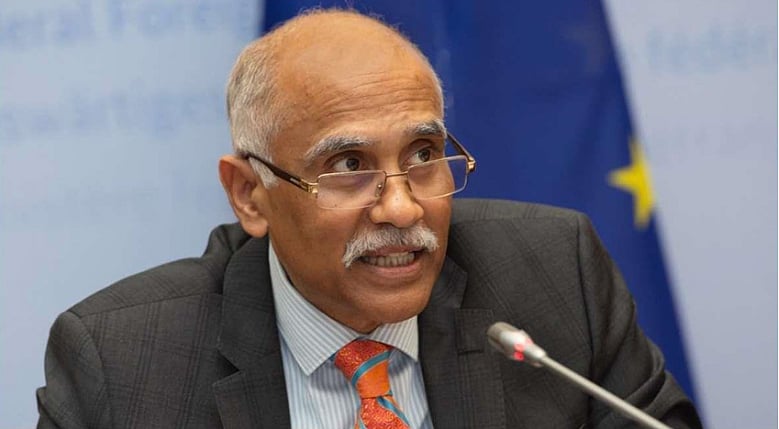
India’s Permanent Representative at the UN, Ambassador Parvathaneni Harish, while speaking at a United Nations Security Council session focusing on the situation in Afghanistan, said that Islamabad was trying to deflect blame onto New Delhi.
“Pakistan’s campaign of military airstrikes against Afghanistan is causing huge civilian casualties and suffering to the Afghan people... Such unconscionable acts of violence are a blatant assault on Afghanistan’s sovereignty and a threat to the region’s peace and stability,” Parvathaneni said.
What is ‘Fitna al-Hindustan’?
‘Fitna al-Hindustan’ is an Arabic phrase meaning ‘disorder of India.’ Pakistan’s government and military establishment began using this term to refer to anti-state and militant groups operating in Balochistan.
The India narrative
Islamabad has, in recent months, issued official notifications directing government agencies to describe several militant groups as “Fitna al-Hindustan,” alleging that they are backed by India. However, Pakistan has not presented evidence to support these claims. By applying this phrase, Pakistan claims that the unrest in Balochistan is not because of local grievances, but the insurgent groups are being supported and funded by India.
India’s response
India, however, strongly dismissed this narrative, describing it as an ‘organised factory of hate’. ‘Fitna al-Hindustan’ is nothing but officially sponsored misinformation and disinformation dressed in religious terminology,” Parvathaneni said. The Indian envoy argued that the narrative was designed to divert attention from Pakistan’s internal political and economic challenges.
Tensions between Pakistan and Afghanistan
Pakistan has a long history of engaging in war with its neighbours. For the past several months, Pakistan has been engaging in cross-border military action that has resulted in major casualties. The UN reported that Pakistani airstrikes had killed at least 42 civilians and injured 104 while displacing more than 100,000 people. The tensions escalated when Afghan officials alleged that a Pakistani airstrike on a drug rehabilitation centre in Kabul killed more than 400 people. The UN verified at least 269 deaths.
“Let me reiterate. Dressing up a massacre as a military operation does not absolve the perpetrator. Killing, maiming, and orphaning civilians is not counter terrorism,” Parvathaneni said.
While a temporary pause prevents wider conflict, violence continues along the border.