Retired Indian Army officer Rajiv Narayanan on Friday issued a strong clarification denying viral social media claims linking him to a man allegedly caught in a pedophile-hunting sting operation in the United Kingdom.
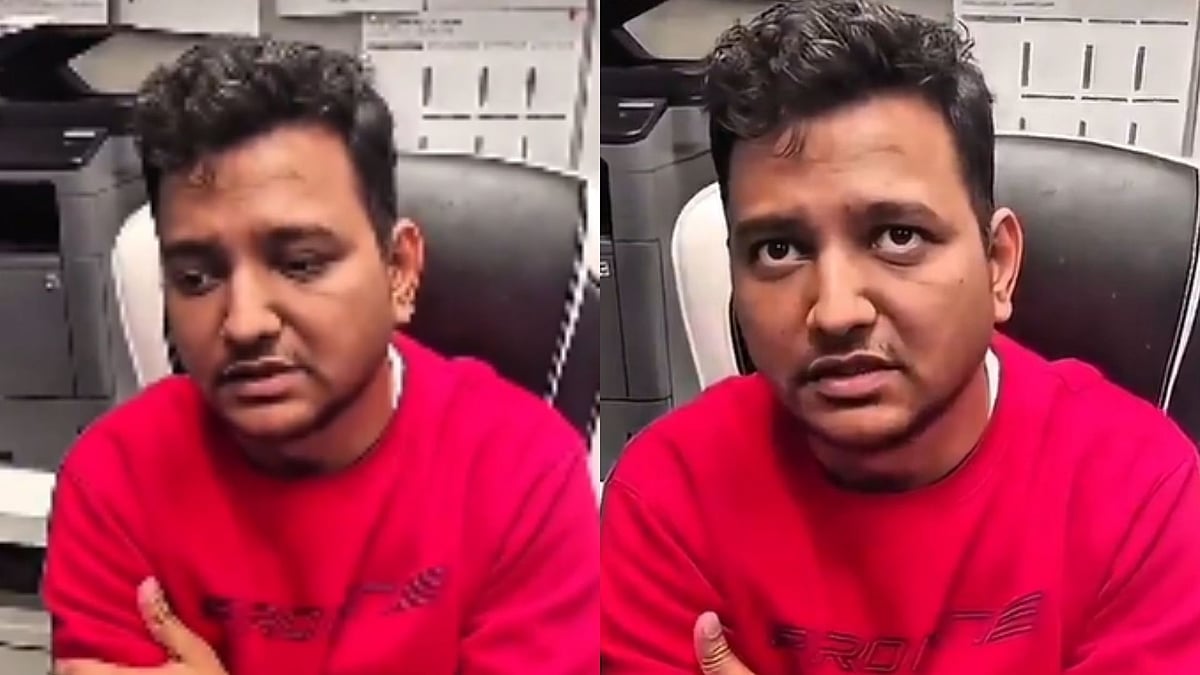
The controversy erupted after an X user named Baba Thoka shared a video clip showing a man being interrogated and claimed that the individual was the son of Major General Rajiv Narayanan. The post further alleged that the retired officer had sent his son to the UK on a business visa and described the incident as an “international embarrassment for India.”
Responding to the allegations, Narayanan categorically denied the claims and termed them “false, baseless, and malicious.” In a detailed statement, the retired officer said he does not have a son and accused the social media user of attempting to defame him.
“I, Major General Rajiv Narayanan (Retired), AVSM, VSM (V), a former senior officer of the Indian Army with over 37 years of distinguished service, wish to issue the following unequivocal statement: I have no son. I have never had a son,” the statement read.

He further said that any attempt to associate him with the individual seen in the viral clip was a deliberate act of “defamation and character assassination” without any evidence.
Narayanan clarified that he has no familial or personal connection with the person featured in the video circulating on platforms such as X and TikTok. He added that the spread of such misinformation had caused distress to him and his family and undermined the reputation he had built during decades of military service.
The retired Major General also warned of possible legal action against those responsible for spreading the claims. He demanded that all individuals and social media platforms sharing the content immediately remove it, issue public corrections, and stop further dissemination.
“Failure to do so will compel me to pursue appropriate legal remedies, both in India and the United Kingdom, against those responsible for originating and amplifying this misinformation,” he said.
Narayanan also urged media organisations and social media users to verify facts before sharing unverified and potentially defamatory content online.
