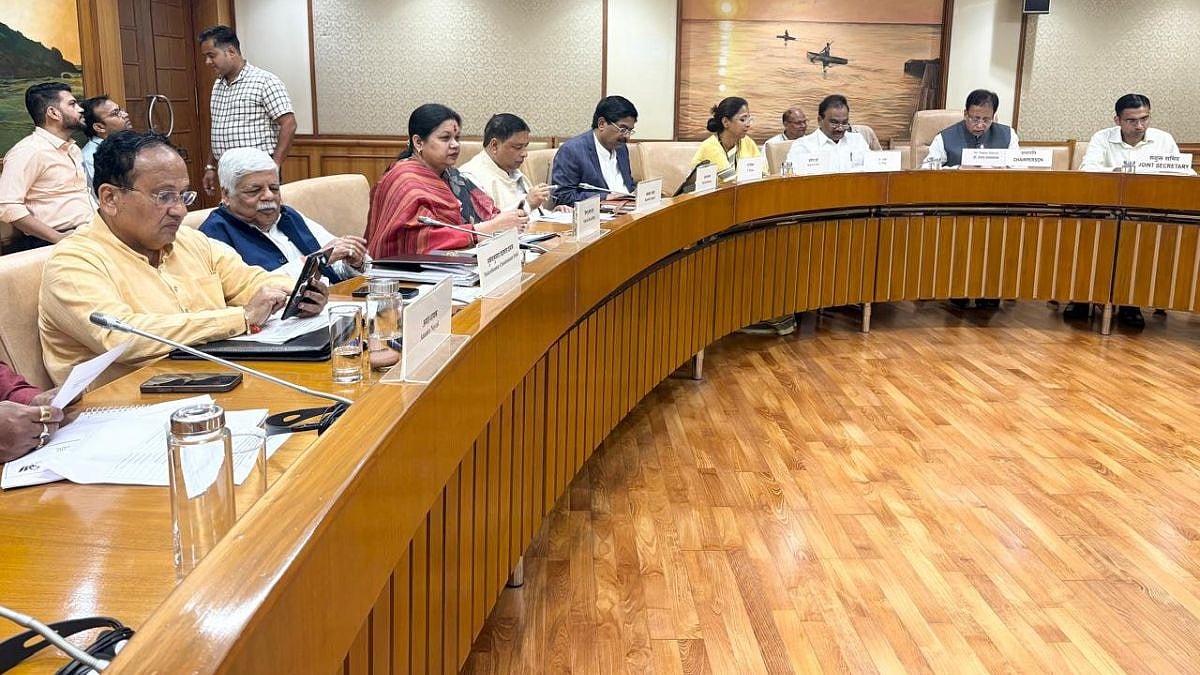
New Delhi, September 29, 2026: The ministries of Home Affairs and Law and Justice on Tuesday gave a clause-by-clause briefing to the Joint Parliamentary Committee (JPC) examining the Foreign Contribution (Regulation) Amendment Bill, 2026, as the proposed law continues to face objections from Opposition parties and Christian groups.
The 31-member parliamentary panel, headed by BJP MP Sanjay Jaiswal, was constituted to scrutinise the Bill before submitting its report. Officials from the two ministries gave detailed presentations explaining the reasons for amending the Foreign Contribution (Regulation) Act, 2010, and the proposed way forward, according to sources.
Foreign Funding Rules Under Scrutiny
Organisations and non-governmental organisations (NGOs) receiving foreign contributions are required to register under the Foreign Contribution (Regulation) Act (FCRA). The Ministry of Home Affairs is the nodal authority overseeing their activities.
The committee is also expected to hear the views of domain experts, including State Bank of India Chairman Challa Sreenivasulu Setty, senior government law officers and lawyers. Their inputs assume significance as the panel examines the financial, legal and compliance implications of the proposed changes.
The Bill was introduced in the Lok Sabha on March 25 and referred to the parliamentary committee on August 12 following demands from Opposition parties for greater scrutiny. Opposition parties have alleged that some provisions could restrict legitimate foreign funding received by Christian NGOs and minority-run social welfare and educational institutions.
Government Rejects Minority Charge
The government has rejected allegations that the proposed law discriminates against minorities and has maintained that the legislation is not religion-specific. It says the changes are intended to regulate foreign contributions and improve transparency in their use.
While introducing the Bill in the Lok Sabha, Union Minister of State for Home Nityanand Rai said the legislation was intended to improve transparency and ensure the proper utilisation of money received from abroad.
Responding to Opposition claims that the Bill was “dangerous”, Rai said it was “indeed dangerous” for those using foreign contributions for “forced religious conversion” and for people who “abuse foreign funding” for personal gain, The New Indian Express reports.
The disagreement goes to the heart of the debate surrounding the legislation: while the government has presented tighter regulation as necessary for accountability, its critics fear that stronger controls could make it harder for NGOs and minority institutions dependent on overseas contributions to operate.
Opposition Leaders Raise Concerns
Congress leader KC Venugopal has alleged that the Bill targets minorities and NGOs. Mizoram Chief Minister Lalduhoma, along with a delegation of Christian organisations, met Union Home Minister Amit Shah to express objections to the proposed legislation.
Nagaland Chief Minister Neiphiu Rio and Meghalaya Chief Minister Conrad K Sangma have also raised concerns over provisions of the Bill. DMK MP P Wilson led a delegation of Church leaders to the Union Home Minister seeking its withdrawal, while DMK chief MK Stalin also urged the Centre to withdraw the legislation.
NCP (SP) working president Supriya Sule has opposed the Bill in its present form, arguing that foreign funding cannot always be viewed with suspicion.
US Lawmakers Voice Concern
The proposed changes have also attracted attention outside India. Some US lawmakers from both the Democratic and Republican parties, including Senator James Risch, chairman of the Senate Foreign Relations Committee, have raised concerns that the amendments could adversely affect Christian organisations and other civil society groups.
India has rejected such criticism, describing the legislation as an internal matter.
The competing positions have turned the Bill into more than a technical debate over foreign donations. The committee’s scrutiny will have to address the government’s stated objective of greater accountability as well as concerns over how tighter controls could affect organisations that legally depend on overseas funding.
Fewer NGOs, But More Foreign Funds
At the JPC’s first meeting on September 18, a Ministry of Home Affairs team led by Union Home Secretary Govind Mohan told the panel that the number of active NGOs registered under the FCRA had nearly halved over the past decade even as foreign contributions increased.
According to the data presented to the committee, 14,466 FCRA-registered NGOs are active across 15 states. Tamil Nadu has the highest number with 2,102 organisations, followed by Maharashtra with 1,578, Karnataka with 1,355, Delhi with 1,218, Andhra Pradesh with 1,022 and Kerala with 1,013.
There were 29,022 active FCRA-registered NGOs in 2015.
At the same time, foreign funds received by FCRA-registered NGOs increased from Rs 17,832 crore in 2015-16 to Rs 22,974 crore in 2024-25, even as the number of active organisations declined from 29,022 to 14,466.
Also Watch:
Those contrasting figures are likely to remain central to the scrutiny of the Bill. The question before the parliamentary panel is not merely how much foreign money enters the country, but how the law can regulate it while addressing concerns raised by organisations that rely on such funding.
To get details on exclusive and budget-friendly property deals in Mumbai & surrounding regions, do visit: https://budgetproperties.in/

