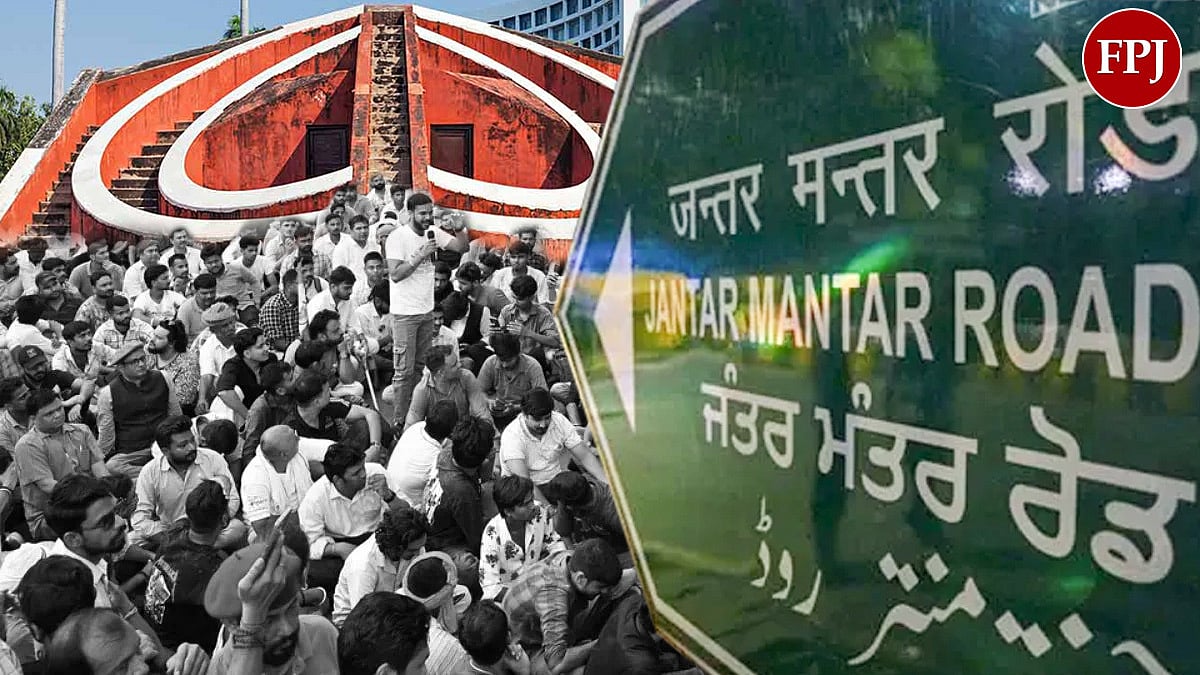
Delhi’s Jantar Mantar, which was de-notified on Monday as a designated protest site, has served as the venue for several key agitations that shaped the course of history over the past three decades.
The Jantar Mantar site in central Delhi has served as the common thread for mobilisations around a range of subjects, from more stringent anti-corruption laws to better measures for women’s safety, and from paper leaks to protests against communalism.
How Jantar Mantar Became Protest Site
For several decades after independence, the stretch between the Boat Club lawns and India Gate in Delhi had been a key protest site. However, a key turning point came in October 1988, when farm leader Mahendra Singh Tikait led a huge gathering of cultivators at the Boat Club lawns.
The farmers’ protest, which went on for a week, led to concerns about public order, after which the government no longer permitted public gatherings there.
By 1993, Jantar Mantar – located close to Parliament and several Union government ministries – became a key alternative protest site. Notwithstanding its proximity to the country’s power centre, its relatively smaller size and two main entry and exit points made it easier to manage from the point of view of law and order.
Among the earliest large demonstrations at Jantar Mantar was a 1993 “Jail Bharo” protest, when as many as 33 organisations held an agitation against the Union government’s economic policies and against communalism, according to PTI.
Anna Agitation
During the tenure of the United Progressive Alliance government, Jantar Mantar again shot to prominence when activist Anna Hazare held a five-day fast demanding a “Jan Lokpal Bill”, which he claimed would be a stronger deterrent against corruption. The protest became one of the largest mobilisations against the Manmohan Singh-led government, and also played a role in the genesis of the Arvind Kejriwal-led Aam Aadmi Party.
Protest For Women’s Safety
The following year, Delhi citizens protested for stronger measures for women’s safety following the gang-rape and murder of a woman in the city in December 2012. While India Gate and Raisina Hill were the primary sites of the agitation, some of the protests took place at Jantar Mantar as well.
In 2013, Parliament passed the Criminal Law (Amendment) Act, 2013, to introduce more stringent measures against sexual offences, and better provisions to ensure justice to survivors.
Wrestlers’ Sit-In
A decade later, in 2023, Jantar Mantar became the site where the country’s most prominent wrestlers, including Olympic medallists, held a sit-in seeking action against former Wrestling Federation of India chief Brij Bhushan Sharan Singh, whom they accused of sexual harassment.
On August 3, a Delhi court acquitted Singh and former WFI Assistant Secretary Vinod Tomar in the case.
CJP Protests
Political campaign held a massive protests at Jantar Mantar earlier this year against alleged irregularities in the undergraduate National Eligibility cum Entrance Test for admissions to medical courses. The protests received a fillip when the Delhi Police forcibly took away activist Sonam Wangchuk, who was holding a hunger strike, to a hospital.
The protest culminated in the resignation of Dharmendra Pradhan as the Union Education Minister, only the second such resignation in the Modi government’s tenure after that of MJ Akbar.
On Monday, a standing order by the Delhi Police commissioner de-notified Jantar Mantar as a designated protest site hours after the Cockroach Janta Party said it would give the police 24 hours to respond to its request for permission to hold a protest at the site amid protests against Chief Election Commissioner Gyanesh Kumar over the special intensive revision.

