
Two decades after over 250 outbreaks led to serious health concerns and mass culling of poultry, India on Friday unveiled its first indigenously developed H5N1 vaccine to protect chickens from bird flu.
What Is Bird Flu?
Highly pathogenic avian influenza (HPAI), commonly known as bird flu, is a serious disease affecting chickens and other birds. Outbreaks can result in almost 100 per cent mortality among infected birds.
About The Vaccine
The first-of-its-kind vaccine has been developed in India against the H5N1 virus of Clade 2.3.2.1a of the HPAI. Hailed by Union minister Shivraj Singh Chouhan as an example of India's self-reliance, the vaccine was developed by Indian Council of Agricultural Research-National High Security Animal Disease Institute in Anand Nagar, Bhopal.

Why Was The Vaccine Needed?
Chouhan said more than 500 outbreaks of H5N1 and H5N8 have been recorded in India since 2006, and until now, no specific vaccine was available against the H5N1 virus.
A vaccine reduces the risk of a significant bird flu outbreak. Such an outbreak poses a risk of reducing the country's GDP growth by 1.5 per cent exposing over 20 per cent of the poultry population to risk, per reports. The 2006 outbreak alone had resulted in direct and indirect losses upwards of Rs 2,200 crore.
According to the World Health Organization (WHO), 1,003 human cases of H5N1 avian influenza, including 479 deaths, have been reported across 25 countries, including India, since 2003.
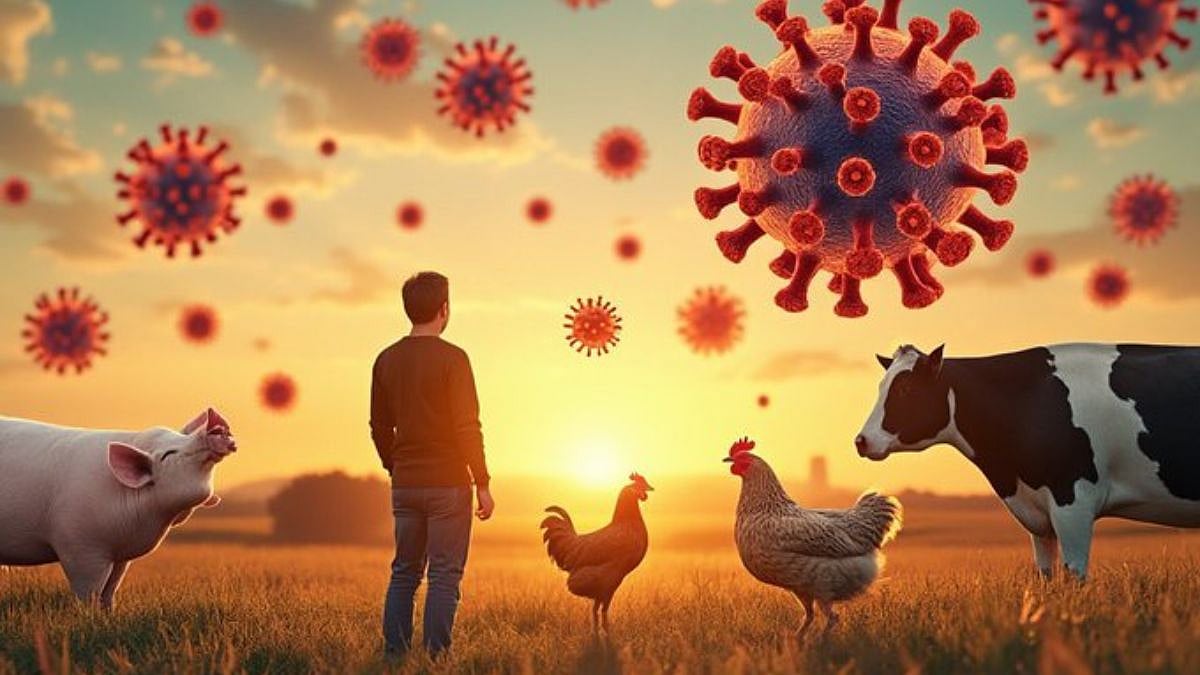
Studies of the virus have shown that the H5N1 strain known as Clade 2.3.2.1a has been responsible for most bird flu outbreaks in chickens. In recent times, infections caused by this strain have also been detected in different animal species, including mammals, along with three human cases.

