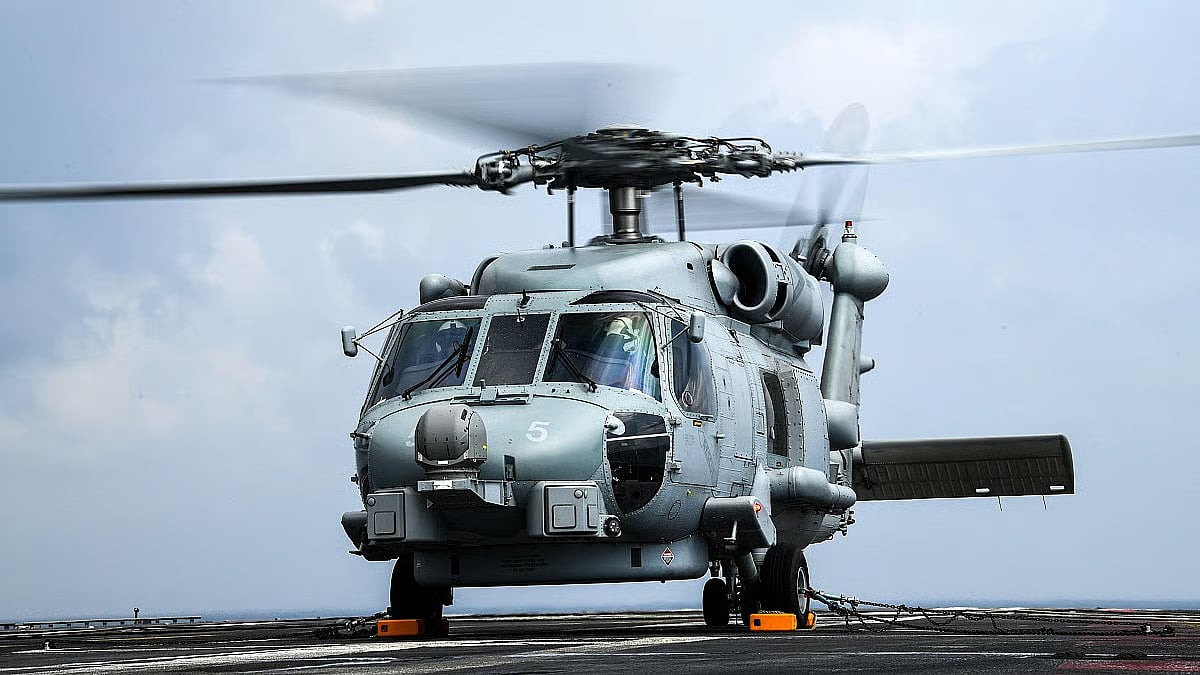
India's maritime surveillance and combat capabilities have received another significant boost with the arrival of an additional MH-60R Seahawk multi-role helicopter for the Indian Navy. The latest helicopter was delivered to Kochi as part of India's ongoing induction of 24 MH-60R helicopters procured from the United States under a government-to-government Foreign Military Sales (FMS) agreement signed in 2020.
The US Embassy in India announced the delivery, stating that more helicopters would arrive during the same week, marking another milestone in the growing defence partnership between New Delhi and Washington.
The helicopters, manufactured by Sikorsky, a Lockheed Martin company, are replacing the Indian Navy's ageing Sea King fleet and are expected to significantly strengthen India's ability to monitor, protect and respond to threats across the Indian Ocean Region.
What Is The MH-60R Seahawk?
Often referred to as the "Romeo", the MH-60R Seahawk is the US Navy's primary multi-mission maritime helicopter and is regarded as one of the most capable naval helicopters currently in service.
Designed to operate from aircraft carriers, destroyers, frigates and shore bases, it can perform a wide range of missions in both day and night conditions and in all weather.
Its primary roles include anti-submarine warfare (ASW) and anti-surface warfare (ASuW), while it also supports search and rescue operations, medical evacuation, logistics missions, intelligence gathering, surveillance, reconnaissance and special operations.
Advanced Sensors That Hunt Submarines
The helicopter's biggest strength lies in its sophisticated sensor suite, allowing it to detect, track and engage underwater and surface threats at long distances.
Its key systems include
AN/AQS-22 Airborne Low Frequency Sonar (ALFS): A dipping sonar capable of locating submarines in both shallow and deep waters.
Multi-mode maritime radar: Detects ships, periscopes and other surface targets while providing weather monitoring.
Electro-optical and infrared (EO/IR) sensors: Enable day-and-night surveillance and precision targeting.
Electronic Support Measures (ESM): Passively detect and identify hostile radar emissions.
Sonobuoys: Acoustic sensors dropped into the sea to help locate submarines.
Together, these systems provide crews with enhanced situational awareness and allow the helicopter to work seamlessly with naval warships and maritime patrol aircraft.
Weapons Designed For Sea Combat
The MH-60R is equipped to engage both underwater and surface threats.
Its arsenal can include:
Mk-54 lightweight torpedoes for anti-submarine warfare.
AGM-114 Hellfire missiles against fast attack boats and other surface targets.
Laser-guided rockets in certain configurations.
Crew-operated machine guns for close-range defence.
Its integrated mission system allows rapid detection, identification and engagement of threats, making it an important force multiplier during naval operations.
Performance And Operational Capabilities
Powered by two General Electric T700-GE-401C turboshaft engines, the MH-60R has a maximum speed of around 267 kmph and an operational range of nearly 850 kilometres, depending on mission configuration.
The helicopter is designed specifically for shipborne operations, featuring folding rotor blades and tail sections for compact storage aboard naval vessels. It also uses specialised recovery systems that enable safe landings even in rough sea conditions.
A typical crew consists of two pilots and one or two mission operators responsible for sensors and weapons.
Why The Seahawk Matters For India
India signed the deal to acquire 24 MH-60R helicopters in 2020 to replace its ageing Sea King helicopters and strengthen anti-submarine capabilities amid increasing naval activity in the Indian Ocean.
The induction significantly enhances the Indian Navy's ability to detect hostile submarines, monitor strategic sea lanes, protect aircraft carrier battle groups and conduct long-range maritime surveillance.
The helicopters are expected to work closely with India's P-8I maritime patrol aircraft and frontline warships, creating a stronger network for tracking and responding to maritime threats.
A Reflection Of Growing US-India Defence Ties
The continued delivery of MH-60R helicopters also highlights the expanding defence relationship between India and the United States.
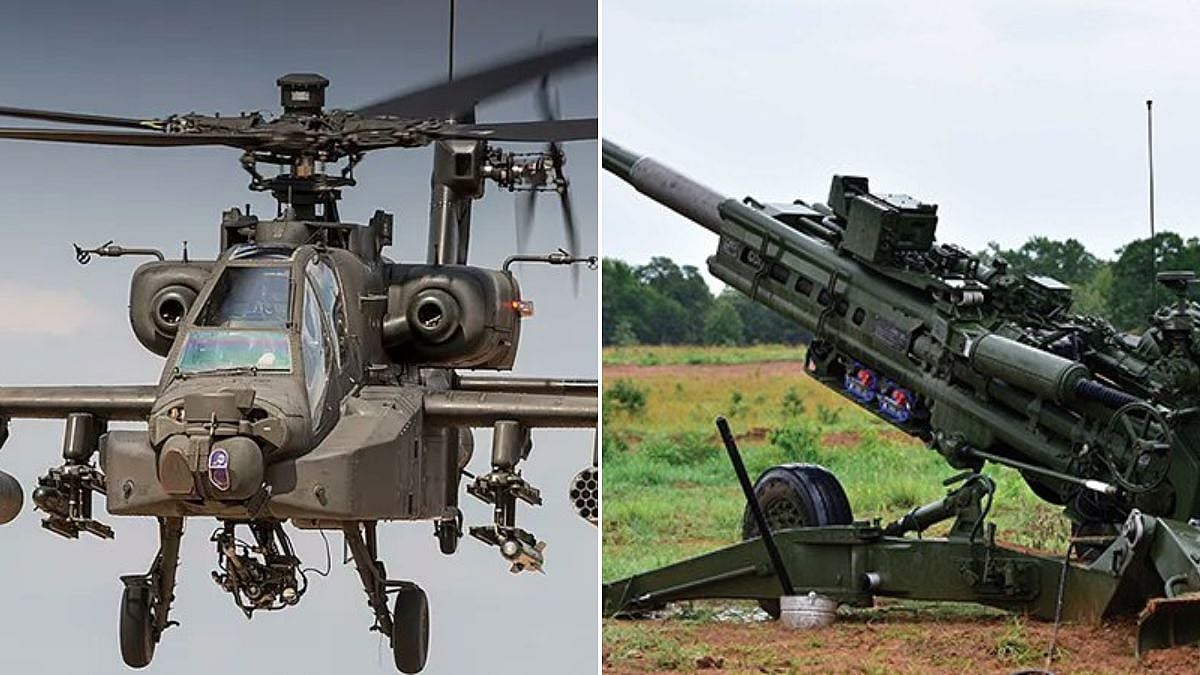
Over the past decade, the two countries have signed key defence agreements, including LEMOA, COMCASA and BECA enabling greater military interoperability, secure communications, logistics support and geospatial intelligence sharing.
Beyond defence hardware, the partnership has expanded into co-development, advanced technologies, defence manufacturing and joint military exercises through initiatives such as INDUS-X, the Defence Technology and Trade Initiative (DTTI) and the Initiative on Critical and Emerging Technology (iCET).

