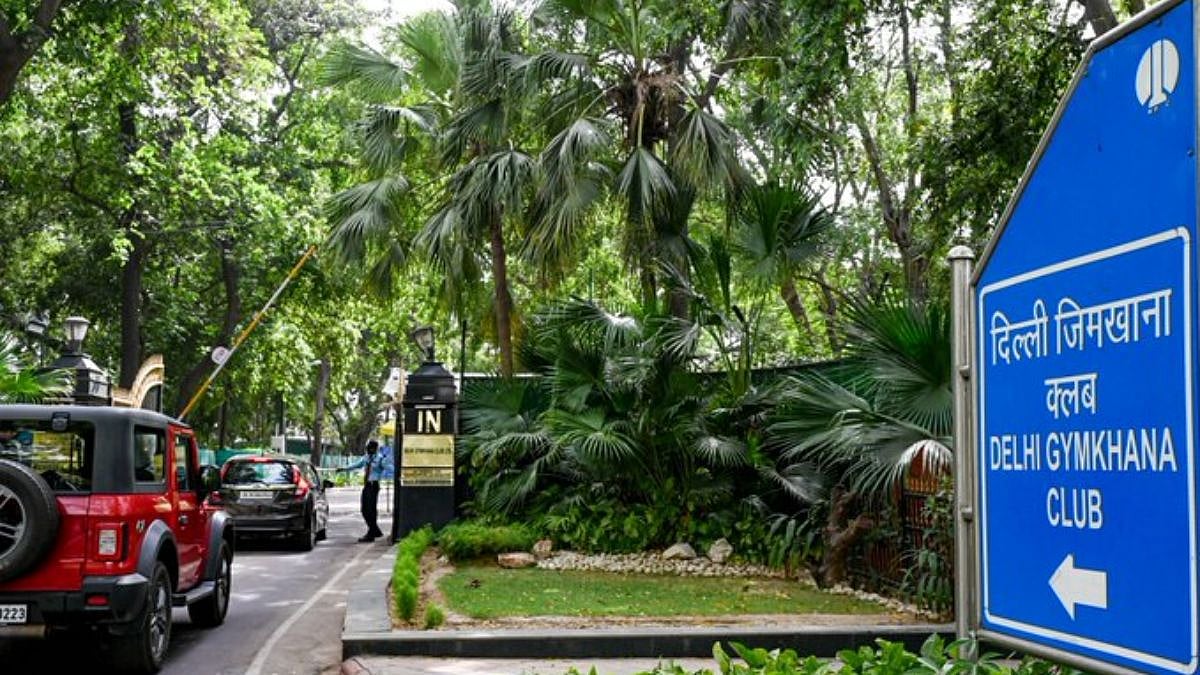
For over a century, the Delhi Gymkhana Club has been one of the most coveted addresses in the national capital, a leafy, sprawling retreat at 2, Safdarjung Road where diplomats, military brass, senior bureaucrats, and the capital's social elite have gathered, dined, and networked. Today, the club finds itself in the most turbulent moment of its 113-year existence, battling the central government on multiple fronts, over land, over rent, and over its very right to exist at its current location.
The Eviction Order That Shocked Delhi's Elite
The crisis reached a flashpoint late last month when the Land and Development Office (LDO), functioning under the Ministry of Housing and Urban Affairs, issued a formal directive ordering the club to hand over its 27.3-acre premises by June 5. The government cited urgent national security imperatives, stating that the strategically located land, situated in close proximity to the Prime Minister's official residence at Lok Kalyan Marg and several key defence establishments, was required to bolster critical defence infrastructure.
The notice invoked presidential powers, stating that the President of India, acting through the LDO, had formally terminated the lease and directed that the government would assume control of the entire property, including all buildings, structures, and open grounds, on the stipulated date.
In response, the club dispatched a letter to the LDO raising four core concerns, primarily asking whether an alternative, suitably located plot of land would be offered to facilitate relocation. The club noted that it serves approximately 14,000 members and employs around 500 staff, and that an abrupt eviction would cause significant disruption to multiple stakeholders. Its governing body also sought a personal meeting with the Land Development Officer to discuss a way forward.
A member of the club wasted little time in approaching the Delhi High Court. The matter was mentioned through Senior Advocate Abhishek Manu Singhvi, seeking urgent hearing. Justice Avneesh Jhingan is scheduled to take up the case on May 26.
A Rent Bill That Grew 100,000-Fold
Alongside the eviction drama, the club has been embroiled in a separate but related dispute over a staggering escalation in ground rent. The club has occupied the Safdarjung Road premises since 1927 under a perpetual lease that pegged annual ground rent at Rs 15 per acre, totalling Rs 409.50 for the entire plot. For over nine decades, this figure remained unchanged.
That changed in December 2023, when the LDO issued its first-ever rent revision notice in the lease's history, backdating the enhancement to April 2018. The revised calculation, based on prevailing land rates for institutional properties, pushed the annual rent to over Rs 4.10 crore. Then, in April 2026, the government escalated its total demand to nearly Rs 47.59 crore, incorporating arrears, interest, and penalties for alleged breaches identified during departmental inspections.
The club has contested this hike vigorously, pointing out that the revised figure represents roughly ten thousand times the original rent and arguing that the retrospective application of new rates violates the government's own 1983 guidelines. It also raised procedural objections, including the absence of any hearing before the demand was raised. The club had already approached the High Court over this matter in early May, and a joint meeting with the LDO was subsequently directed by the court. As of mid-May, both sides indicated efforts were underway to resolve the matter amicably, with the court scheduling the next hearing for July.
Allegations of Fraud from Within
The club's external troubles are compounded by serious internal allegations. A former board member and self-described whistleblower, Niji Sapra, has alleged that she was suspended and stripped of her membership after raising concerns about financial misconduct and violations of Ministry of Corporate Affairs guidelines under the club's previous management. She has alleged that influential factions within the club engaged in systematic financial fraud, exploiting the institution for personal gain, and that well-connected individuals secured memberships for their families while ordinary applicants waited upwards of four decades for a place in the queue.
Government inspection records from 2022 reportedly flagged financial irregularities exceeding Rs 50 crore, illegal appointments, and non-compliance with orders of the National Company Law Tribunal. The club has been under the management of government-nominated directors pursuant to an appellate tribunal order.
Political and Financial Dimensions
The eviction order has also ignited a political row. Opposition leaders have alleged the government intends to expand the Prime Minister's residential complex under the guise of security needs, while ruling party spokespersons have dismissed the charge as opportunistic.
Financially, the club is not without resources. Its most recent audited accounts show a net worth of approximately Rs 129 crore, investments valued at over Rs 217 crore in mutual funds, and a tenfold jump in annual surplus to Rs 9.5 crore in 2023-24. The largest revenue stream, over Rs 43 crore, came from its food, beverage, and banquet operations.
For now, the fate of one of India's most storied social institutions rests with the Delhi High Court, as a century-old lease, a nation's security concerns, and the livelihoods of hundreds of employees hang in the balance.
