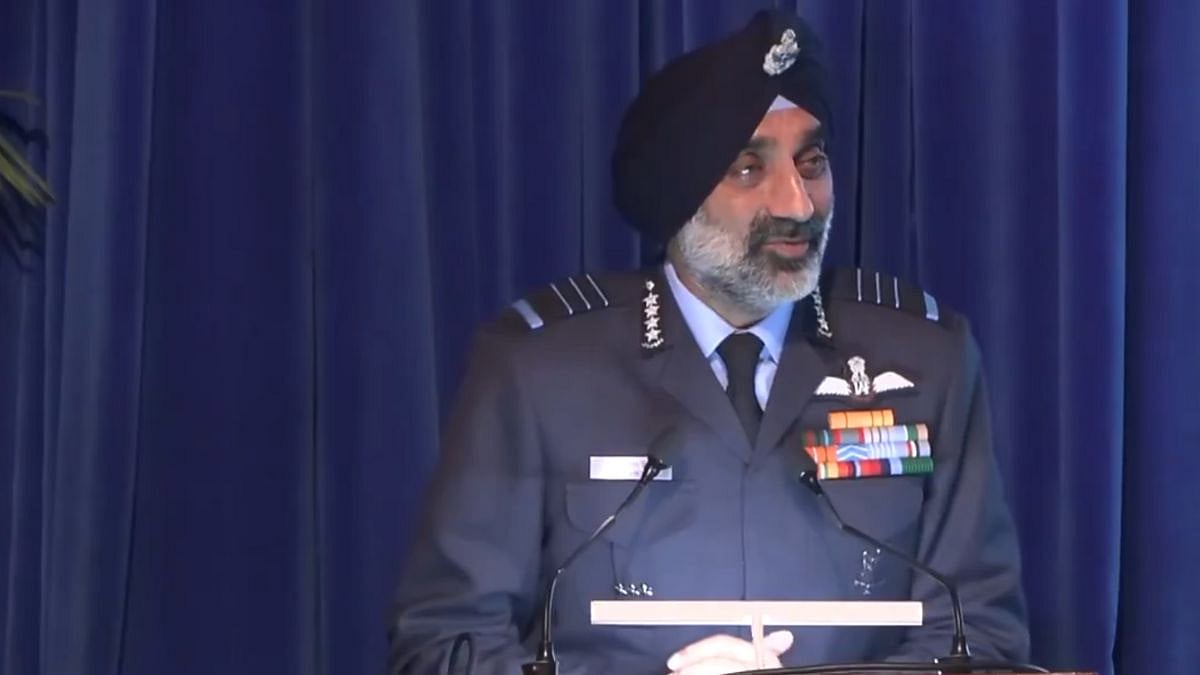
New Delhi: Indian Air Force Chief Air Chief Marshal AP Singh on Wednesday underscored the importance of military power as essential for national security, arguing that economic strength alone is insufficient to protect a nation's sovereignty.
Addressing the 22nd Subroto Mukherjee Seminar in Dlehi, organised by the Centre for Aerospace Power and Strategic Studies (CAPSS), the Air Chief stressed that economic strength alone cannot ensure national security, citing examples of Venezuela and Iraq.
He noted that even if a country is economically strong, it can't ensure security without a robust military. Singh pointed to India's history, where, despite controlling 60% of the world's GDP alongside China, it was colonised because of its lack of military strength.
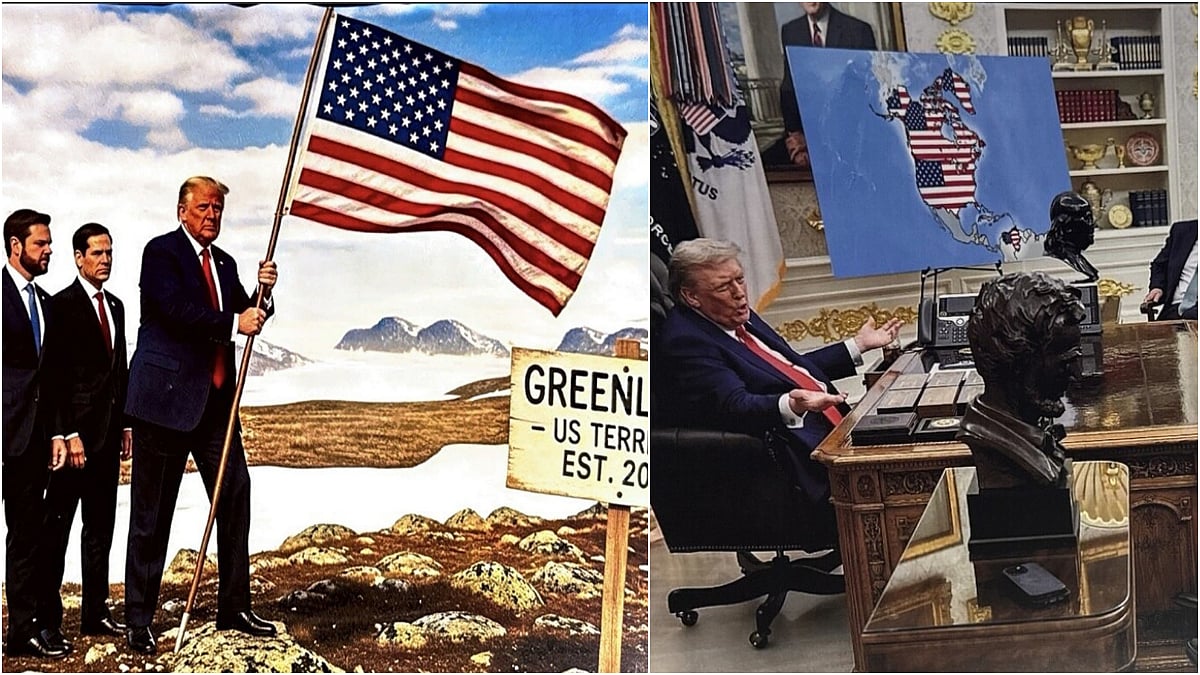
Indian Air Force Chief Air Chief Marshal AP Singh's Statement


"We must understand that military power stands as the ultimate arbiter of national power. Anybody can be economically sound but can't be secure. We have the example of our own country, we plus China controlled 60% of worlds GDP at one time, but that didn't stop us from getting captured and colonised. Any one of these powers is very important, but finally, what is required is a robust military, because if you don't have it, you can be subjugated by anybody. Venezuela and Iraq are the most recent examples. It is the military power which is important, but what is more important is the will to use that military power," he said.
Relations are highly strained following a significant US military operation on January 3, 2026, in which US forces captured Venezuelan President Nicolas Maduro, who now faces narcoterrorism charges in a New York federal court.
The US invasion of Iraq, known as Operation Iraqi Freedom, began in March 2003 with a U.S.-led coalition, citing false claims of Iraq possessing Weapons of Mass Destruction (WMDs) and ties to al-Qaeda, toppling Saddam Hussein's regime.

Air Chief Marshal Singh highlighted the need for a robust military and the will to use it, quoting Ramdhari Singh Dinkar's couplet on forgiveness and strength.
"Unless you have that will, you can keep showing restraint, but that restraint will be seen as a weakness. It is only when you're strong enough, and you show restraint, that it is seen as a capability, stating, 'kshama shobhatee us bhujang ko, jisake paas garal ho usako kya jo dantaheen, visharahit, vineet, saral ho.'" (Forgiveness befits that serpent which possesses venom; What good is it to one who is toothless, venomless, humble, and simple?)
Air Chief Marshal Singh added that India's security requirements are often shaped by developments in its neighbourhood, forcing reactive decision-making at times. He stressed the need for faster decisions on Make in India initiatives and strategic partnerships for next-generation engines and weapon systems to strengthen self-reliance.

He also praised the founding father of the Indian Air Force, Subroto Mukherjee, for building the force with foresight despite limited resources. Singh stated that Mukherjee set the IAF on the right path, and it has been growing from strength to strength. He also highlighted that he is in a better position than his predecessors due to improved resources ""Subroto Mukherjee built the Indian Air Force in an era of constraints, uncertainties, and limited resources... With the kind of foresight he had, he took us on the right path, because as they say, well begun is half done. He put us on the right path, and we have been growing from strength to strength. I think I am in a much better place than my predecessors because resources continue to get better and better," Air Chief Marshal Singh said.
Congratulating CAPSS for organising the seminar, the Air Chief said such platforms keep the armed forces intellectually prepared in an increasingly chaotic global environment. Recalling that the IAF completed 100 years last year, he asserted that building a strong Air Force remains a necessity to safeguard India's sovereignty.
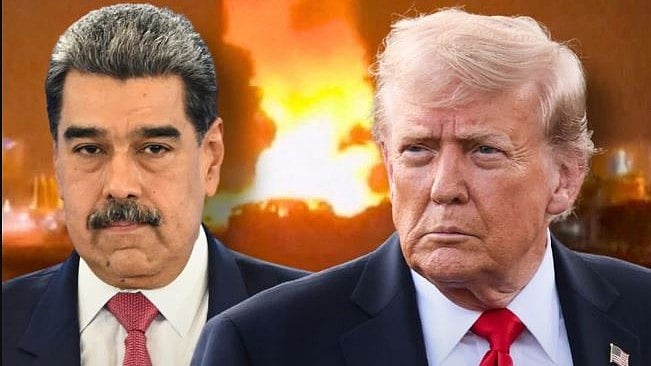
Air Marshal Subroto Mukerjee is widely regarded as the Father of the Indian Air Force, a pioneer who became its first Indian Chief of the Air Staff (COAS) in independent India, leading the IAF's transformation from a British-dominated force to a self-reliant air service through his vision and leadership.
He was one of the first six Indians selected for training at the RAF College in Cranwell, UK. In 1932, he earned his commission and became a founding pilot of the IAF's first squadron. As the first Indian COAS from 1954 to 1960, he was instrumental in building and modernising the IAF, fostering self-reliance and operational excellence.
(Except for the headline, this article has not been edited by FPJ's editorial team and is auto-generated from an agency feed.)