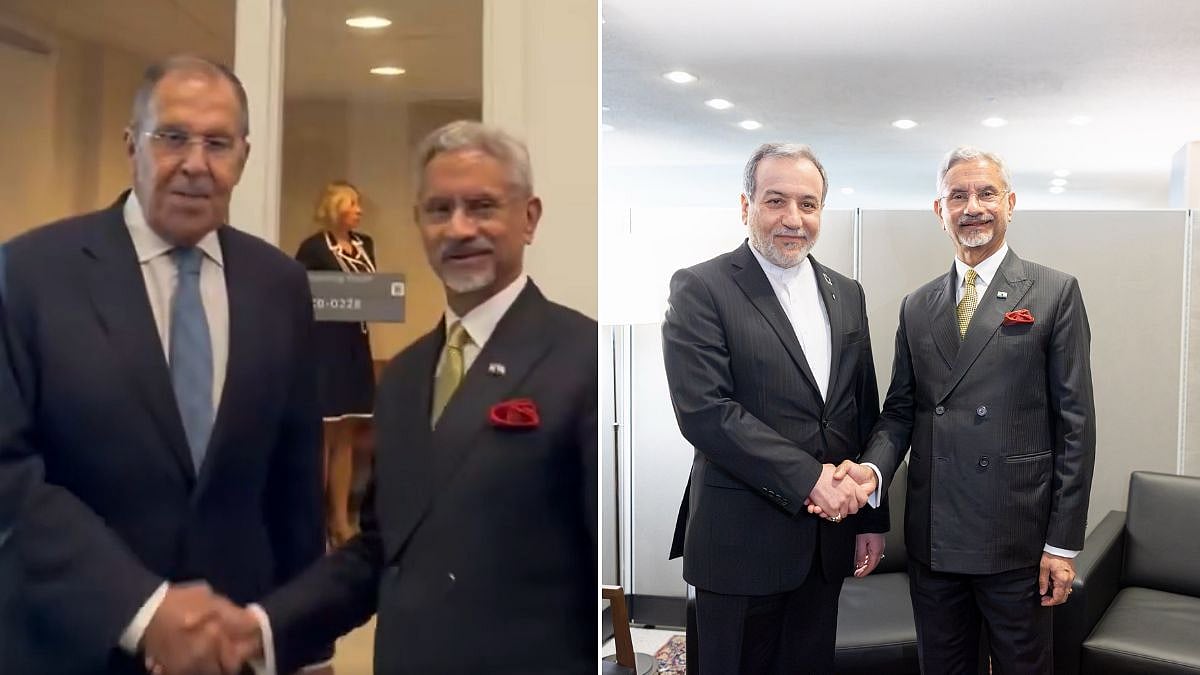
New York, September 26, 2026: External Affairs Minister S Jaishankar held separate meetings with his Russian and Iranian counterparts on the margins of the 81st United Nations General Assembly, discussing bilateral ties, BRICS cooperation and developments in the Gulf conflict.
The meetings came days after US President Donald Trump signed a new law providing for sanctions, tariffs and prohibitions linked to countries purchasing oil and gas from Russia and Iran. For India, which has stressed the importance of securing energy supplies for its 1.4 billion people, the discussions come at a significant time for its diplomatic and economic interests.
Russia, BRICS Ties In Focus
Jaishankar met Russian Foreign Minister Sergey Lavrov and discussed bilateral issues as well as cooperation within BRICS.
“A good meeting with FM Sergey Lavrov of Russia today #UNGA81. Exchanged views on a number of ongoing issues. Also took stock of our bilateral and BRICS cooperation,” Jaishankar said.
BRICS comprises Brazil, China, Egypt, Ethiopia, India, Indonesia, Iran, Russia, Saudi Arabia, South Africa and the United Arab Emirates. India had earlier in September hosted the BRICS Leaders’ Summit, attended by Russian President Vladimir Putin and Iranian President Masoud Pezeshkian.
According to a readout from the Russian Foreign Affairs Ministry, Jaishankar and Lavrov discussed “key issues of Russian-Indian cooperation, the schedule of upcoming bilateral contacts, and current regional and global issues, including the Ukraine crisis and the situation in the Middle East”.
The two sides expressed their intention to continue strengthening their “special and privileged strategic partnership” and maintain close coordination at the UN, G20, BRICS and other international groupings.
Gulf Conflict On Agenda
Jaishankar also met Iranian Foreign Minister Seyed Abbas Araghchi in New York on September 25, with the Gulf conflict figuring prominently in their discussions.
“Appreciate the conversation with FM @araghchi of Iran at the @UN #UNGA81. We discussed the latest developments with regard to the Gulf conflict. Will continue to be in touch,” Jaishankar said in a post on X.
The diplomatic engagement assumes added importance against the backdrop of the Lindsey O Graham Sanctioning Russia and Iran Act of 2026, signed by Trump last week. The law authorises and expands statutory sanctions, tariffs and prohibitions on Russia and extends existing sanctions on Iran, PTI reports.
It also authorises Trump to impose sanctions on Russia and steep tariffs on trading partners such as India and China in the oil and gas sector.
India has responded to the US legislation by saying it remains firmly committed to ensuring energy security for its 1.4 billion people and will continue to pursue diversified sourcing.
India-GCC Partnership Gets A Push
Continuing his engagements at the UN, Jaishankar co-chaired the India-Gulf Cooperation Council (GCC) Troika Ministerial Meeting on the margins of the General Assembly.
The meeting reviewed progress under the India-GCC Joint Action Plan 2024-28 and discussed ways to advance the partnership. India also welcomed the launch of negotiations for an India-GCC free trade agreement.
“Look forward to strengthening ties in the areas of trade, investment, energy, food security, health, new technologies, culture and people-to-people exchanges. Thanked GCC leaderships for the support extended to the Indian community,” Jaishankar said.
India also reiterated its strong commitment to freedom of navigation and the safety of seafarers and commercial shipping.
AI’s Promise And Security Risks
Jaishankar also co-chaired an event titled AI in the Context of International Peace & Security, with an Emphasis on Maritime Security, alongside Greek Foreign Minister George Gerapetritis.
In a post on X, Jaishankar said countries needed to harness the possibilities offered by artificial intelligence while anticipating its consequences and mitigating its risks.
“This calls for an approach that enables innovation while remaining conscious of its security implications,” he said.
Jaishankar said the New Delhi Declaration emphasises democratic access to AI resources, the development of secure and trustworthy systems, investment in human capabilities and the use of AI for economic growth and social good.
In the maritime domain, he said, AI can improve maritime domain awareness, search and rescue operations, disaster response, detection of suspicious activity and the resilience of ports and critical infrastructure.
At the same time, the technology can enable sophisticated reconnaissance, vulnerability mapping and cyber operations targeting vessels, communication networks and undersea infrastructure.
Jaishankar said increasing autonomy in maritime systems also raises questions about attribution, accountability and escalation while compressing decision-making time.
Also Watch:
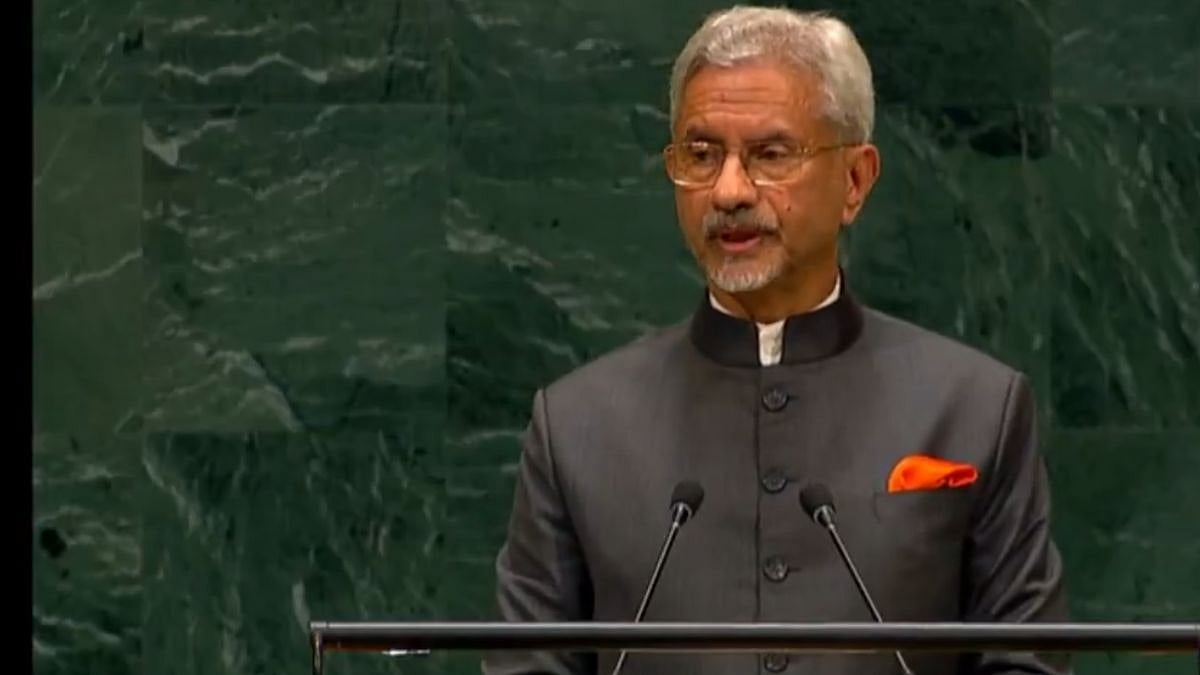
He underlined that the UN Charter and international law, including the law of the sea, remain essential frameworks governing State conduct in the maritime domain.
“Greater transparency, confidence-building, capacity development, technical cooperation and exchange of best practices are essential to ensure that AI is developed and used consistent with these principles,” Jaishankar said.
To get details on exclusive and budget-friendly property deals in Mumbai & surrounding regions, do visit: https://budgetproperties.in/

