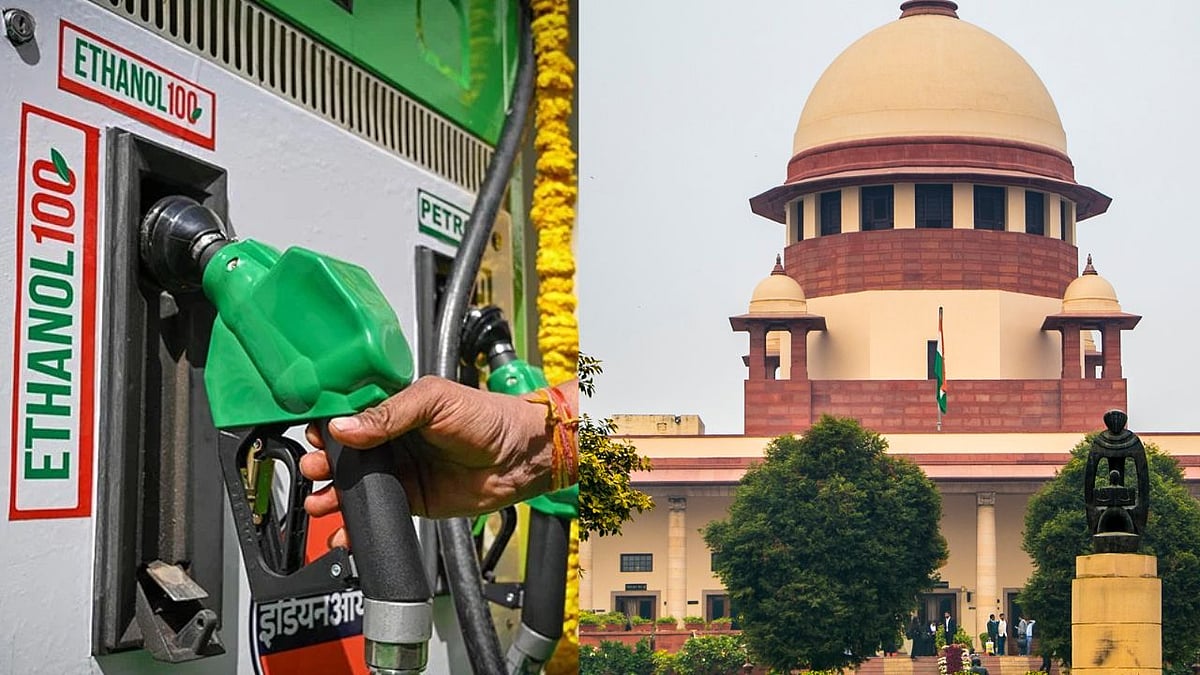
The Central Government on Tuesday informed the Supreme Court that the ethanol blending programme remains an ongoing experiment and that its full impact will become clearer by 2027.
The Centre submitted that while the E20 policy has already been implemented across the country, its long-term effects are still being evaluated. It told the top court that a clearer assessment of the programme's impact is expected by 2027 as more data becomes available.
The government has consistently defended the ethanol blending initiative, maintaining that it is a key step towards reducing India's dependence on imported crude oil, improving energy security, boosting farmers' income, and lowering vehicular emissions.
Supreme Court Earlier Rejected Plea for Pure Petrol
The Centre's submission comes after the Supreme Court earlier dismissed a Public Interest Litigation (PIL) challenging the mandatory nationwide rollout of E20 fuel.
The petitioner argued that millions of vehicles manufactured before 2023 were not designed to run on 20% ethanol-blended petrol and sought directions to ensure the continued availability of ethanol-free petrol (E0) for older vehicles.
However, the apex court declined to interfere with the policy, observing that the government's decision was aimed at promoting cleaner energy and supporting the agricultural sector.
Government Continues to Back Ethanol Blending
Even as concerns over engine compatibility and fuel efficiency continue to surface, the Centre has maintained that the E20 rollout followed extensive consultations with automobile manufacturers and industry stakeholders.
The government, along with insurance companies, has also dismissed viral social media claims suggesting that the use of E20 fuel could void motor insurance policies or cause widespread engine damage, stating that such claims are misleading and unsupported by evidence.

Push for Higher Ethanol Blends
In a bid to accelerate India's biofuel transition, the government recently announced the removal of excise duty and cesses on higher ethanol blends, including E22, E25, E27 and E30. The move is expected to encourage greater biofuel production and support the country's long-term clean energy goals.
Karnataka High Court Flags Ethanol Procurement Issue
Separately, the Karnataka High Court recently questioned Oil Marketing Companies (OMCs) over alleged arbitrary cuts in ethanol procurement allocations. The court directed the companies to honour their existing purchase agreements with domestic biofuel producers, highlighting the importance of maintaining contractual commitments within the ethanol supply chain.

