
New Delhi: The Union Ministry of Health and Family Welfare on Tuesday (December 2) revealed that Delhi recorded a sharp rise in acute respiratory illness (ARI) cases in the past three years. The ministry tabled a report disclosing that six major central government hospitals in the national capital territory (NCT) recorded over two lakh ARI cases between 2022 and 2024.
Out of these cases, more than 30,000 patients were hospitalised. The report was shared in response to a question by Rajya Sabha MP Dr Vikramjit Singh Sahney. Minister of State for Health Prataprao Jadhav told the House that the Centre is closely monitoring the situation through a national disease surveillance system.
Year-Wise Data:
In 2022, 67,054 ARI cases were recorded and out of them 9,878 were hospitalised.
In 2023, 69,293 ARI cases were recorded and out of them 9,727 were hospitalised.
In 2024, 68,411 ARI cases were recorded and out of them 10,819 were hospitalised.
Notably, the number of ARI cases were lower in 2024 as compared to 2023, but hospital admissions were more.
During the Parliament's winter session, Sawhney asked whether the Ministry has studied the correlation between rising air pollution and respiratory diseases in urban areas, reported NDTV. The MP also reportedly demanded the details of increase in outpatient and hospital admissions due to asthma, COPD, and lung infections in several metro cities, especially in Delhi.
Delhi AQI in 'Very Poor' Category:
The air quality in Delhi remained in the 'very poor' category, with an AQI of 376 at 7 am, according to data from the Central Pollution Control Board (CPCB).
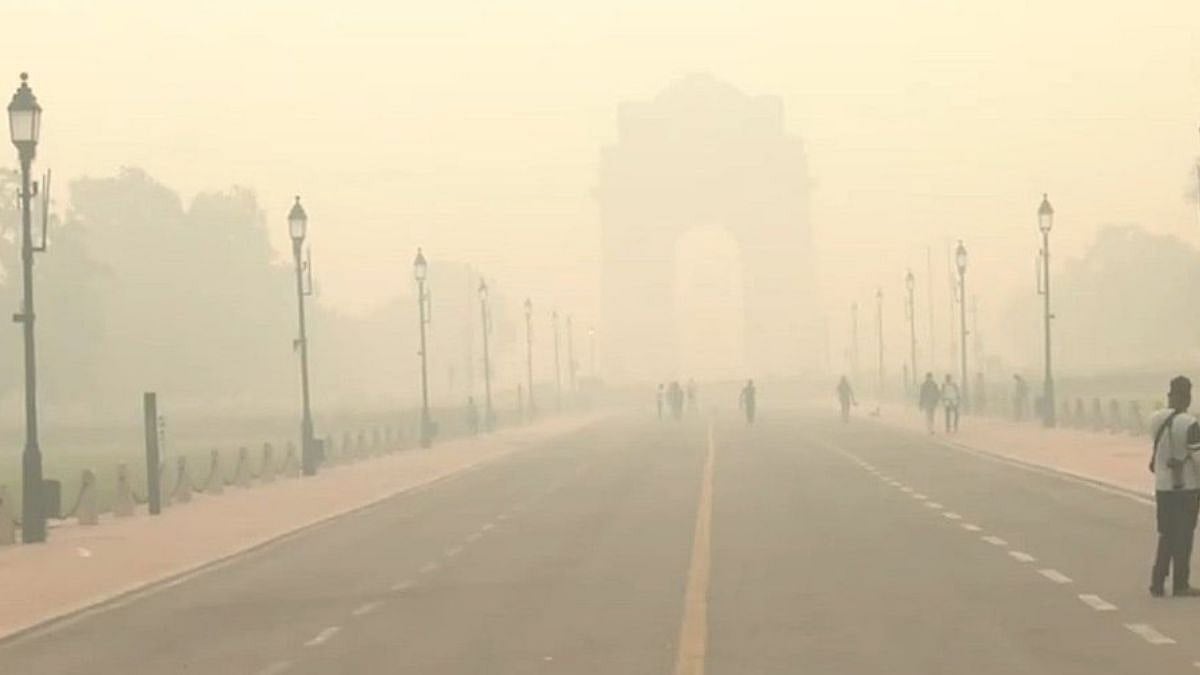
The area around India Gate and Kartavya Path was covered in a dense layer of toxic smog with AQI in the area recorded at 356 in the 'very poor' category. Several other key stations, including Alipur (366), Aya Nagar (360), Burari (396), Dhaula Kuan (303), and Dwarka (377), remained in the 'very poor' category, highlighting the widespread nature of pollution across Delhi.
Meanwhile, some of the areas in Delhi recorded alarming levels of pollution, with AQI readings surpassing 400 in most areas, reported ANI, citing the CPCB data. Almost all monitoring stations in the national capital recorded 'severe' air quality, with AQI of 405 in Anand Vihar, 403 in Ashok Vihar, 431 in Chandani Chowk, and 406 in Jahangirpuri.
According to CPCB, the AQI, which ranges from 0 to 500, is divided into six categories, each reflecting the level of pollution and associated health risks.
An AQI between 0 and 50 is classified as "Good", indicating minimal or no health impact. AQI levels from 51 to 100 fall into the "Satisfactory" category, where air quality remains acceptable.

