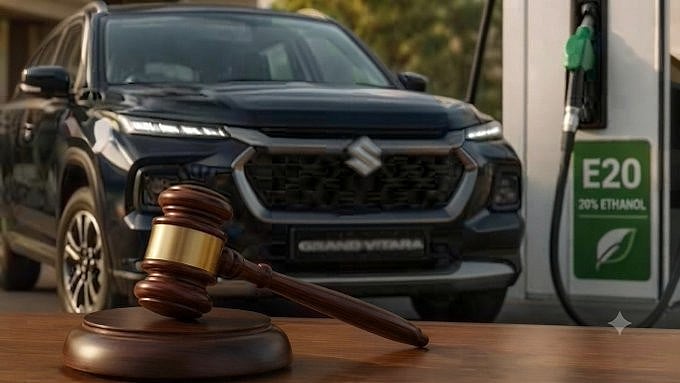
A consumer court in Chhattisgarh has directed Maruti Suzuki India Ltd. and its authorised dealer, Nexa Magnato, to replace a Grand Vitara Strong Hybrid with a new E20-compatible model after finding that the buyer was not informed the vehicle could not run on E20 petrol.
The District Consumer Disputes Redressal Commission, Raipur, passed the order on July 14 while partly allowing a complaint filed by Dr Premraj Devta under Section 35 of the Consumer Protection Act, 2019. The Commission held that selling a non-E20-compliant vehicle in June 2024 without disclosing this limitation amounted to deficiency in service and unfair trade practice, Live Law reports.
A question of disclosure
The order comes at a time when concerns over the use of E20 petrol have been raised by several vehicle owners. The Commission's decision underlines that manufacturers and dealers have a responsibility to clearly inform buyers about a vehicle's fuel compatibility, especially when higher ethanol-blended fuel is being introduced.
According to the complaint, Dr Devta purchased the Maruti Suzuki Grand Vitara Strong Hybrid Delta Plus 1.5 on June 3, 2024. Although the vehicle was sold in 2024, it had been manufactured in January 2023. Within five months of purchase, the vehicle reportedly broke down after contamination was detected in the petrol. The authorised service centre cleaned the fuel tank and returned the vehicle.
Problems continued despite repairs
However, the same problem resurfaced, requiring the fuel tank to be cleaned a second time. The service centre reportedly suggested that the earlier cleaning might not have been thorough. Dr Devta also got a sample of the petrol tested at a government-recognised laboratory, where it was found to contain ethanol and had a curd-like consistency.
Despite repeated repairs, changing the fuel and cleaning the petrol tank, the vehicle allegedly continued to stall. Dr Devta told the Commission that the recurring problems caused him financial loss as well as mental agony, following which he approached the consumer forum seeking relief.
Manufacturer blames contaminated fuel
Before the Commission, Maruti Suzuki and the dealer argued that the vehicle did not suffer from any manufacturing defect. They maintained that the malfunction was caused by contaminated fuel, which they described as an external factor not covered under the vehicle's warranty. On that basis, they opposed the demand for replacement or compensation.
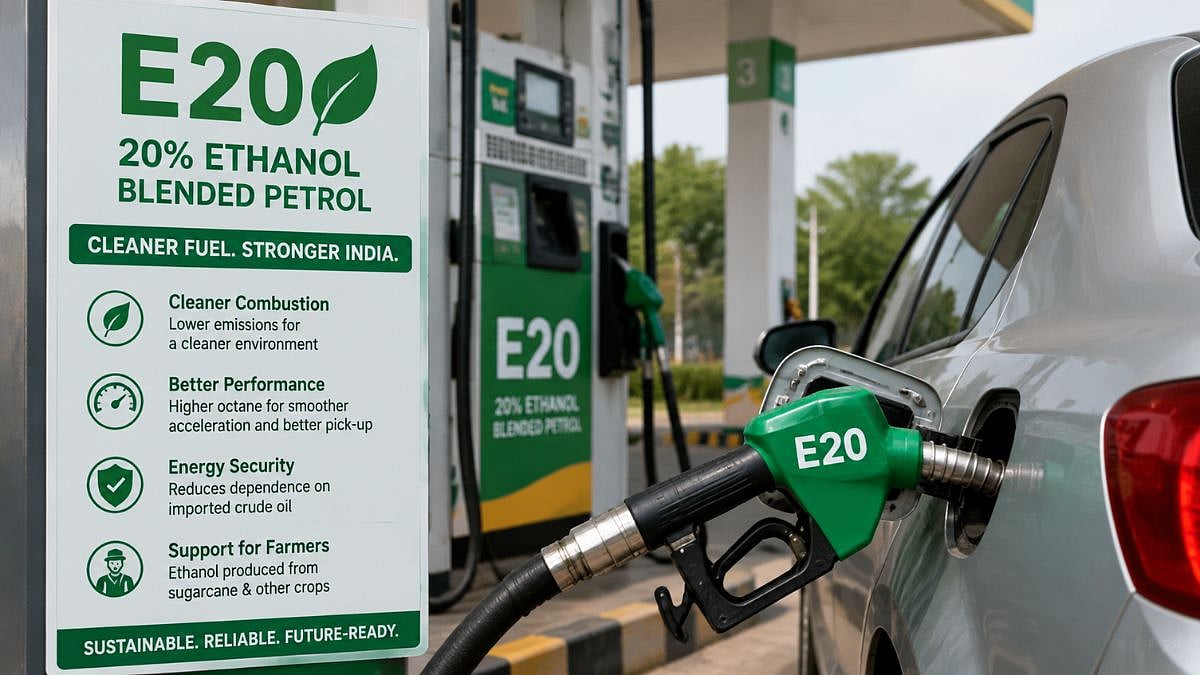
After examining the records and hearing both sides, the Commission observed that merely repairing the vehicle was not an adequate solution. It noted that the vehicle, manufactured in January 2023, was not compatible with E20 petrol, a fuel blended with 20% ethanol, yet this fact was not disclosed to the buyer when it was sold in June 2024.
Commission orders replacement
The Commission found that the vehicle repeatedly broke down despite changes of fuel, repeated cleaning of the petrol tank and fresh refuelling. It held that while the opposite parties blamed poor-quality petrol for the problem, they failed to take back the vehicle or provide the complainant with another vehicle of the same model equipped with an E20-compatible engine.
Accordingly, the Commission directed Maruti Suzuki and the dealer to take back the vehicle and provide a new E20-compatible vehicle of the same model within 45 days.
Also Watch:
If the replacement is not carried out within the stipulated period, the Commission ordered the opposite parties to refund ₹20,50,494, including ₹18,29,000 towards the vehicle price, ₹1,86,850 towards registration charges and ₹34,644 towards the insurance premium.
The Commission also awarded ₹1 lakh as compensation for mental agony and ₹10,000 towards litigation expenses, directing that these amounts be paid within 45 days. If the parties fail to comply, the awarded amounts will carry interest at 7% per annum from the date of the order until payment.

