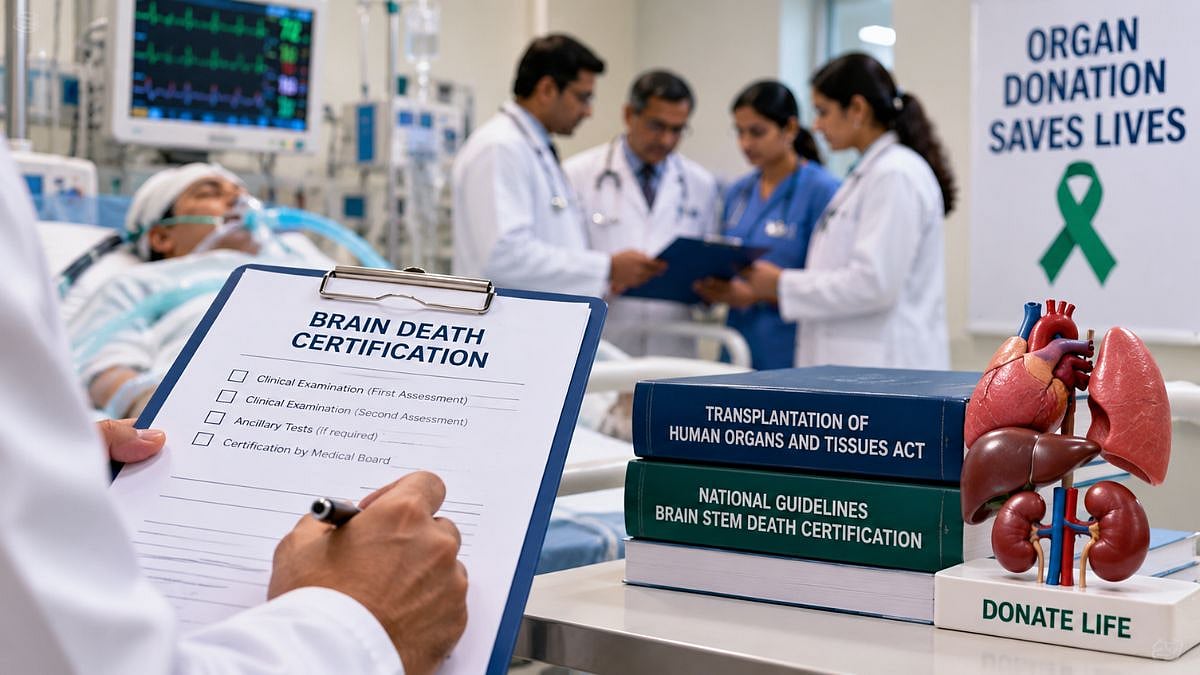
New Delhi, October 5, 2026: The Centre has asked states to ensure that hospitals follow national guidelines for brain stem death certification as part of efforts to strengthen and streamline organ transplantation services across the country.
The guidelines establish a uniform, evidence-based and legally standardised framework for declaring brain stem death. The move assumes significance in India, where deceased organ donation remains limited despite the potential of a single deceased donor to save several lives.
Push For Wider Adoption
“We have urged them to ask hospitals and institutions under their jurisdiction to follow these guidelines. We want more hospitals to support these guidelines, as it will promote deceased organ donation in the country,” Dr Anil Kumar, Director of the National Organ and Tissue Transplant Organisation (NOTTO) under the Health Ministry, said, The New Indian Express reports.
The need for a standard system is particularly important because only around 5-6% of organ donors in India are people declared brain dead, while most organ donors in Western countries fall into this category. Wider and consistent implementation of the guidelines could therefore play an important role in strengthening India’s deceased organ donation programme.
Certification Key To Deceased Donation
“The successful realisation of deceased donation hinges entirely on the prompt, accurate, and transparent identification and certification of Brain Stem Death (BSD), and that is why we have requested the states to direct the hospitals to follow them,” Kumar said.
He added that “a clear and standardised process for certifying Brain Stem Death is crucial to reassure grieving families that clinical evaluations are conducted with the highest legal and ethical safeguards”. A transparent process is particularly significant because families are required to make decisions about organ donation at an exceptionally difficult time.
One Donor Can Save Eight Lives
A deceased donor can save up to eight lives and improve the lives of many others. Living donors alone cannot meet the growing demand for organs, making deceased donation an important part of efforts to bridge the gap.
“Certain organs like heart, lungs and tissues like cornea can only be donated by a deceased donor,” officials said. This makes proper identification and certification of brain stem death critical not only from a medical and legal standpoint but also for making more organs available for transplantation.
What Is Brain Stem Death?
Brain stem death, also called brain death, occurs when the brain stem stops functioning completely. The condition is irreversible and, once a person is declared brain stem dead, there is no hope of revival.
Also Watch:

The national guidelines, launched in August, state that a board of four doctors, as specified under the rules of the Transplantation of Human Organs and Tissues Act, can certify a person as brain stem dead. The certification is based on a set of clinical tests conducted twice, with a minimum interval of six hours between the two sets of tests for adults.
To get details on exclusive and budget-friendly property deals in Mumbai & surrounding regions, do visit: https://budgetproperties.in/

