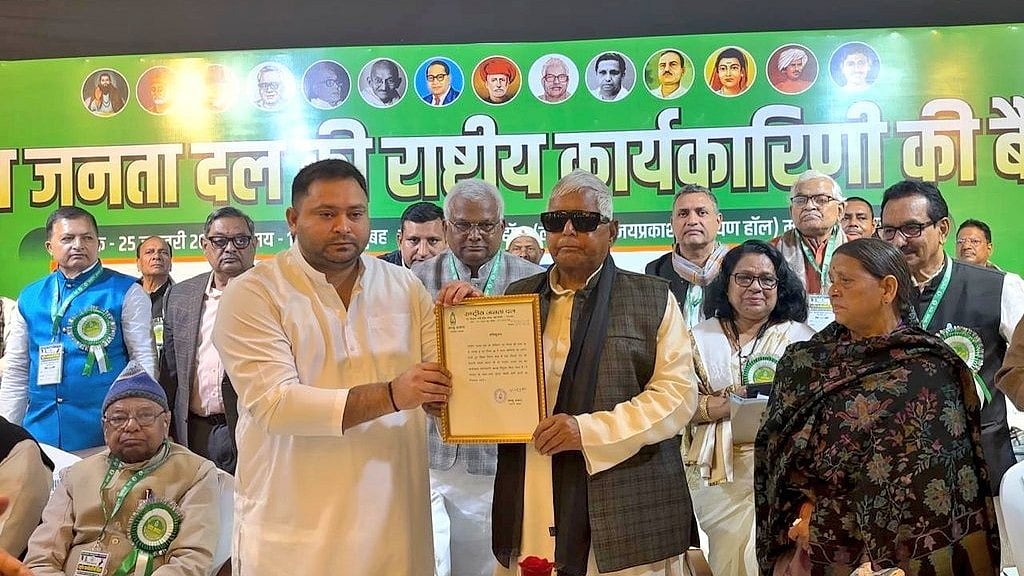
Patna: Rashtriya Janata Dal (RJD) leader Tejashwi Yadav has been appointed the party’s new national working president, marking a significant organisational shift amid concerns over founder Lalu Prasad Yadav’s health and following the party’s poor performance in the recently concluded Bihar Assembly Elections 2025.
The decision was taken during an important meeting of the RJD national executive held at a hotel in Patna. The meeting was attended by senior leaders including Lalu Prasad Yadav, Rabri Devi, Misa Bharti and other top functionaries. Bihar RJD president Mangni Lal Mandal formally announced Tejashwi’s appointment.
The proposal to appoint Tejashwi as national working president was moved by senior leader Bhola Yadav on the instructions of Lalu Prasad Yadav. It was passed unanimously, with executive members endorsing it by a show of hands. For the first time in the party’s history, an acting chief has been appointed, with Tejashwi being granted all powers of the party president.

A senior RJD leader told the media that there was a broad consensus among leaders present that Tejashwi should now shoulder greater responsibility. Party leaders described him as the future of both Bihar and the RJD. Lalu Prasad Yadav later handed over a certificate formalising the decision.
Founded in 1997 after splitting from the Janata Dal, RJD has been led by Lalu Prasad since its inception. However, given his advancing age and health issues, party sources said there was a growing need for a second line of leadership to handle day-to-day organisational affairs.

