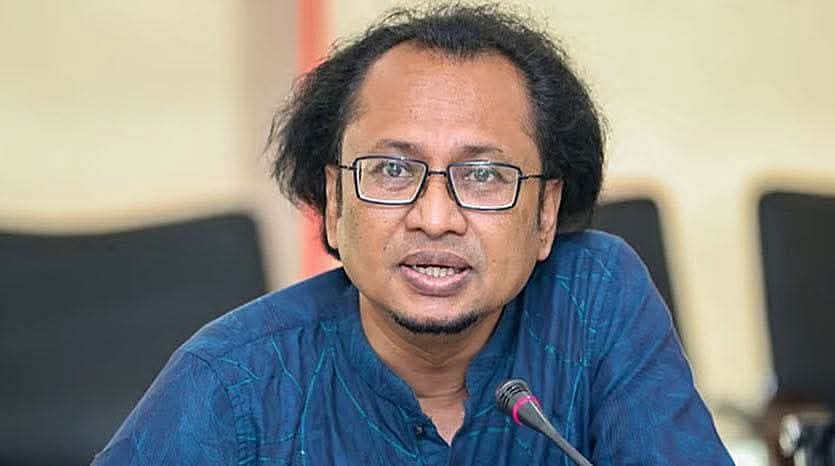
A fresh diplomatic dispute has emerged between India and Bangladesh after Dhaka summoned India's Deputy High Commissioner Pawan Badhe to formally protest the treatment of Bangladesh Prime Minister's advisor Dr. Zahed Ur Rahman at New Delhi's Indira Gandhi International Airport.
The incident, which occurred during Rahman's visit to attend a meeting of the Indian Ocean Rim Association (IORA), has triggered sharp reactions in Bangladesh and added another layer of complexity to already sensitive bilateral relations.
Airport Verification Leads to Diplomatic Fallout
Dr. Zahed Ur Rahman arrived in New Delhi on Sunday evening to participate in the 28th Meeting of the Committee of Senior Officials of IORA. However, shortly after landing, he was reportedly stopped by immigration authorities after his name was flagged during security screening.
According to reports, Rahman underwent verification procedures for nearly two-and-a-half hours. Sources indicated that Indian authorities eventually granted him a one-time exemption to enter the country and cleared him to proceed with his visit.
Despite receiving clearance, Rahman chose not to attend the scheduled meetings and instead returned to Dhaka via Colombo, describing the experience as disrespectful and unexpected.
Bangladesh Registers Formal Protest
Reacting strongly to the episode, Bangladesh's Ministry of Foreign Affairs summoned Deputy High Commissioner Pawan Badhe, who is currently serving as Acting High Commissioner in Dhaka.
Bangladesh conveyed its displeasure over the handling of the matter, arguing that Indian authorities had been informed in advance about Rahman's official status and travel plans.
Foreign Affairs Adviser Khalilur Rahman described the incident as "unexpected and regrettable," underscoring Dhaka's concern over the treatment accorded to a senior government representative.
Questions Over Security Watchlist
Reports suggest Rahman was flagged because his name appeared on a security watchlist, allegedly linked to previous remarks critical of India.
Indian authorities have maintained that the delay was part of a verification process and that Rahman was ultimately permitted to enter the country. However, the advisor's decision to abandon the visit transformed what may have been a routine security review into a diplomatic issue.
The fact that Rahman travelled on a regular passport rather than a diplomatic passport has also been cited in discussions surrounding the incident.
Tensions Surface Amid Calls for Cooperation
The controversy comes at a sensitive moment in India-Bangladesh relations under Bangladesh's BNP-led government, which took office earlier this year.
Only days before the incident, Bangladesh's Foreign Affairs Adviser Humayun Kabir had publicly stressed the importance of maintaining constructive ties with India, describing cooperation between the two neighbours as essential due to geography and shared regional interests.
His remarks reflected a broader effort by both countries to preserve engagement despite occasional differences.
Leadership Transition at Indian Mission
The diplomatic friction also coincides with a transition at the Indian High Commission in Dhaka.
India's newly appointed High Commissioner, Dinesh Trivedi, recently arrived in Bangladesh but has not yet formally presented his credentials. Until then, Deputy High Commissioner Pawan Badhe continues to serve as Acting High Commissioner.
The development has drawn attention because it comes at a time when both countries have expressed interest in expanding cooperation in trade, connectivity, regional security and other strategic sectors.
Bilateral Relations Under Spotlight
While neither side has indicated any broader policy shift, the airport incident has become a focal point in discussions about the future trajectory of India-Bangladesh relations.
Observers note that both governments have repeatedly emphasised the importance of maintaining stable ties, making the diplomatic fallout from Rahman's brief stop in New Delhi particularly significant.
For now, attention remains on whether the issue will be resolved through diplomatic engagement or continue to cast a shadow over ongoing bilateral cooperation.

