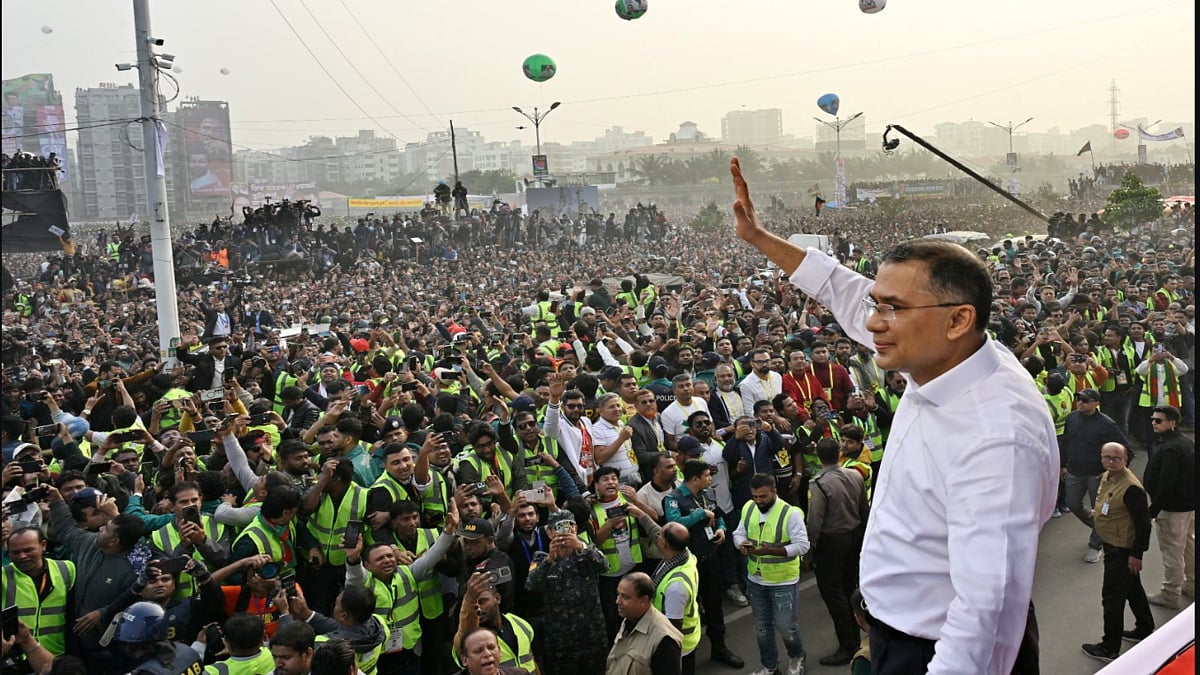
Following a sweeping victory in the February 2026 elections, the Bangladesh Nationalist Party (BNP) government, led by Prime Minister Tarique Rahman, officially hit its first 100 days in office on May 27, 2026. Taking the oath on February 17, 2026, the administration inherited a deeply complicated legacy marked by the aftermath of the 2024 youth uprising, structural economic fractures and severely strained relations with neighbouring India.
The standard 100-day mark functions as a critical barometer to decode political messaging and see exactly where an administration intends to steer a country. Over its initial three and a half months, the Rahman administration moved rapidly to move away from simple daily administration toward structural shifts across the macroeconomy, energy grid and private sector investment climate. At the same time, India is watching closely and aligning to a new historic shift as it recalibrates its relationship with Dhaka.
Rahman government’s core economic strategy
To deal with this complex domestic scenario, the Rahman government is walking a tightrope between two massive goals of easing the immediate cost-of-living crisis for everyday citizens while simultaneously injecting large-scale capital to reactivate idle industries and boost domestic employment. This delicate balancing act is a direct response to a country faced with heavy headline inflation, banking sector stress, sluggish private capital expenditure and an energy supply deficit.
According to reports from the Dhaka Tribune, the centrepiece of these first 100 days is the central bank's formal rollout of a Tk60,000 crore countercyclical stimulus framework. This economic intervention is specifically designed to bail out non-operational manufacturing units, supply liquidity to struggling micro-enterprises and expand export diversification to protect foreign exchange inflows.
Crucially, the administration recognises that monetary interventions alone are insufficient. Consequently, the administration is heavily leaning into infrastructure development to jumpstart growth. During this initial phase, the Executive Committee of the National Economic Council (Ecnec) held three vital meetings, giving the green light to 28 major development projects with a combined price tag of roughly Tk50,625 crore. The project list highlights a clear long-term focus on water security, healthcare, transport expansion and transitioning into a technology-driven economy.
Why India is changing its diplomatic strategy towrads Dhaka
While Dhaka fixes its eyes on internal economic restructuring, New Delhi is simultaneously undergoing a profound paradigm shift, largely because India's ties with Bangladesh got a reality check with the dramatic fall of the Sheikh Hasina regime in August 2024. It completely exposed the limitations of New Delhi's singular focus and New Delhi suddenly found itself heavily overinvested in one political faction and entirely underprepared for a more pluralistic, restless Bangladesh.
Adding urgency to this diplomatic overhaul is the fact that this political transition fuelled an expansion of anti-India sentiment, particularly among younger Bangladeshis who lack the shared historical memory of the 1971 Liberation War and reject any perceived big brother framing from New Delhi. Consequently, the core diplomatic challenge for India has profoundly transformed. India realised it needs to engage at a much deeper level including broader political factions and far-reaching people-to-people contact.
Dinesh Trivedi and how he changes the equation
In direct response to this need for nuanced, multi-layered engagement, India made a careful choice in picking its new ambassador to Dhaka. In a historic departure from decades of precedent, New Delhi officially announced the appointment of veteran politician Dinesh Trivedi as India’s next High Commissioner to Bangladesh, replacing career diplomat Pranay Verma. Trivedi is an exceptionally rare political appointee to a South Asian ambassadorial post.
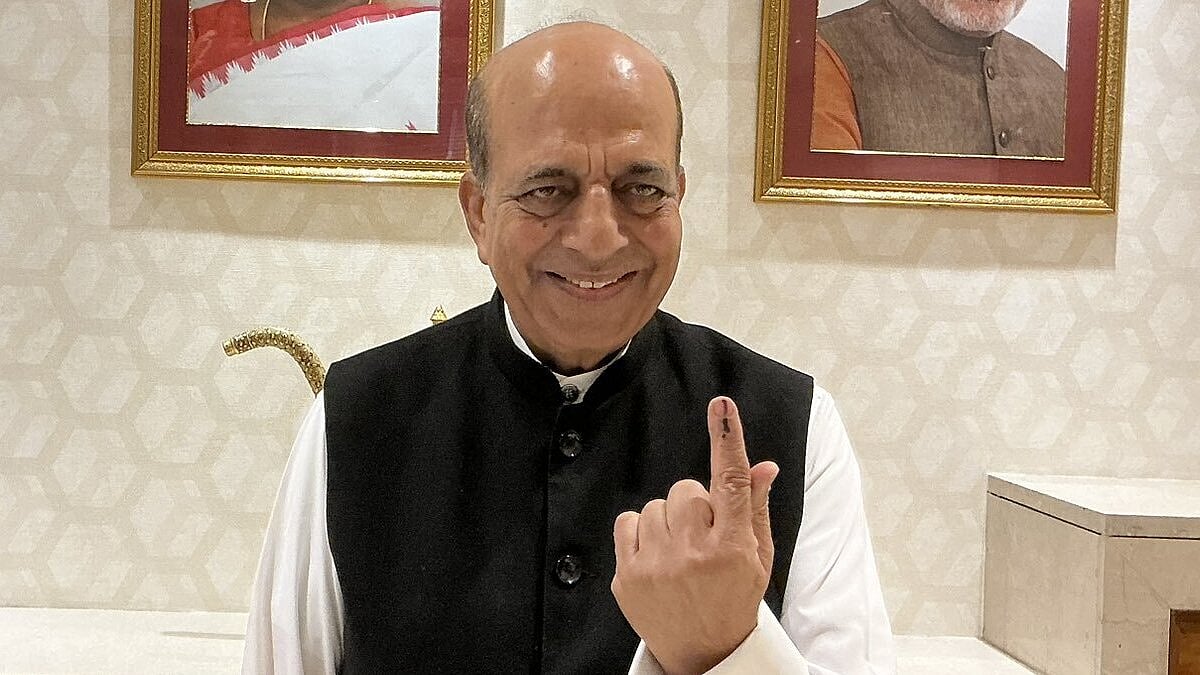
India's High Commissioner to Bangladesh Dinesh Trivedi. | X handle of @DinTri
This unconventional choice reflects a preference for raw political acumen over rigid bureaucracy, given that Trivedi brings more than three decades of high-stakes, frontline political intuition to the table. Having served in the Congress, the Janata Dal and as a close confidant to Mamata Banerjee in the Trinamool Congress before joining the BJP in 2021, Trivedi is a veteran of coalition politics and parliamentary governance. He famously resigned as railway minister in 2012 after prioritising economically sound safety modernisations over partisan politics.
It is precisely this political dexterity that makes his appointment so strategic. Trivedi not as a typical bureaucratic envoy, but as a deliberate political instrument. Raised in Kolkata and fluent in Bangla, he deeply understands the complex social codes, identity politics and deep-seated grievances of the region. This is vital because India's relationship with Bangladesh is deeply intertwined with its own domestic politics.
Ultimately, his presence on the ground will be tested by long-standing friction points, as critical bilateral issues such as the unshared Teesta river water-sharing deals, border security, cross-border smuggling and migration rhetoric are deeply influenced by the political terrain in West Bengal. Trivedi’s unique background positions him perfectly to manage the volatile Delhi-Kolkata-Dhaka political triangle.
Shifting geopolitical and regional dynamics
However, New Delhi's diplomatic recalibration cannot afford to happen in a vacuum, especially as the Rahman government actively diversifies its external partnerships, meaning India can no longer rely on sheer geographical proximity to guarantee a strategic advantage.
Chinese infrastructure financing and military cooperation continue to expand rapidly across the Bay of Bengal. Simultaneously, regional alignments are shifting rapidly. Bilateral ties between Pakistan and Bangladesh have experienced a notable warming trend since late 2024. Trade between Islamabad and Dhaka jumped significantly to $865 million in the 2024–2025 period, up from $628 million the previous year, fuelled by a 28 per cent surge in Pakistani exports.
Despite these competing regional pull factors, both Dhaka and New Delhi are actively working to repair their vital bilateral ties. In April 2026, Bangladesh's Foreign Minister Khalilur Rahman travelled to New Delhi for high-level meetings with External Affairs Minister S Jaishankar, marking the first major ministerial visit since the new government took power.
This high-level dialogue quickly yielded tangible results, as the bilateral talks yielded critical, practical cooperation to address Bangladesh's immediate domestic vulnerabilities. To help Dhaka handle its pressing energy crisis, India formally agreed to export 40,000 tonnes of diesel. Furthermore, New Delhi committed to simplifying and resuming the expedited issuance of medical and business visas for Bangladeshi nationals, which had been severely scaled back during recent political upheavals.
These opening diplomatic engagements indicate that while Bangladesh pursues a highly balanced, 'Bangladesh First' foreign policy, both nations recognise that regional stability requires building a relationship rooted in mutual trust and reciprocal economic interests.

