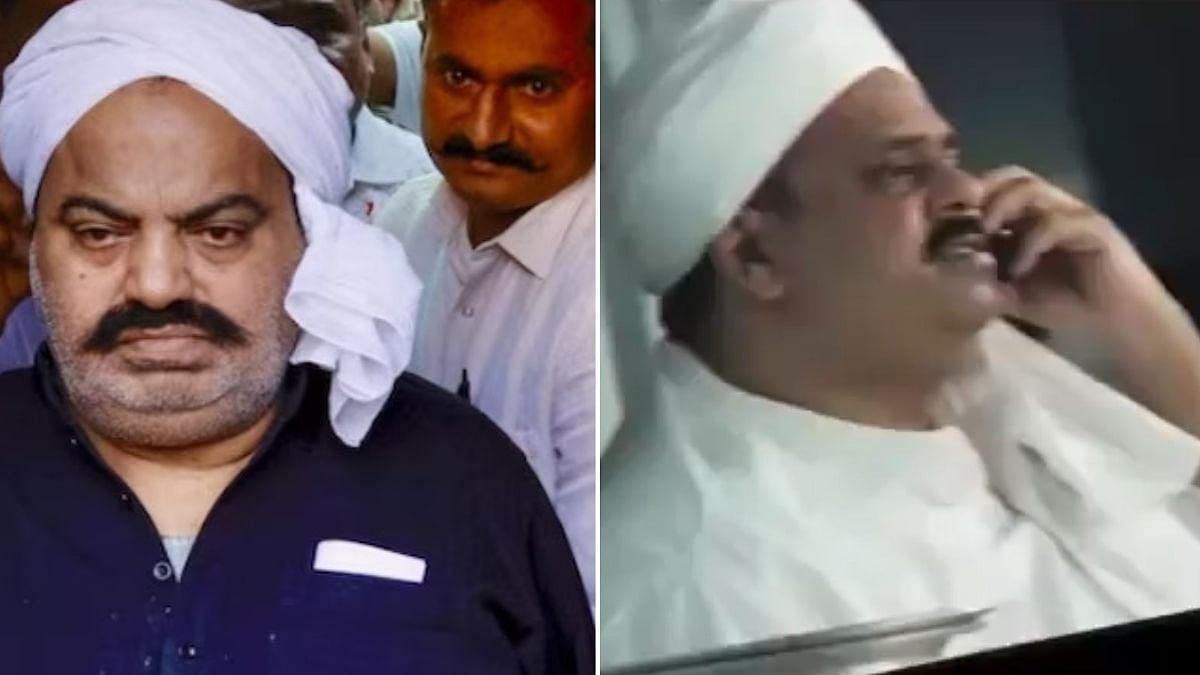
Lucknow: The box office success of Dhurandhar: The Revenge has spilled into Uttar Pradesh’s political arena, putting the Samajwadi Party on the defensive as the film’s character “Atif Ahmad” revives uncomfortable parallels with slain gangster-politician Atiq Ahmed.
The nearly four-hour film, which has clocked a record ₹236 crore worldwide on its opening day, features the character “Atif” in at least three key sequences. From its opening scene set in Chakia in Prayagraj, the character’s attire, mannerisms and rise as a mafia figure mirror Atiq Ahmed closely.
While the makers have issued a disclaimer, the resemblance is hard to miss. From the Chakia backdrop in Prayagraj to the depiction of a white-clad strongman with deep criminal networks, the character closely mirrors Atiq’s life. What has intensified the political heat is the film’s portrayal of “Atif” as having links with Pakistan’s ISI and terror outfit Lashkar-e-Taiba.
Samajwadi Party chief Akhilesh Yadav has publicly dismissed the film as part of a “fabricated narrative”, but within political circles the discomfort runs deeper.
Party leaders privately acknowledge that the timing and tone of the portrayal could have implications as Uttar Pradesh moves toward the 2027 Assembly elections. The concern is that repeated visual references linking a figure resembling Atiq to terror networks may harden perceptions among voters.
For Akhilesh Yadav, the challenge is two-fold. On one hand, the SP has worked to move beyond its past image tied to strongmen politics. On the other, the revival of Atiq’s persona through popular cinema risks reopening that chapter at a time when electoral positioning is critical.
Atiq Ahmed’s political journey remains central to the controversy. He was elected MLA in 1996 and later became an MP from Phulpur, both under the Samajwadi Party banner. His long criminal record and eventual killing in April 2023 had already made him a recurring reference point in BJP’s attacks on previous SP governments.
The film’s narrative, however, adds a new dimension by foregrounding alleged international links. Even though such claims remain contested and not fully established in official records, their cinematic amplification is seen as politically potent.
Analysts say this could sharpen polarisation in a state where law and order narratives often influence voting behaviour.
Within SP ranks, there is unease that such portrayals could consolidate sections of Hindu voters against the party by reinforcing the “mafia-politician” image repeatedly highlighted by the BJP.
At the same time, the party is wary of how the issue plays out among Muslim voters, a key part of its support base. Atiq Ahmed, despite his criminal background, had a following in certain pockets, and his portrayal as an alleged terror-linked figure complicates the narrative further.
SP leaders argue that this creates a political trap where the party risks being targeted regardless of how it responds.
The ruling BJP, led by Chief Minister Yogi Adityanath, has consistently foregrounded its crackdown on organised crime, projecting Uttar Pradesh as moving away from a “mafia era”.
References to figures like Atiq Ahmed have been central to that messaging. The emergence of a mainstream film echoing similar themes is being seen by SP as reinforcing the ruling party’s political line, even if indirectly.
Also Watch:
A key flashpoint remains the film’s claims around fake currency and terror links. While police investigations had cited statements suggesting possible connections with foreign handlers, there has been no conclusive public evidence establishing several elements depicted in the film.
SP leaders maintain that blending unproven allegations with dramatized storytelling risks turning perception into accepted fact.
Party MP Afzal Ansari has accused filmmakers of using real-life figures selectively for commercial gain, arguing that disclaimers cannot mask the political impact of such portrayals.
