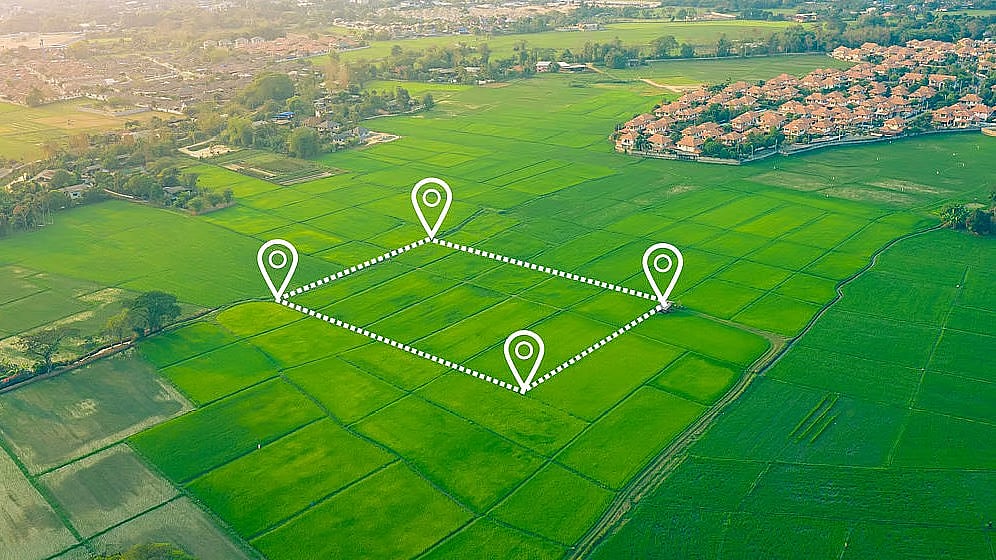
Guwahati: In a series of key decisions aimed at improving the ease of doing business and strengthening social and educational infrastructure, the Assam Cabinet on Tuesday approved the Assam Regulation of Re-classification and Re-classification cum Transfer of Lands (Amendment) Bill, 2026, which will be introduced in the forthcoming Budget Session of the Assam Legislative Assembly.
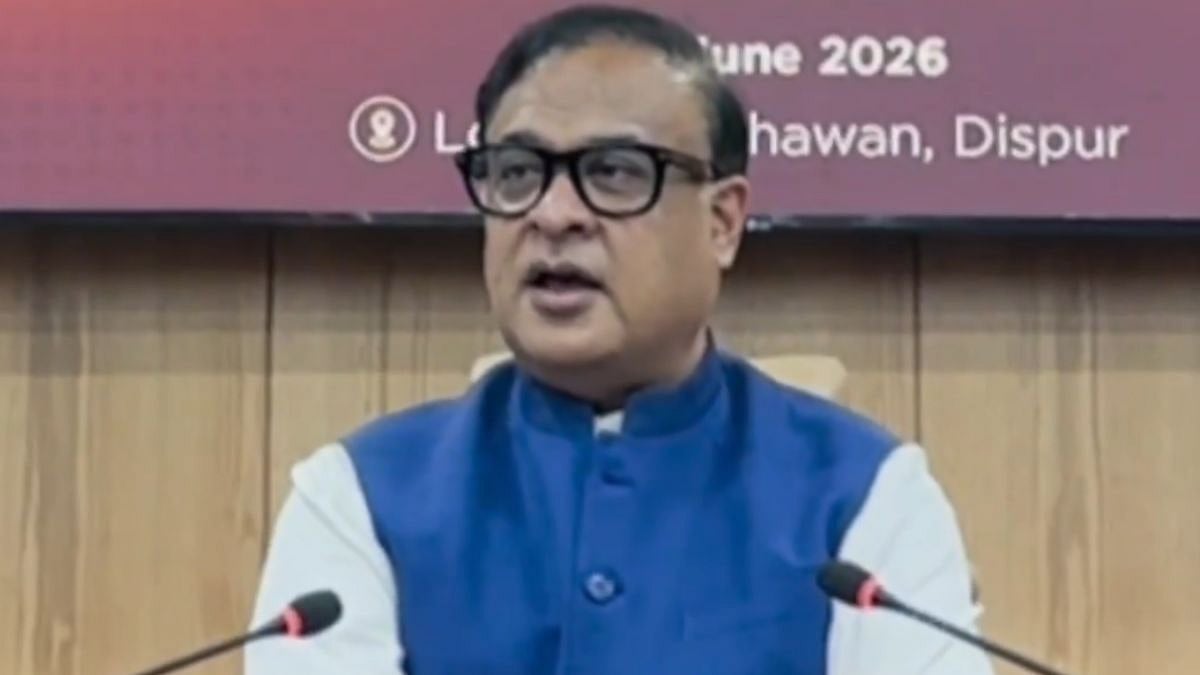
Announcing the Cabinet decisions, Chief Minister Himanta Biswa Sarma said the proposed legislation is intended to streamline the regulatory environment and encourage industrial and commercial investment in the state.
"The sectors to be allowed in the Bill are: MSME, Hydrocarbon, Solar, Agriculture to Non-agriculture," Sarma said.
The Chief Minister further announced that the Cabinet has approved automatic conversion of agricultural land for setting up micro and khadi enterprises and solar plants without requiring approval from the district commissioners.

In another significant decision, the Cabinet approved the extension of the validity period of licences of all Fair Price Shops (FPSs) in the state up to December 31, 2026, instead of the existing deadline of June 30, 2026. The move is aimed at ensuring uninterrupted functioning of fair price shops and the smooth distribution of foodgrains to beneficiaries under the National Food Security Act (NFSA).
The Cabinet also approved the release of Rs 9.75 crore to the Assam Tea Corporation Ltd. (ATCL) to facilitate the proposed voluntary retirement scheme (VRS) for its executives.
To promote investment in higher education, the Cabinet approved amendments to the Assam Private Universities Act, 2007. The amendment seeks to reduce the minimum land requirement for establishing private universities in rural areas from 60 bighas to 35 bighas and in urban areas from 30 bighas to 21 bighas.
The Cabinet further approved proposals relating to the school education sector while maintaining prescribed academic and safety standards. Under the revised norms, the minimum built-up area required for LP to secondary schools has been fixed at one bigha in urban areas and three bighas in rural areas. Such institutions will be required to mandatorily provide facilities including sanitation, drinking water, boundary walls, toilets, disaster mitigation measures and infrastructure that is accessible to divyang students.
The Cabinet also approved the Assam Tourism Accommodation (Development and Registration) Rules, 2026, for the registration of homestays and similar establishments. The new rules provide for a simplified single-window registration process along with an automatic renewal mechanism after every three years.

