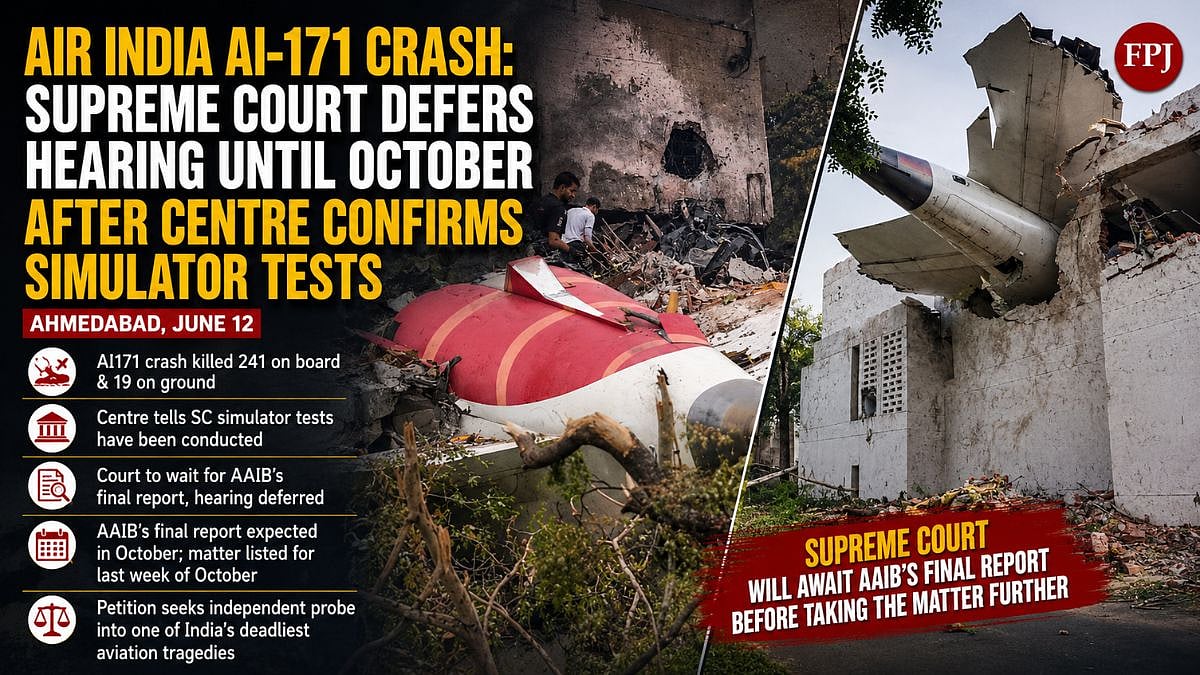
New Delhi, July 29, 2026: The Central government on Tuesday informed the Supreme Court that simulator tests have been conducted as part of the investigation into the Air India Flight AI171 crash near Ahmedabad, one of India's deadliest aviation disasters in recent years.
Appearing for the Centre, Solicitor General Tushar Mehta told a Bench comprising Chief Justice of India Surya Kant and Justices Joymalya Bagchi and V Mohana that the simulator tests had already been carried out.
Recording the submission, the Court said it would now wait for the final investigation report of the Aircraft Accident Investigation Bureau (AAIB) before taking the matter further. The hearing has been deferred to the final week of October, Bar & Bench reported.
Why Simulator Tests Matter
Simulator tests recreate flight conditions to assess a pilot's handling of the aircraft, decision-making, and crew resource management during an emergency. In accident investigations, such tests are conducted by trained test pilots to examine whether the aircraft could have been recovered under similar circumstances. While the results do not determine liability, they can provide valuable technical inputs into understanding what happened during the flight.
The Court noted that one of the prayers in the petition sought directions to conduct simulator tests to identify the cause of the crash and place the findings before the investigating committee. Since the Centre informed the Bench that the tests had already been conducted, the Court recorded the submission in its order.
Court To Await Final AAIB Findings
The matter came up during the hearing of a petition filed by Pushkaraj Sabharwal, father of deceased pilot Captain Sumeet Sabharwal, along with the Federation of Indian Pilots.
The petition seeks the constitution of an independent committee headed by a retired Supreme Court judge to conduct what it describes as a fair, transparent, and technically robust investigation into the crash.
Earlier, the AAIB informed the Court through an affidavit that its draft final report is likely to be ready by October. Accepting the submission, the Bench said it would wait for the report before proceeding further.
"We would like to wait for the AAIB report. Final report of AAIB shall be submitted in October. List the matter in the last week of October," the Court observed.
The London-bound Boeing 787 Dreamliner crashed into the BJ Medical College hostel complex on June 12, less than a minute after taking off from Ahmedabad. The accident killed 241 of the 242 people on board and 19 people on the ground, making it one of the worst aviation tragedies in the country.
Petition Challenges Investigation
The petitioners argued that an incomplete or prejudiced investigation could undermine aviation safety and put future passengers at risk. They also questioned the AAIB's preliminary report, alleging that it focused on pilot actions without conclusive evidence.
Opposing the plea for a judicial probe, the AAIB maintained that the existing legal framework, including the Chicago Convention, ICAO Annex 13, the Bharatiya Vayuyan Adhiniyam, 2024, and the Aircraft (Investigation of Accidents and Incidents) Rules, 2025, gives the Bureau exclusive authority to investigate aircraft accidents. It argued that there is no legal basis for a parallel investigation.
The Bureau also opposed the petitioners' request for access to cockpit voice recorder (CVR) recordings, stating that Rule 17(5) of the Aircraft (Investigation of Accidents and Incidents) Rules, 2025, prohibits the public disclosure of cockpit voice recordings and airborne image recordings.
Also Watch:
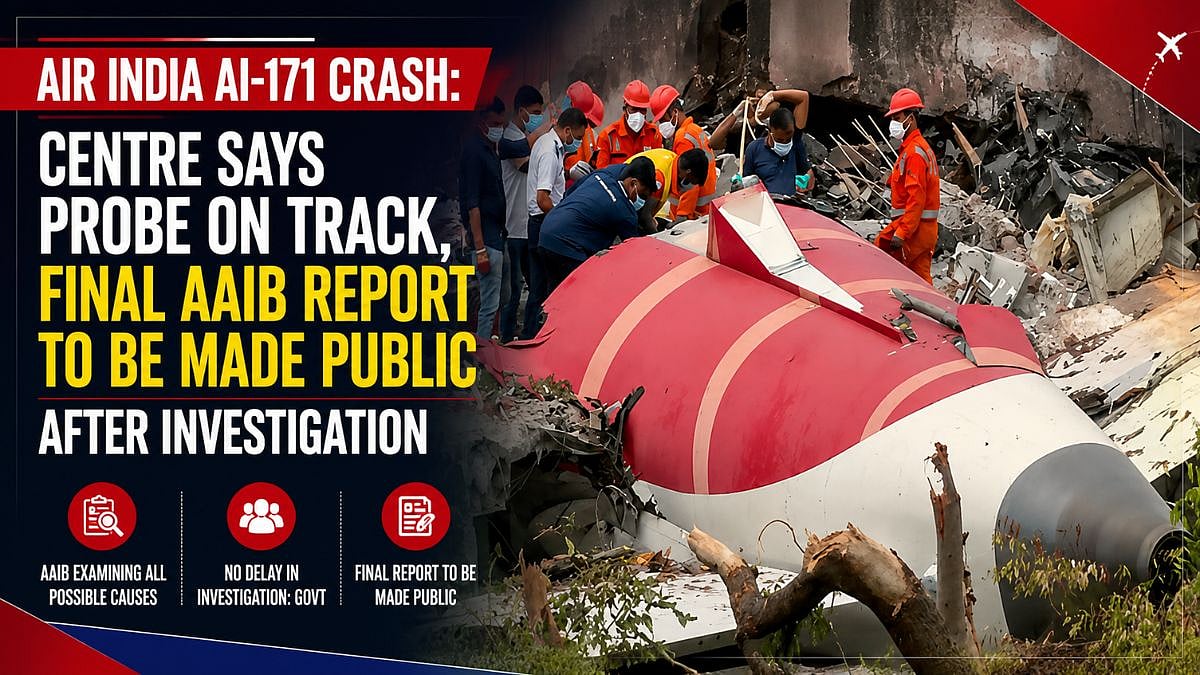
The AAIB further emphasised that the purpose of an aircraft accident investigation is to improve aviation safety and prevent future accidents, and not to fix civil or criminal liability.
With the final report expected in October, the Supreme Court has chosen to wait for the technical findings before deciding the next course of action, signalling that the outcome of the investigation will be crucial to the case.
To get details on exclusive and budget-friendly property deals in Mumbai & surrounding regions, do visit: https://budgetproperties.in/

