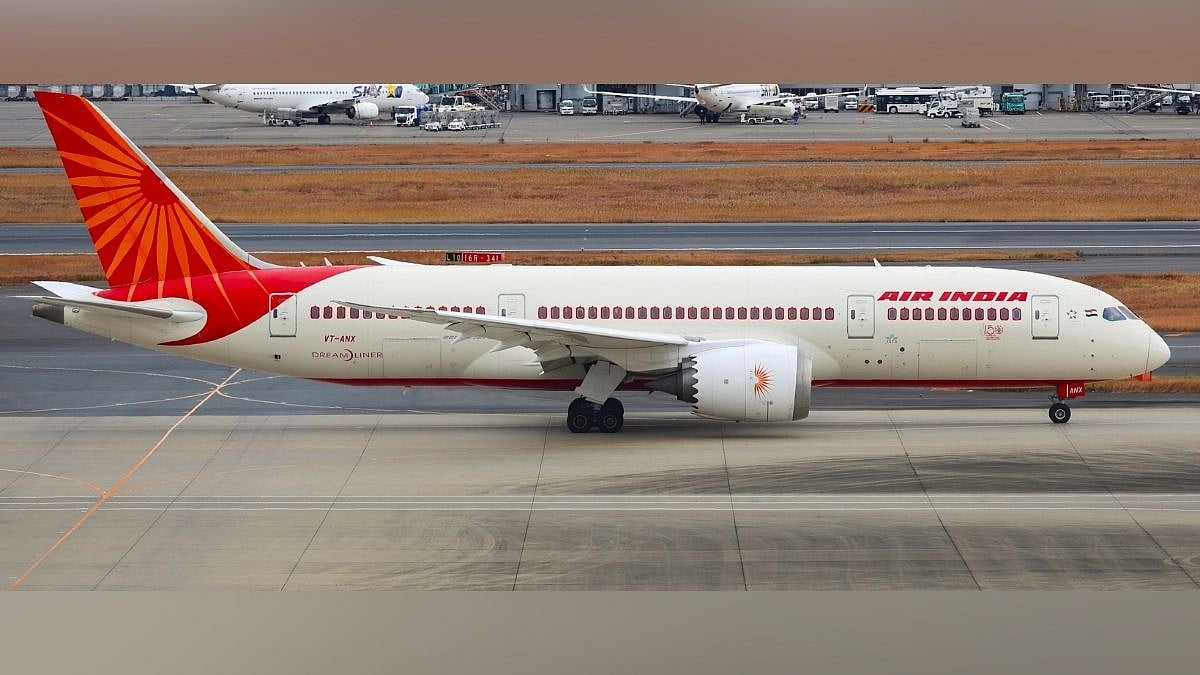
Mumbai: The Federation of Indian Pilots (FIP) has urged the Aircraft Accident Investigation Bureau (AAIB) to conduct comprehensive simulator tests before publishing the final probe report for Air India flight AI-171 crash last year. The development comes after independent simulator tests contradict the timeline given in the preliminary report.
Discrepancy Emerges
A year after the tragic Air India crash in Ahmedabad, the AAIB is yet to publish the final investigation report into the accident. Meanwhile on Sunday, FIP wrote to AAIB highlighting discrepancies in the timeline of RAM Air Turbine (RAT) deployment between privately conducted simulator tests and the preliminary investigation report.
RAT is an emergency deployable wind turbine used to provide hydraulic and electrical power in the event of a total system failure.
RAT Explained
According to FIP, Beasley Allen Law Firm, which is representing multiple families of the crash victims, wrote to the federation highlighting that while the preliminary report indicated that RAT was deployed on VT-ANB just four seconds after fuel cut while the simulator test required around 18 seconds following a fuel interruption to deploy, spin up, and generate usable hydraulic power. Notably, the Federation has earlier highlighted this discrepancy of RAT deployment timing in its previous letters to AAIB.
FIP president Captain CS Randhawa stated that if the RAT power generation timestamp on VT-ANB is accurate and if the simulator tests are representative of real-world performance, the tests indicate that the RAT device would have been deployed much before fuel system interruption. The FIP reiterated that the RAT may have been deployed autonomously as a symptom of a severe electrical or systemic failure that was already underway, rather than being triggered by pilot-induced fuel control switch movements.
FIP President’s Statement
The argument for an early system failure is further supported by external visual evidence. While the AAIB report includes photographs showing the RAT deployed immediately after take-off, the FIP highlights still-frame images captured from an Ahmedabad airport security camera. These images appear to show that the RAT was already deployed and visible while the aircraft was still on the runway, before it rotated for take-off.
Moreover, the simulator tests revealed massive discrepancies in take-off performance metrics compared to the AAIB baseline data. It highlighted that while the preliminary report stated that VT-ANB took 56 seconds to achieve V1 (decision speed) and VR (rotation speed), it took 46 seconds and 48 seconds respectively on the simulator.
Visual Evidence
The FIP has also urged the AAIB to look beyond pilot actions and collectively examine survivor reports, which mention a "loud bang" and the "dimming of cabin lighting." The letter also urged AAIB to direct Air India and Boeing to decode raw maintenance messages which were transmitted from the aircraft around 14 minutes before the take-off roll. The log reveals multiple automated fault messages concerning the right and left bus power control units, flight control modules, and hydraulic systems.

The letter also raised questions against Air India’s flight operations and flight safety departments to have failed to flag these timing discrepancies to investigators despite having their own Boeing 787 simulators and direct access to these ACARS messages.
The pilot body alleged that this silence allowed a "pilot suicide narrative to be continuously propagated in national and international news media," unfairly shifting the blame onto the flight crew before a thorough technical investigation could be completed.
The FIP has requested that the AAIB conduct a new, transparent round of simulator testing observed by an FIP-nominated representative, and that a copy of the Ahmedabad Airport security footage be handed over for independent analysis.

