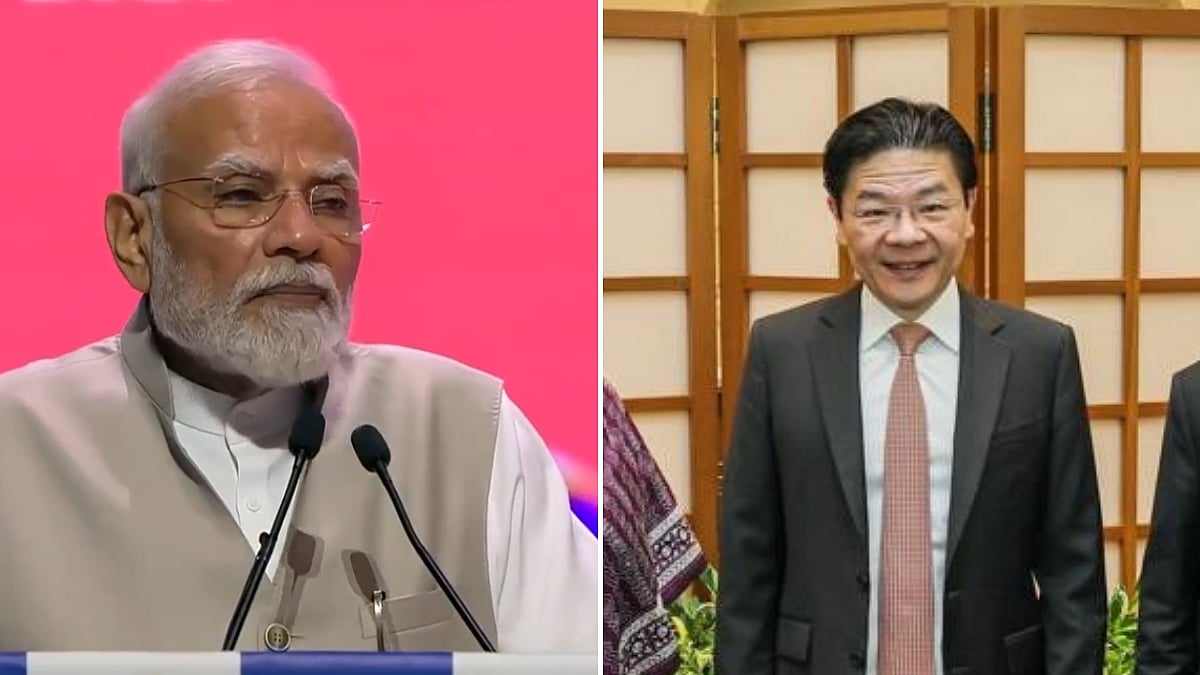
A social media post comparing the annual salaries of world leaders has triggered a wide-ranging online debate about pay, perks and the economics of political office.
Business tycoon Harsh Goenka shared a breakdown of annual salaries drawn in rupee terms. Singapore's Prime Minister tops the list at Rs 26.6 crore, followed by Hong Kong's Chief Executive (Rs 6.83 crore), Switzerland's President (Rs 5.76 crore), the US President (Rs 3.8 crore) and the UK Prime Minister (Rs 2.19 crore). China's Xi Jinping and India's Prime Minister Narendra Modi sit at the lower end, each drawing an annual salary of Rs 20–21 lakh. Goenka captioned the list, "Quite a range for essentially the same job description!"
Perks beyond salaries
The post quickly drew responses questioning whether salary alone tells the full story. One user, @MPFincorp, asked AI chatbot Grok to compare the non-salary perks enjoyed by these leaders. Grok's response noted that Singapore's PM follows a "clean-wage" policy, salary plus office and security cover, with commercial flights for travel.
Hong Kong's Chief Executive gets official residences (Government House and Fanling Lodge), a dedicated car, security, and post-term medical and administrative support. Switzerland's President receives an additional stipend, an official car and driver, and government jet access, but no dedicated residence.

The US President's perks include the White House, Air Force One, Camp David, and lifetime Secret Service protection plus pension. The UK PM has access to 10 Downing Street and Chequers with armoured car security. Xi Jinping resides in the Zhongnanhai compound under elite Central Guard protection with a special aircraft, while Modi is housed at 7 Lok Kalyan Marg with SPG protection and government aircraft and vehicles.
Economic context fuels debate
The comparison sparked further commentary. Some users argued the numbers ignore corruption, with one claiming that when unaccounted wealth is factored in, "Indian officials surpass even Singapore's leaders."
Others pointed to economic context, noting Singapore's nominal per capita GDP (around $107,760) dwarfs India's (around $2,813), arguing salaries should scale with national income levels.
Another line of argument centred on opportunity cost suggesting Singapore's leadership could command higher pay in the private sector, whereas many Indian politicians have no alternative career to fall back on.
A more sceptical voice questioned the entire comparison's usefulness, calling for per capita income to be placed alongside the salary figures for proper context.

