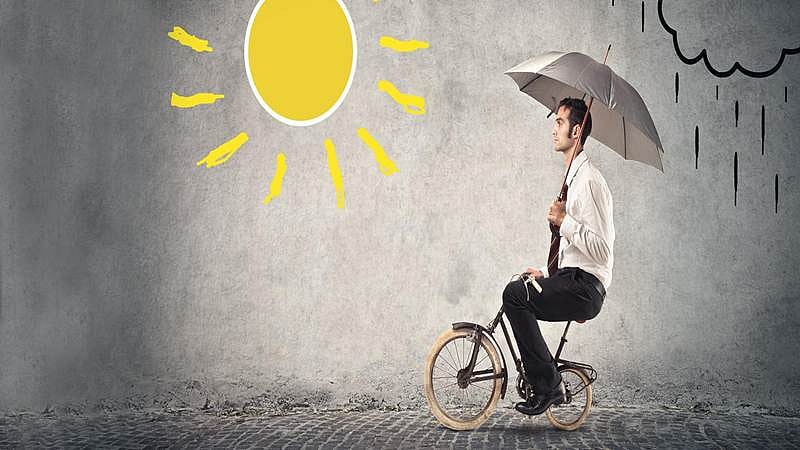
Dr Shrirang Bakhle sheds light on the specific mental abilities that allow us to successfully adapt to all the varieties of changes.
Also Read: How self-fulfilling prophecies come true
“My daughter is going away for studies to a distant land far away from us. I hope she will be able to adapt to the new place and new people – and do well in studies. I don’t know about her, but I am going to terribly miss her – becoming a kind of homesick myself!” These could be the words of a parent whose child has gone from a small remote village to a faraway city or they could be the words of a parent whose child has gone abroad. Will the daughter adapt to the new life? Will the parent adapt to the life without the daughter? What exactly is ‘adaptability’?
Adaptability doesn’t just mean learning a new language or acclimatizing to different weather conditions. It means a whole lot of changes that happen in the mind – in the process of successfully mastering a new situation. It is very important to realize that adapting does not mean meekly and sadly accepting a new situation. It means developing new skills and achieving what one wants – even in the new circumstances.
We, humans, are master adapters. Even if we just consider different geographical or climactic conditions, humans have been able to live successfully in all corners of the world – and even in space! No other animal can adapt so well to such diverse environments.
Bu we humans face varieties of challenging living conditions that are not just atmospheric. Getting married or having childrenare adaptability challenges – and so also losing one’s spouse by divorce or death. Managing a new job is always a challenge. But losing one’s job – especially in the middle age – is a bigger challenge. This is becoming commoner in today’s turbulent business environment. Sudden major health problems in oneself or the dear ones, test our adaptability to the extreme. Such challenges are faced by everyone – from the poorest to the richest.
Also Read: How emotions make us impatient
What are the specific mental abilities that allow us to successfully adapt to all the varieties of changes? And why is it that some people are unable to adapt and become miserable? A lot depends on how we view the situation. There are opposing perspectives on any change: the comfort of a ‘normal’ routine versus the uncertainty of the change; the boredom of the same old life versus the excitement of the novel experiences! Do you look at the new situation as a problem or a challenge? The final outcome of the ‘adaptability contest’ depends on the mindset of the person: the beliefs, the wishes and the emotions.
If a person believes that the change is a terrible calamity, then it will be difficult for the person to adapt successfully. If the person believes in her/ his adaptability, then s/he will put in all the efforts to adapt. It is very important to look at the change as an opportunity to grow and improve. For example, consider a man who has been transferred by his company to another town. Undoubtedly, there will be discomforts, but the family can look at it as an opportunity to develop new skills. Children who relocate to a new town can become smarter and more able at developing friendships. Persons who are exposed to a variety of people and situations can become more mature and can understand the broad spectrum of life. Why humans, even rats in the laboratory have been shown to develop bigger brains if they are exposed to complex environment as compared to simple, mundane environment!
Not only the beliefs, but wishes, too, determine whether you will be able adapt successfully. The most important wish is the wish to learn new skills and knowledge. For example, consider a sudden, major disability(such as paralysis) that alters the lifestyle. Earlier, the life is smoother. But the arrival of an illness leads to major changes and restrictions in the lifestyle. Here, the determination or an intense wish to make the life as normal as possible makes the person learn new skills – skills to overcome the limitations by adapting new strategies. Then there are people who simply accept the defeat and the restrictions.
The emotion status plays a major role in the adaptation process. The person with a strong happiness can not only adapt better but can actually enjoy the process of transformation. The person who has a happy mindset picks up the advantages better than an unhappy person who will selectively count all the problems associated with the transition. Consider a simple common situation. A student has to go to different town for studies. The student with the unhappy mindset will feel sad about going away from old friends. The person with the happy mindset will look forward to making new friends – while keeping in touch with old friends on mobile.
The life has many twists and turns. If we turn on our adaptability, we can come out winners!
