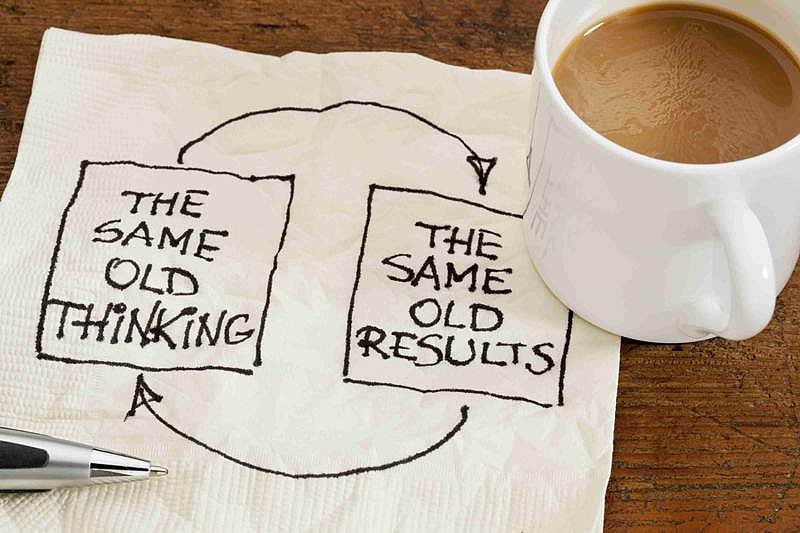
One peculiar aspect of this type of predictions is that, first, we make a hypothesis: how the situation is going to turn out. And so, we start looking for the signs – selectively, says Dr Shrirang Bakhle.
A three years old child develops a simple cold, cough. So he is taken to the doctor for a check-up. On the way, the child starts making predictions in his mind about how horrible the ordeal of the check-up is going to be. Tension starts building up in his mind as they reach the clinic. By the time his turn comes and parents take him inside the cabin, his tension has reached peak. When, finally, he is made to lie down on the examination bed, all hell breaks loose!
With a torch in hand, the doctor asks him to open his mouth. The response from child is an 80 decibel vehement bawling “No”! A lot of coaxing by the doctor and parents has no impact. Finally, the doctor asks the parents to hold the child tight. Then the doc pushes a tongue depressor into the mouth. The child shakes his head with all his might. At last, the impossible looking task of examining the child’s throat is over. But, for the child, his prediction has come true: the check-up by the doctor is indeed a terrible experience!
Another three years old has to undergo exactly the same check-up. Her prophecy is exactly the opposite: the doc is a nice person and the check-up is a pleasant experience. So, she happily climbs on the examination table and when the doc says, “Open your mouth”, she does it happily. The result: No struggling, no crying, no thrusting tongue depressor into mouth, check-up over in seconds and “Good girl!” from everyone. Importantly: her prophecy has also come true!
Both were ‘Self-fulfilling predictions’. Each child made a certain mental prediction which ultimately turned out to be true. Even if each child had made the other prediction, it would still have come true. Is it magic? How does it work out?
We keep making mental predictions all the time: ‘My meeting with the boss is going to turn out bad’, ‘I am going to get jitters on stage while making the presentation’, ‘I am going to enjoy the party’ and so on. The predictions can be negative or positive. So, how do they turn out to be true?
Consider negative predictions. For example, consider a boxer in the ring who has got ready to hit out – hands in boxing position, footwork starts and most importantly, adrenaline start flowing. Slightest move by the opponent and the boxer quickly hits out.
Our verbal duels are quite similar. You make a mental prediction that your meeting with the colleagues is going to be an unpleasant and irritating experience. Now, let us see how this becomes a self-fulfilling prophecy. You anticipate insult and injustice and verbal fights. So even before the meeting, you get into a ‘fighting mode’ – ready to ‘fight it out’. Your adrenaline is flowing and you are looking for the first signs of trouble – ready to pounce upon your opponents! Somebody makes a slightly unpleasant remark and you say to yourself, ‘Here it starts’. So you attack. Naturally, the verbal fight ensues. So, you tell yourself, ‘See, my prediction has come true: it was an unpleasant experience.’
Every day, every week, we can find astrological predictions in the newspapers and magazines that are based on zodiac signs. Imagine: this prediction is going to turn out to be true for one-twelfth of the world population – approximately 616 million people! Yet, many people say it does come true. Magic?
One peculiar aspect of this type of predictions is that, first, we make a hypothesis: how the situation is going to turn out. And so, we start looking for the signs – selectively. For example, if the prediction says, ‘you will have health problems in the next week’, you start looking for signs of health problems. Slightest acidity, and you say the prediction has come true!
This type of ‘mental filtering’ becomes very important in relationships. If you make a hypothesis that ‘this person is nice’, then you start looking for signs of niceness in her or him. It your hypothesis is that the person is nasty, you start looking for signs of nastiness. As the reality is, most of the people have a combination of these two. So both predictions turn out to be true.
This is not only true for people but for situations, too. For example, parents want children to meet different relatives or friends. How the situation turns out, can depend on the prediction that the children make: happy or sad or frightening or irritating or, most commonly, BORING!
As you keep making your predictions (happy and unhappy) through the day, observe these points: By making that prediction, are your efforts changing? Are you selectively filtering your observations? Are you colouring people or situations? Then you will understand the magic of ‘Self-fulfilling prophecies’!
