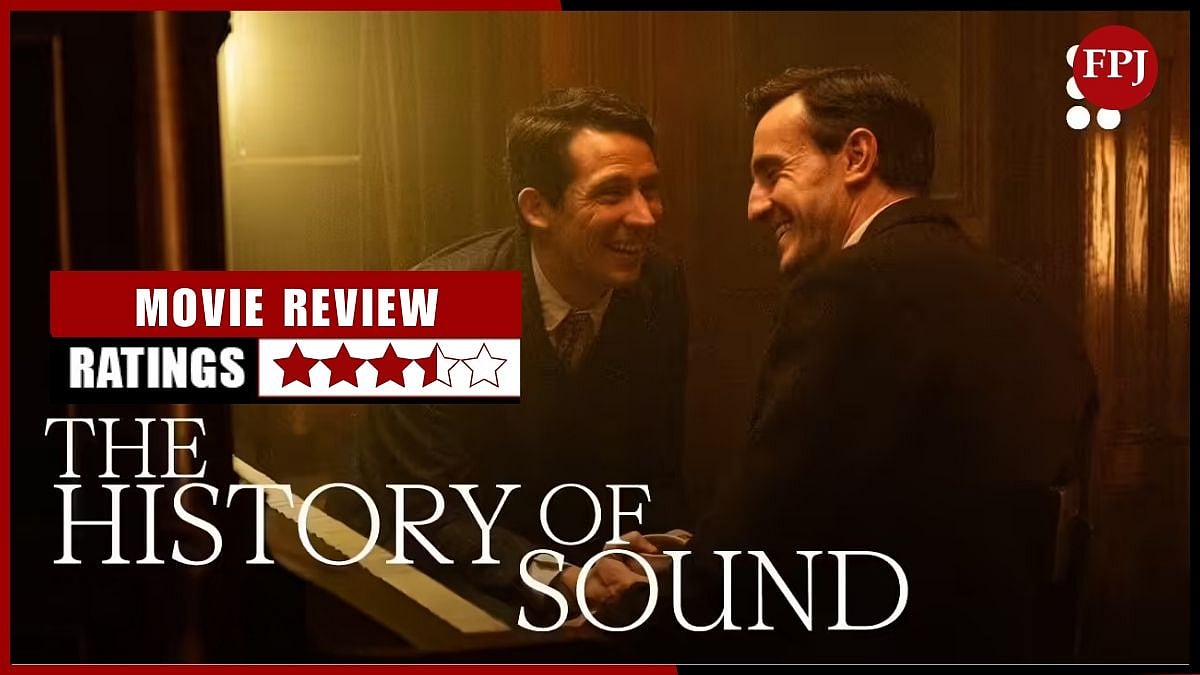
Title: The History of Sound
Director: Oliver Hermanus
Cast: Paul Mescal, Josh O’Connor, Peter Mark Kendall, Chris Cooper, Molly Price
Where: In theatres near you
Rating: 3.5 Stars
What happens to all the sound released in the world, and never captured? This is a love story told subtly, and with a studied quietness that both enchants and frustrates, a question the film itself eventually circles back to as if testing its own memory.
The History of Sound is a period romance that believes in restraint almost to the point of self-denial. Set in early 20th-century America, it follows two men who find each other through music and lose each other to the passage of time, circumstance, and their own reticence. Director Oliver Hermanus stages the film like a carefully preserved artefact, polished, reverent, and faintly distant.
The narrative unfolds with a deliberate calm, tracing meetings, separations, and reunions across years and landscapes. There is beauty in this composure, but also a nagging sense that conflict arrives too gently, like a knock that never becomes a bang. The emotional stakes feel cushioned, even when history, war, and social constraints should weigh more heavily. The film wants to be about longing and memory, yet it often feels more like a catalogue of moments than a surge of feeling.

Actors’ Performance
Paul Mescal and Josh O’Connor bring sincerity and intelligence to their roles, grounding the film whenever it risks drifting into museum-piece territory. Mescal portrays Lionel as inward and passive, a man whose extraordinary musical gift contrasts with his emotional reserve. O’Connor’s David is more animated, witty, and restless, and the film brightens whenever he is on screen. Together, they share an unforced chemistry that feels lived-in rather than theatrical.
Yet the imbalance between their characters becomes an issue. Lionel’s interior life remains opaque, making it harder to fully invest in his choices once David recedes. O’Connor, by contrast, leaves a stronger imprint, and his absence later in the film is keenly felt. The performances are refined and nuanced, but they are working against a script that prefers suggestion over revelation.

Music and Aesthetics
Where the film truly finds its voice is in its music. The folk songs, collected, sung, and shared, carry an emotional rawness that the drama itself often withholds. These sequences feel alive, communal, and haunted, reminding us why such songs endure. The sound design and musical arrangements do much of the emotional heavy lifting, offering grief and yearning in melody where dialogue holds back.
Visually, the film is immaculate. Muted palettes, painterly compositions, and a tactile sense of place create a world of quiet beauty. At times, though, this aesthetic perfection becomes a limitation. Everything looks too composed, too clean, as if hardship and desire have been carefully tidied away.
FPJ Verdict
This is a film of undeniable craft, elevated by strong performances and haunting music, yet held at arm’s length by its own politeness. It listens intently to the past but rarely raises its voice in the present. For all its loveliness, one wishes it trusted messiness a little more. Like the sounds it mourns, its deepest emotions sometimes feel just out of reach, fading before they can fully resonate.

