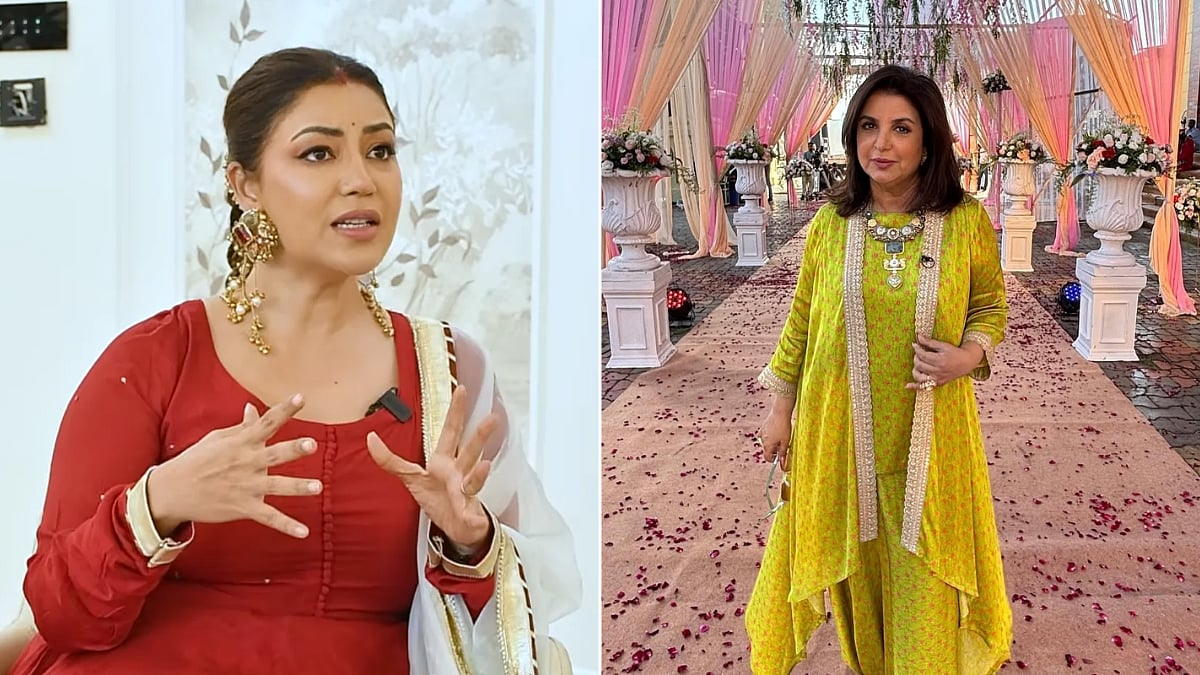
Motherhood is a deeply personal journey and for some women, the road to becoming a mother comes with challenges, uncertainty and moments when hope can seem difficult to hold on to. Actor Debina Bonnerjee, who went through her own struggles with infertility before welcoming two daughters, recently opened up about how filmmaker-choreographer Farah Khan became a source of inspiration during one of the most difficult phases of her life.
Speaking to Free Press Journal exclusively, Debina talked about the importance of conversations around motherhood after 40. She also recalled how Farah’s openness about her IVF journey and becoming a mother to triplets at 43 gave her hope when she was struggling to conceive. She also highlighted why it is important for women navigating infertility to have positive examples to look up to, without romanticising the challenges associated with pregnancies later in life.
Debina opens up about how Farah Khan’s decision to speak openly about her IVF journey and embrace motherhood at 43 gave her hope during her own struggle with infertility. She said, “One conversation that is gradually gaining momentum is motherhood after 40. People have said that we should not romanticise pregnancies after 40 because others might think it is the right thing to do and make their own decisions accordingly. But I would say that when I was dealing with infertility, I couldn’t understand whether there would ever be a positive outcome for me. At that time, the only example we had was Farah Ma’am. She spoke about her journey so openly. When you have a successful example in front of you, it gives you hope. You start thinking, ‘If that has happened, it can happen to me too. I have chances as well.’ Otherwise, you begin to feel that your chances are over.”

Debina further spoke about women who delay pregnancy while pursuing their careers and the need for greater understanding of the physical and emotional changes women experience as they move through different stages of life. “Women who are focused on their careers often keep pushing their pregnancies a little later, sometimes until they feel there is no time left. But when you realise that it is not just one or two women, but several women who have experienced pregnancies after 40, you begin to feel that it could be possible for you too. And then, by the time you come out of pregnancy and those pregnancy hormones and enter the postpartum phase, perimenopause begins. This makes things even more difficult. Women have to go through so much. I think, as a society, we need to understand that a woman’s body is constantly changing. Instead of judging, we should try to understand," she added.
The actress also stressed the importance of women understanding their own bodies, identifying the root of health concerns and having more informed conversations about what they are experiencing. “I also think women need to understand their own bodies better. Instead of simply thinking, ‘Why is this happening to me?’, ask yourself what phase you are going through and what might be happening inside your body. What kind of toxins are building up? Why is something like this happening? Instead of assuming that everything is fine just because you are eating clean, understand yourself, get to the root of the problem and address it. It is good that these conversations are finally beginning," Debina concluded.

