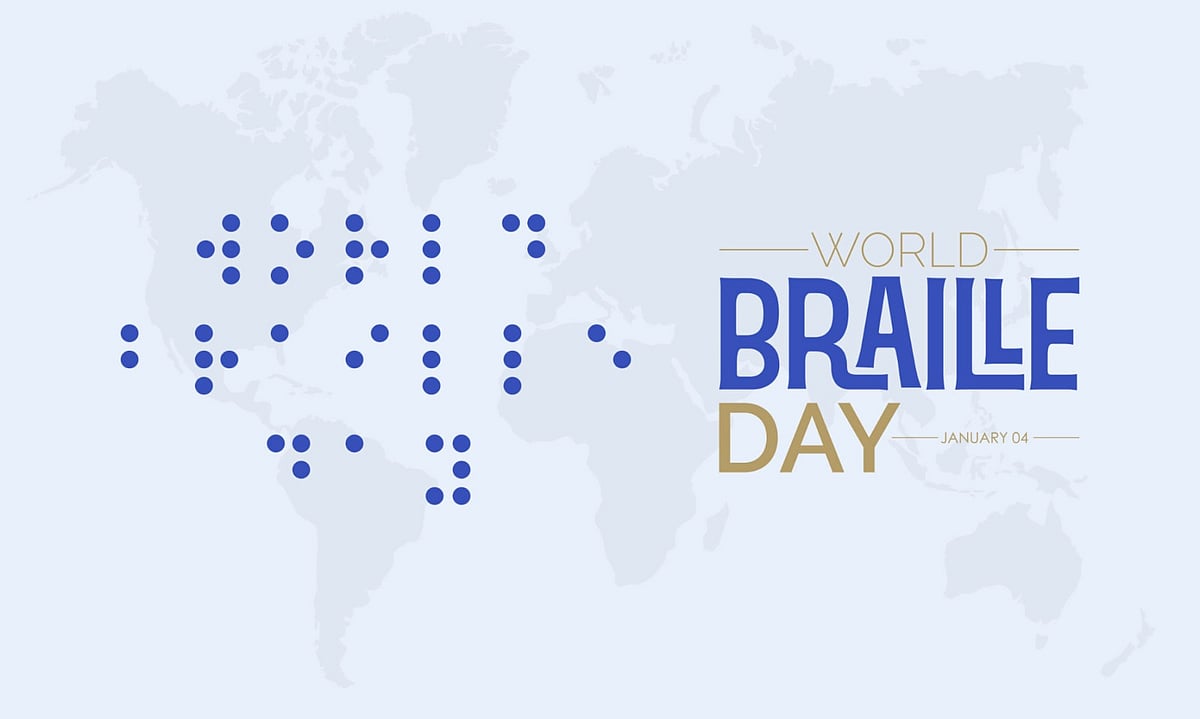
Every January 4th, the global community unites to celebrate World Braille Day, a poignant tribute to the indomitable spirit of Louis Braille. This day recognizes the profound impact of his invention, Braille, a revolutionary tactile writing system that has empowered millions of visually impaired individuals to read and write independently.
Early Life and Determination:
Louis Braille's journey began in the quaint French town of Coupvray in 1809. Despite losing his sight at the tender age of three due to a workshop accident, his determination led him to become a bright student. At 10, he enrolled in The Royal Institution for Blind Youth in Paris, a pioneering institution for the visually impaired.
Invention of Braille:
Motivated by a desire to overcome the limitations faced by the blind in his time, Louis Braille invented a tactile system of raised dots that could be felt with fingertips. This invention, known as Braille, became a game-changer, transforming the lives of countless individuals by opening doors to education, employment, and self-expression.
Understanding Braille:
Braille is a structured writing system comprising cells with six raised dots arranged in two rows of three. These dots, forming 64 possible combinations, represent letters, numbers, and even entire words. The complexity of Braille ranges from Grade 1, offering letter-for-letter correspondence, to Grade 2, which includes contractions and abbreviations.
How Braille Works:
The core of Braille lies in the Braille cell, a rectangular space containing six raised dots. Each dot within the cell can be raised or not, creating patterns representing specific characters. Braille readers run their fingertips across the dots, feeling the combinations that correspond to the text. Skilled readers can use both hands, achieving speeds comparable to sighted readers with printed text.
World Braille Day serves as a poignant reminder of Louis Braille's enduring legacy. Through the celebration of this day, we recognize the invaluable contributions of Braille in fostering independence, literacy, and communication for visually impaired individuals globally. As we commemorate World Braille Day, let us renew our commitment to inclusive education and accessibility, ensuring a more equitable future for the blind and visually challenged.


