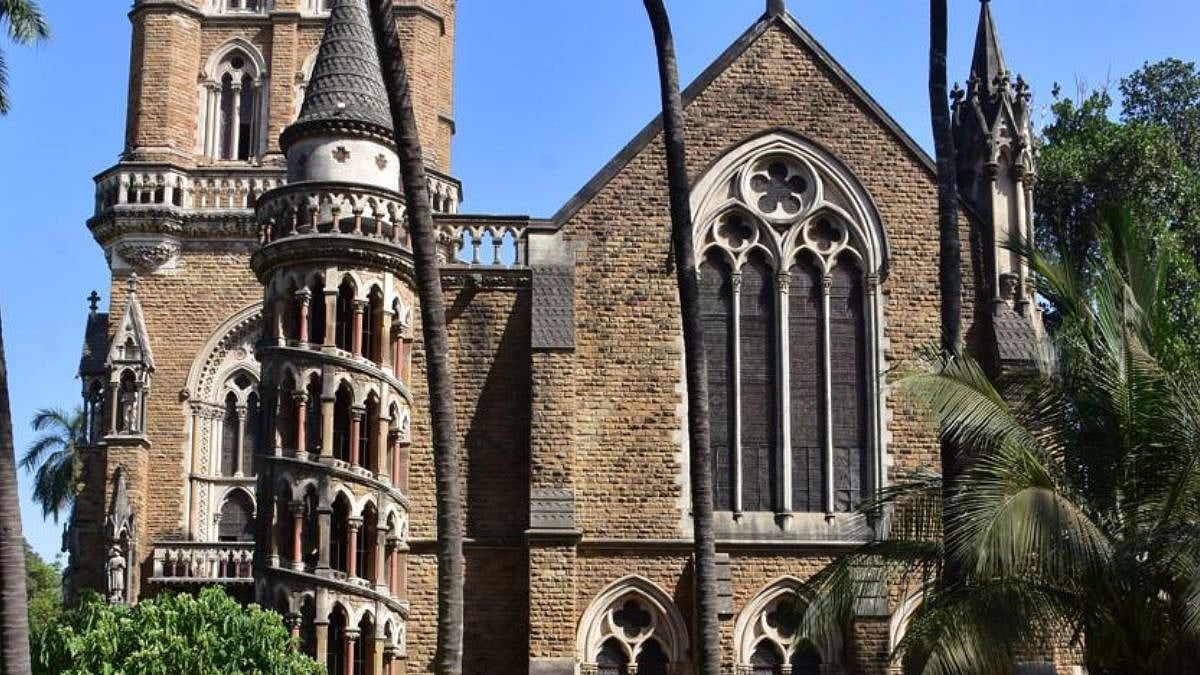
Mumbai: Mumbai University's Department of Physics has made significant strides in green hydrogen production, energy storage and clean energy technologies, with its Advanced Materials and Energy Research Laboratory emerging as a leading centre for cutting-edge research in the field.
The laboratory has gained national and international recognition for its work on green hydrogen generation, advanced supercapacitors and the development of high-performance materials for energy conversion and storage. According to the university, the laboratory published 25 research papers in 2025 and has already published 20 papers so far in 2026, taking its total number of publications in reputed international journals to 155.
As countries across the world seek to reduce greenhouse gas emissions, address climate change and cut dependence on fossil fuels, green hydrogen and advanced energy storage technologies are increasingly being viewed as key pillars of the future energy landscape.

Led by Dr Pradeep B. Sarawade, the Advanced Materials and Energy Research Laboratory is undertaking research in electrocatalytic water splitting for green hydrogen production, high-performance supercapacitors, heterostructure engineering, biomass-based nanomaterials, defect engineering and computational materials science.
Senior Research Fellow Dr Tajala Magare is carrying out research under the prestigious NRF-PAIR IIT Bombay project in the areas of electrocatalytic water splitting, supercapacitors and heterostructure engineering. The research focuses on developing low-cost, highly efficient and durable energy materials that can serve as alternatives to expensive precious metals.
The laboratory has also established research collaborations with leading international institutions, including the University of Southern Denmark, King Abdullah University of Science and Technology (KAUST), the University of Jeddah and Australia's Commonwealth Scientific and Industrial Research Organisation (CSIRO).
The university said the laboratory has also become a hub for international research and training, with students from Fiji, Uganda and Nigeria, along with scholars from universities across India, pursuing research at the facility.
Research from the laboratory has been published in several high-impact international journals, including Chemical Engineering Journal, Coordination Chemistry Reviews, Journal of Materials Chemistry, Journal of Energy Storage, Journal of Power Sources, Journal of Alloys and Compounds, and Sustainable Energy & Fuels.
Dr Sarawade attributed the laboratory's achievements to the research-oriented ecosystem at Mumbai University and the encouragement extended by Vice-Chancellor Prof. Ravindra Kulkarni. He said the laboratory's work in green hydrogen, clean energy and sustainable technologies aligns with India's National Green Hydrogen Mission as well as the United Nations Sustainable Development Goals, and is expected to contribute significantly to the development of next-generation energy technologies.
