Mumbai: State recorded a concerning decline in student learning outcomes in recent years, even as the state continues to improve school infrastructure, digital access, and enrollment indicators, according to findings given by Niti Aayog in the report 'School education system in India: Temporal analysis and policy roadmap'
Grade 3 Language and Maths Scores Drop Between 2017 and 2021
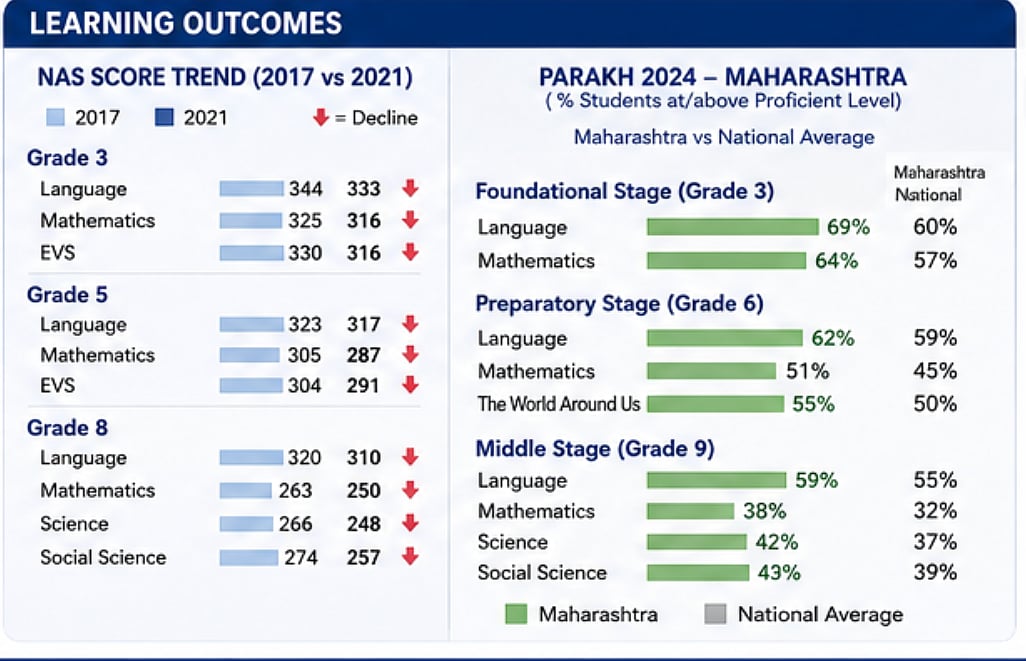
The National Achievement Survey (NAS) data in the report comparing 2017 and 2021 scores shows a moderate decline across key subjects and grade levels in Maharashtra. The findings have raised concerns among education experts about foundational learning gaps, post-pandemic learning losses, and the growing pressure on the school education system.
At the Grade 3 level, language scores declined from 344 in 2017 to 333 in 2021, while mathematics scores dropped from 325 to 316. Environmental Studies (EVS) scores also fell from 330 to 316 during the same period.
Experts Blame Pandemic Disruptions and Digital Divide
A similar trend was observed in Grade 5, where language scores declined from 323 to 317, mathematics from 305 to 287, and EVS from 304 to 291. At the Grade 8 level, the decline appeared sharper in mathematics and science-related subjects. Mathematics scores fell from 263 to 250, science from 266 to 248, social science from 274 to 257, and language from 320 to 310.
Education analysts say the decline reflects the long-term impact of disruptions caused by the COVID-19 pandemic, particularly on foundational literacy and numeracy. School closures, uneven digital access during online learning, and widening socio-economic disparities are believed to have affected learning continuity, especially among vulnerable students.
Primary Dropout Rate Nearly Zero, Retention Strong
The decline comes despite Maharashtra recording notable improvements in infrastructure and retention indicators over the past decade. According to the latest school education data for 2024-25, internet access in schools increased dramatically from 14% in 2014-15 to 72.1%, while functional smart classrooms rose from 17.3% in 2021-22 to 63.6% in 2024-25. Schools with computers also increased from 57.1% to 82.5%.
The state also maintained strong student retention rates. Maharashtra’s primary dropout rate declined to nearly zero in 2024-25, while transition rates between primary, upper primary, and secondary stages remained above 98%.
Maharashtra Still Above National Average in PARAKH 2024
However, experts warn that improved infrastructure alone may not immediately translate into stronger classroom learning outcomes. Maharashtra continues to face teacher shortages, with vacancies reported for 8,254 elementary teachers, 660 secondary teachers, and 65 senior secondary teachers in government schools. The pupil-teacher ratio at the higher secondary level stands at 37, above the national average.

Despite the NAS decline, Maharashtra performed above the national average in the PARAKH 2024 assessment across language, mathematics, science, and social science categories. This suggests that while learning levels have weakened compared to earlier years, the state still performs relatively better than many others nationally.
The education review also recommends major reforms, including strengthening foundational learning beyond Grade 3, improving teacher deployment, expanding competency-based assessments, integrating digital learning with classroom teaching, and increasing academic mentoring for schools.
Experts say Maharashtra’s challenge now is not merely expanding access to education, but ensuring that students meaningfully learn and retain core competencies in classrooms across the state.
To get details on exclusive and budget-friendly property deals in Mumbai & surrounding regions, do visit: https://budgetproperties.in/

