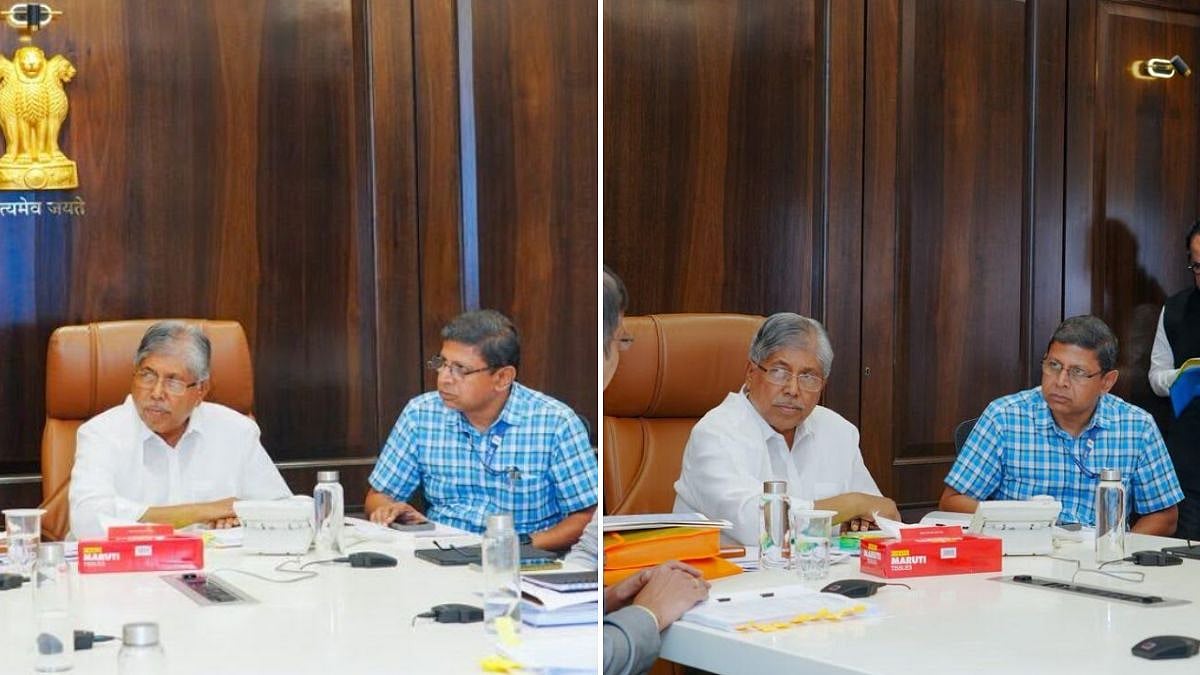
Mumbai: In a major push to transform Maharashtra into a global hub for research, innovation, and futuristic technologies, the State Department of Higher and Technical Education has announced the launch of the ‘CM-SRISTHI’ scheme (Scheme for Research, Innovations and Technological Hubs in Higher Education Institutions). The announcement was made by Higher and Technical Education Minister Chandrakant Patil following the issuance of the Government Resolution passed in the recent cabinet meeting.
Government Resolution Issued
Structured for a five-year implementation period from 2026-27 to 2030-31, the initiative aligns directly with the state's ‘Viksit Maharashtra @2047’ vision. The central focus of CM-SRISTHI is to bridge the gap between academia, research, and market needs by developing cutting-edge technology and creating a highly skilled workforce across public universities, government engineering colleges, and polytechnics.
Under the scheme, research will prioritize advanced and frontier sectors such as Artificial Intelligence, Generative AI, Agentic AI, Quantum Computing, Semiconductor and VLSI technology, Robotics, Digital Twins, Drones, 5G/6G, EV Battery Technology, Green Hydrogen, and Space Technology. To support this vision, public universities will set up independent 'Schools of Technology' dedicated to postgraduate, Ph.D., and post-doctoral research, with a strong emphasis on applied and translational research integrated with incubation centers and research parks.
Frontier Technologies Prioritised
The initiative also introduces structural reforms to globalize and modernize higher education in the state. Maharashtra will encourage top foreign universities to set up campuses or offer joint and dual degree programs with local institutions, while fostering student-faculty exchange. To move beyond traditional campus boundaries, a 'Meta University' model will be implemented, enabling multiple universities and industries to share resources and work within a unified academic ecosystem. Additionally, select government engineering institutes will undergo modern transformation to align their curricula with Industry 5.0 requirements.

Industry participation will play a critical role in driving commercial usage and technology transfer under CM-SRISTHI. For projects with commercial viability, industry partners will be required to contribute at least 25% of the total project cost. Funding will be strictly project-based, requiring participating institutes to submit Detailed Project Reports outlining clear objectives, resource allocation, and long-term sustainability.
State-of-the-art Centres of Excellence will be established across prominent institutions, including the Institute of Chemical Technology (ICT) Mumbai, COEP Technological University Pune, VJTI Mumbai, DBATU Lonere, SGGSIET Nanded, and Government Engineering Colleges in Amravati, Chhatrapati Sambhajinagar, Jalgaon, and Karad. Notably, Amravati is slated to get five specialized centers covering AI, Robotics, Semiconductors, Sustainable Mobility, and Smart Infrastructure to accelerate patents, startup development, and employment opportunities.
To get details on exclusive and budget-friendly property deals in Mumbai & surrounding regions, do visit: https://budgetproperties.in/

