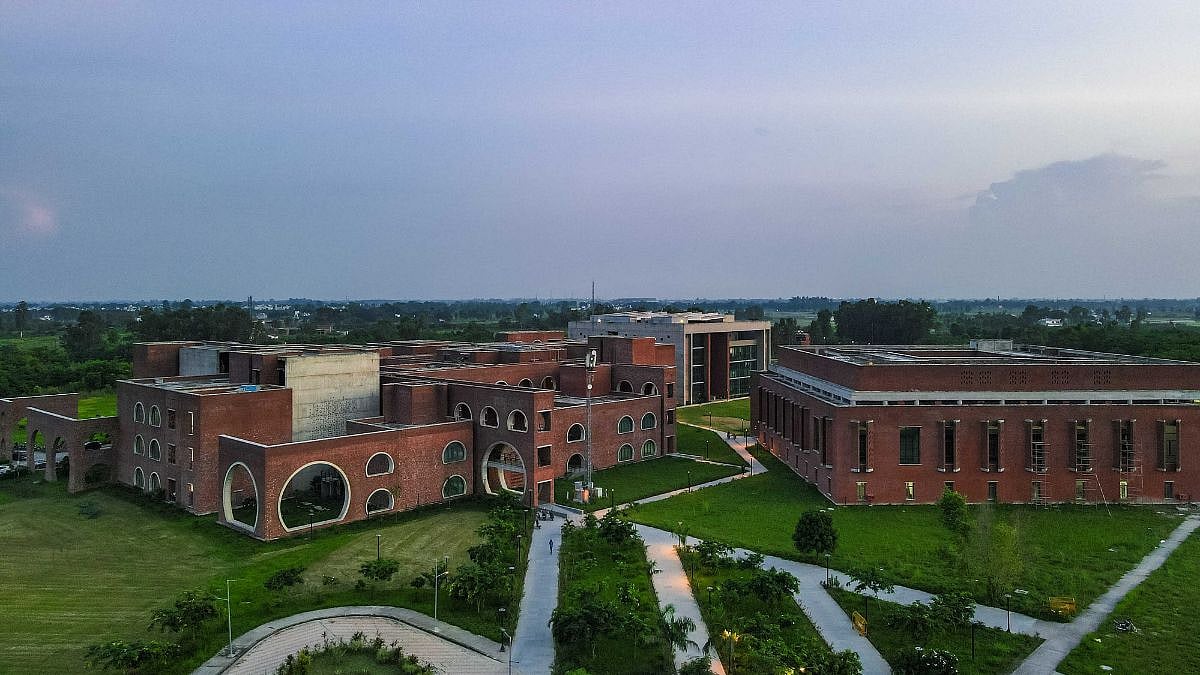
Uttarakhand: Racing against distance and logistical challenges, the Indian Institute of Management (IIM) Kashipur conferred degrees on 546 students at its 13th convocation ceremony held on Saturday at its Uttarakhand campus.
Graduate Distribution
A total of 546 students graduated across five programmes. The programme-wise distribution included 280 students from the MBA programme, 160 from the MBA (Analytics), 34 from the Executive MBA (E-MBA), 58 from the Executive MBA in Analytics (EMBAA), and 14 scholars from the doctoral (Ph.D.) programme.
Established in 2011, IIM Kashipur is among the second-generation IIMs striving to compete with older, more established institutes. In recent years, the institute has expanded its academic portfolio by introducing executive programmes and specialised courses to stay relevant in a competitive management education landscape.
Director on Analytics Programme
Highlighting one such initiative, Director Neeraj Dwivedi said, “IIM Kashipur was among the first institutes to introduce the MBA in Analytics around 2020. Subsequently, other leading institutes, including IIM Bangalore, began offering similar programmes. Today, it is one of the most sought-after courses.” He added that all 160 seats in the programme were filled in the latest batch, indicating strong demand.
The MBA (Analytics) programme, in particular, attracts students from technical backgrounds, enabling them to integrate data-driven skills with managerial decision-making. Srishti Singh, 26, a gold medallist, said, “We were given the opportunity to undertake live consulting projects for local businesses, including a hand-made goods brand. We had to identify the company ourselves and work on solving real-world challenges. Such experiences provide valuable hands-on exposure.”
Despite its relatively remote location—approximately a four-hour drive from Delhi and with limited direct flight connectivity via Pantnagar—the institute continues to maintain strong enrolment. Over 90 per cent of seats across programmes, including doctoral and executive courses, are consistently filled.
However, the institute faces challenges in terms of industry access and alumni reach, given its relatively recent establishment. Addressing this, Dwivedi said, “To improve accessibility for recruiters, we facilitate online interviews and, whenever required, arrange for students to travel to major cities such as Delhi, Mumbai, and Bengaluru for in-person interactions.”
Students also highlighted the institute’s role in enabling upward mobility. Rajat Singh, another gold medallist, said, “The institute acts as a stepping stone for students from smaller towns, providing exposure and access to the corporate world. While older B-schools remain strong competitors, we are focused on delivering quality education and opportunities across diverse backgrounds.”

