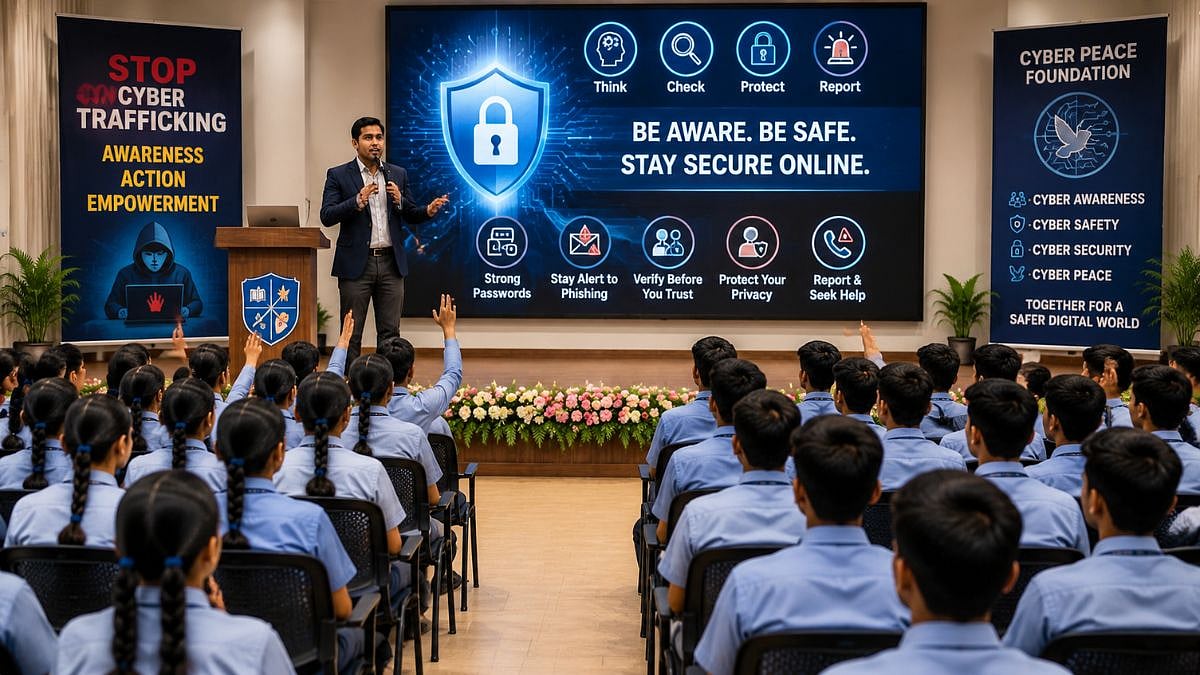
Ranchi, Jun 20: An interactive session was held on cyber trafficking on Saturday at a school here to make students aware of the knowledge and skills to navigate the digital world safely and responsibly.
Cyber trafficking refers to the use of the internet and telecommunications to facilitate human trafficking and forced labour.
The session titled ‘Stop Cyber Trafficking –Awareness, Action, Empowerment’ was organised by the Cyber Peace Foundation, a global non-profit organisation promoting cybersecurity.
Maj Vineet, founder and global president of Cyber Peace, detailed the evolving cyber threat landscape and increasing risks associated with internet-connected technologies during the session, according to a release issued by the organiser.
He explained how everyday devices such as smartphones, CCTV cameras, Wi-Fi routers, smart locks, and Internet of Things (IoT) devices are connected to the internet and can become targets of cyberattacks if not adequately secured.
The session covered a wide range of topics, including password security, phishing attacks, malicious links, fake job offers, online scams, digital arrest frauds, cyberbullying, ransomware, identity theft, AI-generated deepfakes, and privacy risks on social media platforms.
Students were encouraged to adopt strong cyber hygiene practices, including enabling two-factor authentication, using unique passwords, reviewing privacy settings, and exercising caution while interacting online, the release said.
A significant focus of the session was on technology-associated human trafficking and online exploitation.
Through case studies and real-life examples, students learned how cybercriminals use social media, messaging platforms, gaming communities, fake employment opportunities, modelling offers, and online friendships to manipulate and exploit individuals, it stated.
The session emphasised the importance of verifying opportunities, avoiding interactions with unknown individuals, and seeking guidance from trusted adults whenever something appears suspicious.
(Except for the headline, this article has not been edited by FPJ's editorial team and auto-generated from an agency feed.)
