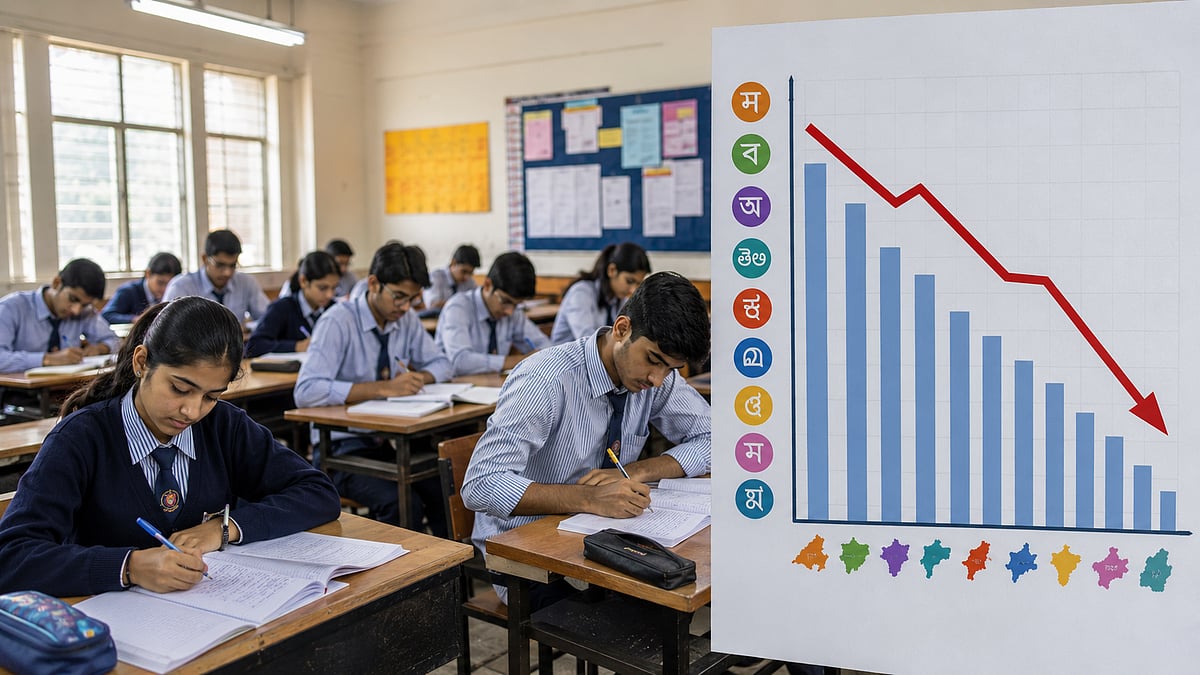
CBSE Exam 2026: Even as lakhs of students appeared for the CBSE Class 12 examinations this year, the recent statistics from the CBSE subject-wise full marks statistics has pointed out an noticeable contrast between regional languages subjects and mainstream academic electives.
According to figures published by the Central Board of Secondary Education (CBSE) regarding the 2026 Senior School Certificate Examination, it becomes evident that there were a few regional language subjects in which the number of perfect scorers was very small, compared to those subjects which had a commercial, technological, artistic, or practical element.
The new trend in the CBSE syllabus is being reflected through these figures, and the role of regional languages in senior secondary education comes under the spotlight yet again.
Regional languages have very few students with perfect scores
One of the most remarkable subjects from the CBSE figures list was Marathi, where the number of perfect scorers stood at just one. Manipuri and French also recorded just one perfect scorer each.
Telugu had three students scoring 100 marks, while Assamese recorded two. Bengali saw 15 students scoring full marks, Tamil had 52, and Kannada recorded five perfect scorers.
Even Urdu Core, once widely taught in several schools, had only five students securing full marks. Sanskrit Core recorded 119 perfect scorers, while Punjabi emerged among the stronger-performing regional languages with 796 students scoring 100 marks.
Malayalam performed reasonably well too, with 367 candidates obtaining a perfect score in the exam.
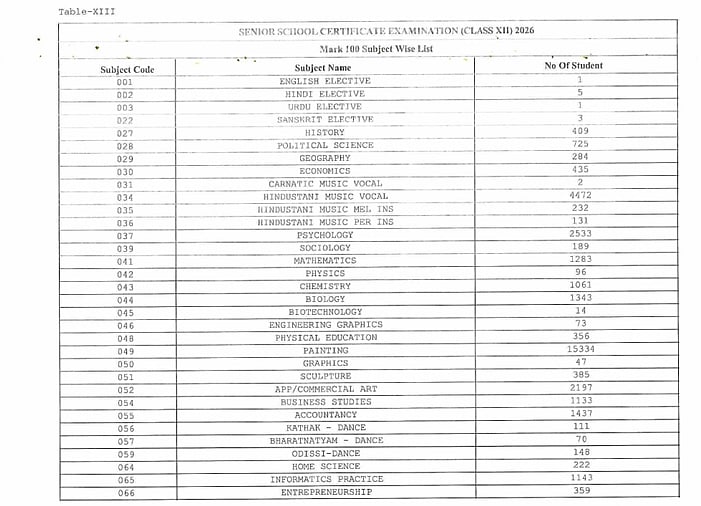
Regional Language Subjects: Students Scoring Full Marks (100/100)
Marathi: 1 Student
Manipuri: 1 Student
Assamese: 2 students
Telugu: 3 Students
Urdu cose: 5 Students
Kannada: 5 students
Bengali: 15 students
Tamil: 52 students
Sanskrit core: 119 students
Malayalam: 367 students
Punjabi: 796 students
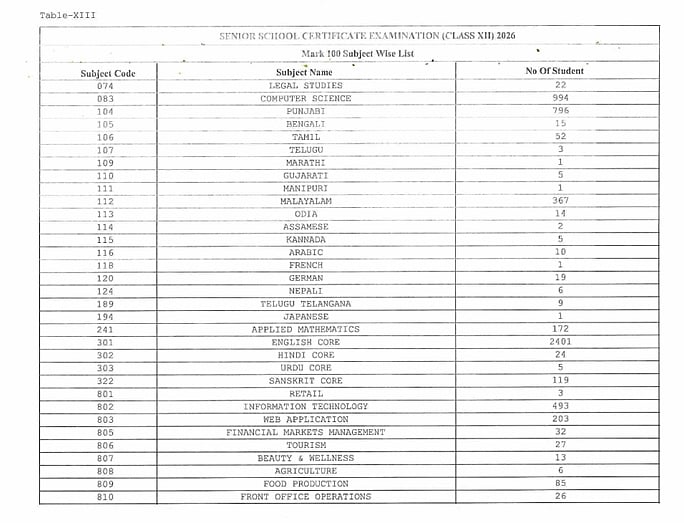
Other Popular/Elective Subjects: Students Scoring Full Marks (100/100)
Painting – 15,334 students
Hindustani Music Vocal – 4,472 students
Artificial Intelligence – 3,326 students
Psychology – 2,533 students
App/Commercial Art: 2,197 students
Yoga: 2,013 students
Electives predominate in full mark subjects
On the contrary, a number of electives as well as vocational courses secured much larger figures for obtaining perfect scores.
Painting was an example of such a subject, with 15,334 candidates earning a perfect score in it. Psychology recorded 2,533 perfect scorers, while Hindustani Music Vocal had 4472 and Artificial intelligence crossed 3326 students with full marks.
App/ Commerical art recorded 2197 students scoring 100 marks.
The contrast reflects how scoring patterns continue to vary widely across subjects in senior secondary education.
Differences becoming clear in CBSE schools
The fall occurs at a time when the CBSE itself is trying to encourage multilingual learning at schools through NEP 2020. In recent times, the board issued an instruction to the affiliated schools to adopt the R3 model for Class 6 students in just seven days. As per the scheme of studies, students were expected to learn three languages in a bid to make education multilingual and ensure the preservation of the Indian languages.

This move came as part of the central government’s strategy to ensure regional language teaching and mother-tongue-based multilingual education at schools. However, the latest subject-wise figures of students scoring perfect 100s in Class 12 paint a different picture for regional language subjects.
The National Education Policy constantly emphasises the significance of bilingual studies and the preservation of native tongues.

