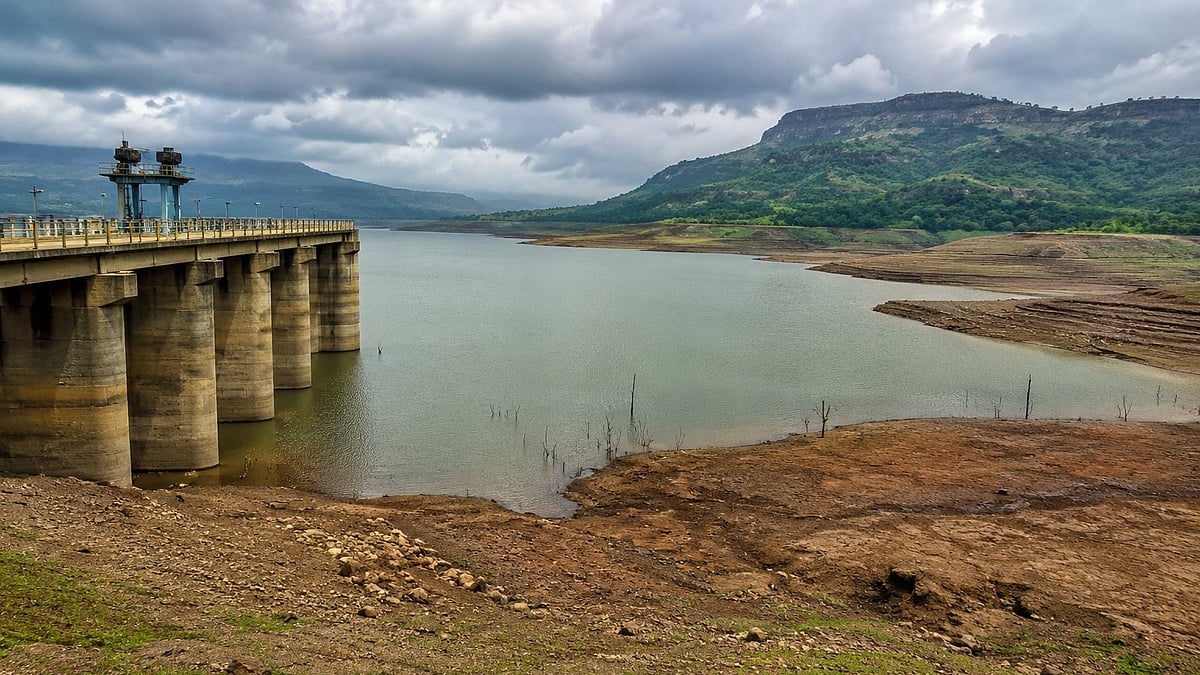
India’s hydropower generation witnessed a sharp decline in June as a delayed and uneven southwest monsoon reduced water availability in reservoirs, affecting electricity production from dams across the country.
The decline came at a time when India faced intense summer power demand, forcing coal-based plants, nuclear stations and renewable energy sources to increase output to maintain electricity supply.
According to Ministry of Power data cited by Bloomberg News, hydropower generation dropped nearly 21% year-on-year in June, marking the steepest fall since February 2024.
During the April-June quarter, hydroelectric output declined by around 7% compared with the previous year.
The fall in hydropower generation reflects the impact of a weak start to the monsoon season. The India Meteorological Department (IMD) reported that cumulative rainfall across the country was 38% below normal until July 1, with El Niño conditions affecting monsoon progress.
The rainfall deficit has also raised concerns beyond the power sector. Reduced water availability has affected irrigation prospects during the important kharif sowing period, creating challenges for farmers.
Reservoir storage levels have shown signs of stress. Data from the Central Water Commission indicated that 166 major reservoirs monitored by the agency held around 47.7 billion cubic metres of water as of July 2.
This was nearly one-fourth of their total capacity and around 39% lower than the storage level recorded a year earlier.
However, the situation has shown some improvement in recent days as monsoon activity has strengthened in several regions.

The overall rainfall deficit has narrowed to around 20%, raising expectations that reservoir levels could improve and support hydropower generation in the coming months.
The IMD has forecast July rainfall at around 94% of the long-period average, suggesting near-normal rainfall activity during the month.
Power demand has also started easing with the arrival of rains and cooler weather conditions.
Peak electricity demand remained below 250 gigawatts in July, compared with 265.2 GW in June and a record 270.8 GW during May’s heatwave conditions.
Despite the decline in hydropower generation, India’s electricity system has managed to meet demand comfortably due to increased contribution from thermal, nuclear and renewable energy sources, according to data from the Grid Controller of India.

