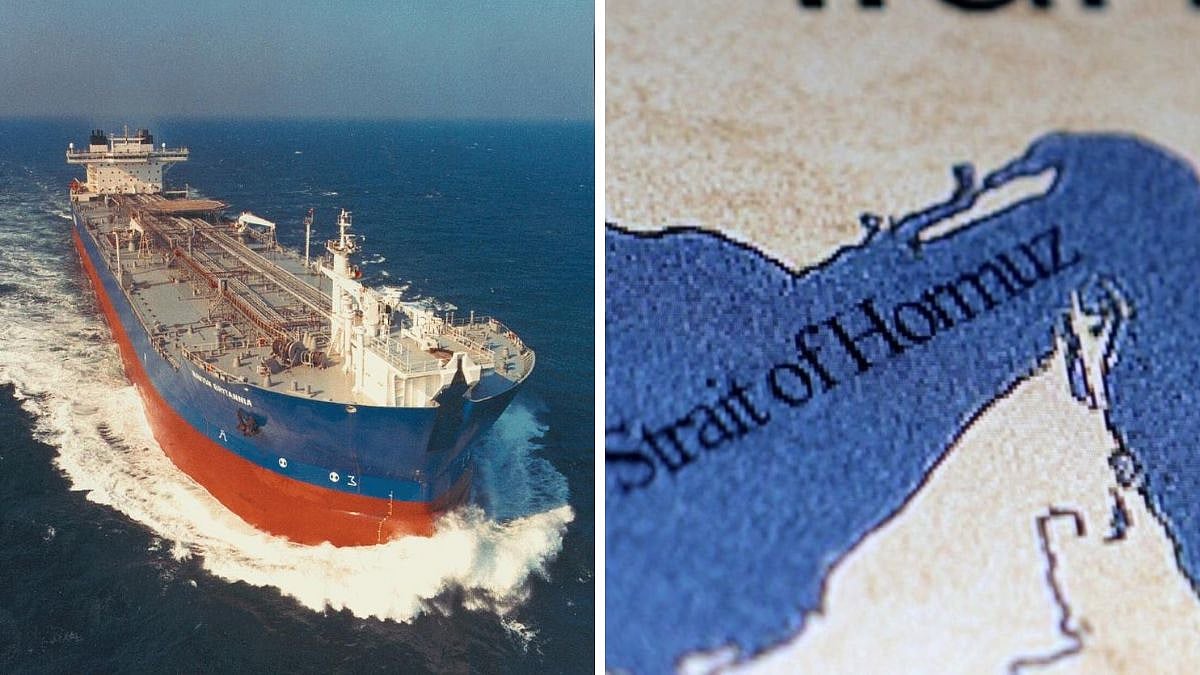
As the United States and Iran have agreed upon a two-week ceasefire, the transit of stranded vessels in the Gulf region may ease as Iran will allow more traffic through the Strait of Hormuz.
Ship transit through the strait may improve to about 25 percent of the pre-war scenario by next week, according to a report by Moneycontrol, which cited an assessment by S&P Global Commodities at Sea (CAS).
Since the start of the war in late February, traffic through the strait had slumped to as low as 10 percent compared to pre-war levels.

About 500 ships are currently stuck inside the strait. The ships carry commodities like oil, chemical products, and liquefied natural gas (LPG).
According to the assessment, these vessels would be able to exit the strait by April 24, subject to the condition that the warring sides follow the agreement.
The traffic through the strait may reach 50 percent of pre-war levels by April 22, the report said.
The situation is currently uncertain over the process to be followed to exit the strait. Iran has said that ships seeking to pass through the crucial waterway will need to coordinate with the country’s armed forces for a secured exit.
Also, Iran’s coastguards have said any ship trying to transit without permission would be “targeted and destroyed.”
“This also assumes that priority will be given to outbound exits, with energy-related vessels at the front of the queue. If traffic remains at 10 percent of pre-war levels for the foreseeable future, it will take over a month for the majority of the vessels to exit, with vessels clearing by May 10. Ships may have additional requirements, such as inspections or naval escorts, during the ceasefire, which could limit traffic even more,” CAS was quoted as saying.
According to Kpler data, about 172 million barrels of crude and refined products were stranded as of April 7 in the Mideast Gulf.

