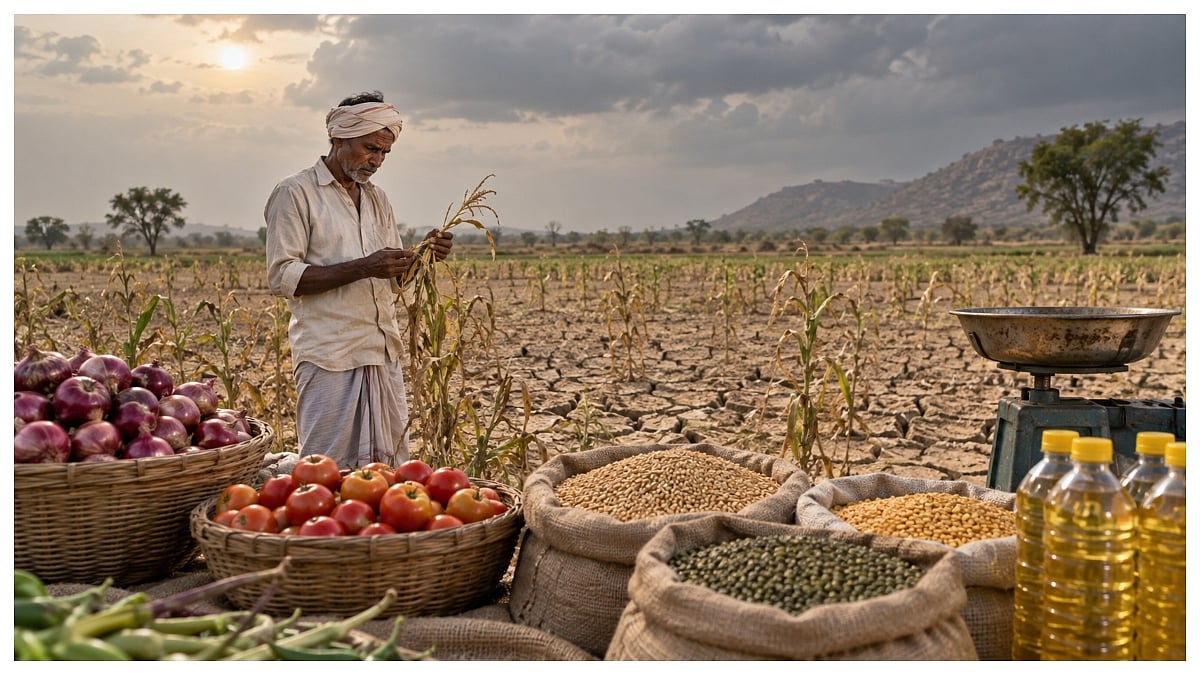
Mumbai: India may face sustained food inflation in the coming months as a weak and uneven monsoon threatens crop yields, while a strengthening El Niño and geopolitical tensions push global commodity prices higher.
Erratic Monsoon Hurts Crops
Southwest monsoon rainfall was 14.7 percent below the long-period average as of September 13. Moreover, 24 of India’s 36 meteorological subdivisions recorded rainfall deficiencies exceeding 10 percent.
Southern states, along with Maharashtra’s Marathwada and Vidarbha regions, were among the worst affected. Extended dry spells, interrupted by heavy downpours, could reduce yields despite kharif sowing remaining broadly stable.
The Agriculture Ministry said kharif crops covered 1,096.5 lakh hectares by September 11, only 1.4 percent below last year. However, lower fertiliser sales indicate weaker cultivation activity and cautious spending by farmers.
Crop Prices Already Climb
Wholesale prices are reflecting concerns over production. Maize in Chhindwara is trading near Rs 2,625 per quintal, compared with Rs 2,165 last year.
Arhar prices in Akola have climbed to Rs 8,650 from Rs 6,200, while soyabean in Dewas has risen to Rs 6,150 from Rs 4,300 per quintal.

The US Department of Agriculture expects India’s rice production to fall to 147 million tonnes from 154 million tonnes, while maize output could decline to 50 million tonnes from 55.1 million tonnes.
Rabi Season Faces Risk
El Niño has entered a strong phase and could intensify further, potentially producing a shorter and warmer winter. That may hurt wheat, mustard, pulses, potato, onion, garlic and spice crops during the coming rabi season.
Global Prices Add Pressure
The FAO food price index reached 133.3 points in August, its highest since November 2022. Vegetable oil prices were at their highest since June 2022, while cereals touched a 27-month peak.
Rising wheat and corn export prices, declining global stocks and trade disruptions linked to conflicts in West Asia and Russia-Ukraine could add pressure. Together, these domestic and international factors suggest food inflation may return and remain elevated.

