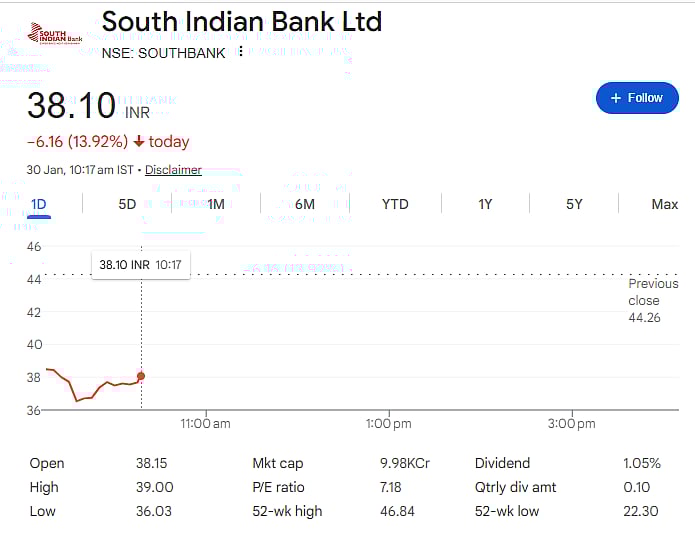
Mumbai: Shares of South Indian Bank Ltd saw a steep fall on Thursday, January 30, sliding nearly 14 percent in early trade. The stock dropped to around Rs 38 on the NSE from the previous close of Rs 44.26, wiping out a large part of recent gains.
The sharp fall came as heavy selling pressure emerged in the stock, with investors booking profits and reacting to concerns around earnings growth and future outlook.
What triggered the sell-off?
The main reason behind the sudden fall is profit booking after a strong rally in recent months. South Indian Bank shares had risen sharply over the past year, supported by improving asset quality and better financial performance.

However, after the recent quarterly results, investors felt that the pace of improvement may slow down. The stock was trading at higher levels compared to its past averages, leading many traders to exit and lock in profits.
Earnings and growth concerns
Market participants are also worried about moderate growth in profits and margins. While the bank has shown improvement in reducing bad loans and strengthening its balance sheet, the latest numbers did not meet high market expectations.
Investors are cautious about rising operating costs and slower credit growth in a competitive banking environment. This has raised concerns about whether the bank can maintain strong profit momentum in the coming quarters.

Broader market pressure adds to fall
The overall stock market sentiment also remains weak, especially in mid-cap and small-cap stocks. Banking stocks have been under pressure due to concerns over interest rate outlook and global market volatility.
South Indian Bank, being a mid-sized private lender, was more vulnerable to selling compared to larger banks, leading to a sharper fall.
Valuation still looks reasonable
Even after the fall, the stock is trading at a price-to-earnings (P/E) ratio of around 7, which many analysts consider reasonable for a turnaround story. The bank’s market capitalisation stands close to Rs 10,000 crore.
The bank has also improved its asset quality over the past few years, with lower non-performing assets and better capital position, which remains a positive factor in the long term.
What investors should watch ahead?
Going forward, investors will closely track the bank’s loan growth, profitability, and asset quality. Any slowdown in credit demand or rise in bad loans could impact performance.
While the long-term story remains stable, the sharp fall shows that markets are now demanding consistent earnings growth, not just improvement from a weak base.
In the near term, the stock may remain volatile as investors reassess the bank’s growth prospects and overall market conditions.
Disclaimer: This article is for informational purposes only and should not be considered investment advice. Stock prices may fluctuate due to market risks, and investors must consult financial advisors before making decisions.

