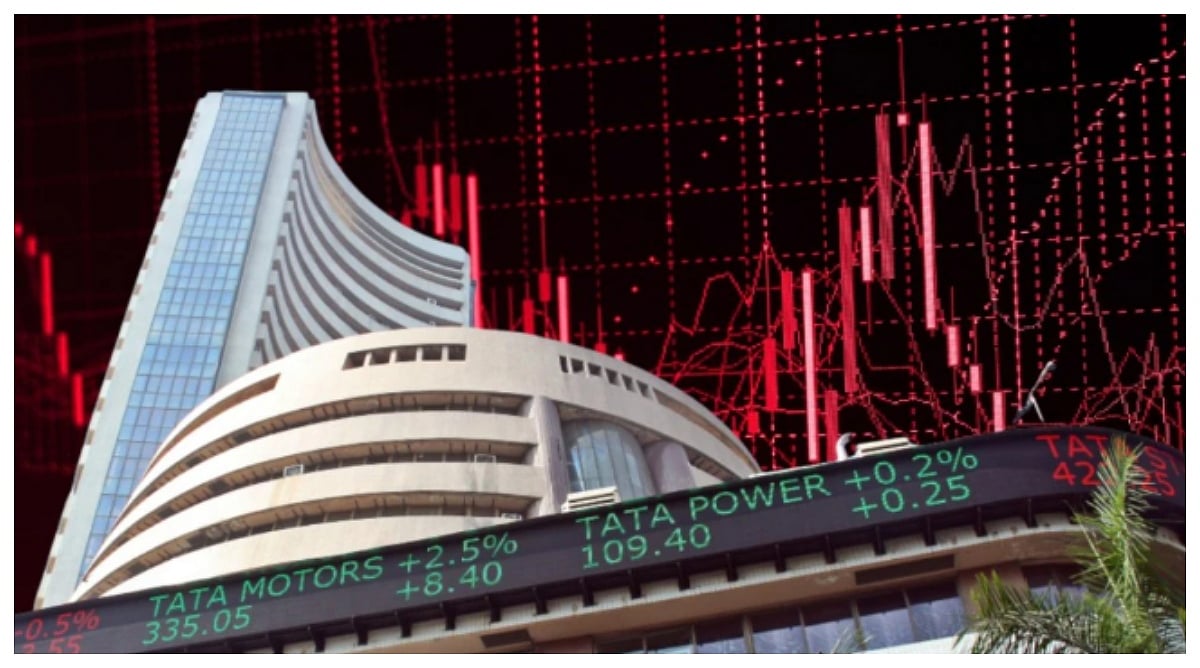
Mumbai: Indian stock markets ended sharply lower on Monday due to rising tensions in the Middle East. The Sensex dropped 1,836 points to close at 72,696.39, while the Nifty fell 601.85 points, or 2.6 percent, to settle at 22,512.65.
The fall reflects growing fear among investors as geopolitical risks increase.
Geopolitical Tensions Weigh on Markets
The main reason for the market crash is the rising conflict between the United States and Iran. Investors are worried that the situation could worsen, affecting global trade and economic stability.

Tensions have also pushed crude oil prices higher, adding to inflation concerns. Brent crude rose to around $108.73 per barrel.
Volatility Jumps Sharply
Market volatility increased significantly during the session. The India VIX, also known as the fear index, jumped over 17 percent to 26.73.
Higher volatility shows that investors are uncertain and cautious, leading to heavy selling across the market.
Broader Markets Hit Harder
Midcap and smallcap stocks saw even bigger losses compared to benchmark indices. The Nifty MidCap index fell 3.69 percent, while the SmallCap index declined 4.16 percent.
This indicates that selling pressure was widespread and not limited to large companies.
Sector-Wise Performance
Construction-related stocks were among the worst performers, with the Nifty Construction Durable index falling more than 5 percent.
Realty and metal stocks also dropped sharply. However, IT stocks showed some resilience and recorded smaller losses compared to other sectors.
Technical Outlook Remains Weak
Experts say the overall market trend is still bearish. The Nifty is forming lower highs and lower lows, which signals continued weakness.
The 22,650–22,700 range is now seen as immediate resistance, while the 22,900–23,000 zone is a strong supply area.
Energy Concerns Add Pressure
The situation has also raised concerns about energy security. Prime Minister Narendra Modi said the government is taking steps to ensure smooth oil supply through the Strait of Hormuz.
This route is crucial for global oil transport, and any disruption can impact prices and markets.
What It Means for Investors?
Investors are likely to remain cautious as long as tensions continue. Markets may stay volatile in the near term due to global uncertainty and rising oil prices.

