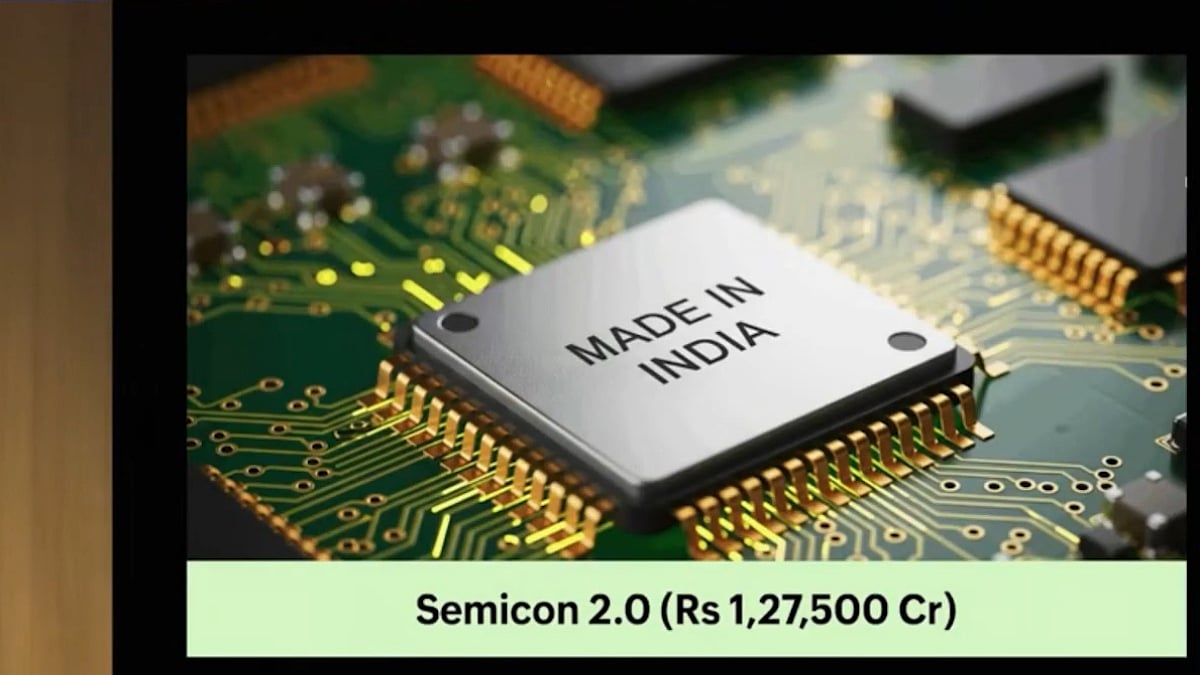
The government has formally notified the Semicon 2.0 scheme with an outlay of ₹1.27 lakh crore, seeking to accelerate the development of India’s semiconductor design and manufacturing ecosystem.
The programme is structured across six segments covering various stages of the semiconductor value chain.
These include chip design by Indian companies, manufacturing of capital equipment required for semiconductor production, semiconductor fabrication units, as well as assembly, packaging and testing activities.
According to the government notification, Semicon 2.0 is intended to provide sustained policy and financial support to the sector and strengthen capabilities across the entire semiconductor ecosystem.
Focus On Domestic Chip Design And Manufacturing
The scheme aims to create a resilient, trusted and sovereign semiconductor ecosystem by supporting the design, development and deployment of technologies considered important for India’s strategic and critical infrastructure.
A key objective will be to encourage domestic development of semiconductor intellectual property (IP) cores, chips, system-on-chips (SoCs) and modules used in electronic products.
The government plans to identify specific technologies based on their national importance and strategic priorities, with support extending across different applications and segments.
Building Semiconductor Technology Capabilities
Semicon 2.0 will also focus on developing the underlying technology building blocks required to create a stronger domestic semiconductor industry.
The notification said these building blocks will include standardised IPs covering areas such as computing, memory, radio frequency (RF), power, networking and sensors.
By supporting these capabilities alongside fabrication, packaging and testing infrastructure, the government intends to develop a more comprehensive semiconductor value chain within India.
The initiative comes as India seeks to reduce dependence on overseas semiconductor supply chains and establish itself as a competitive destination for chip manufacturing and technology development.
The government’s emphasis on domestic IP and strategic semiconductor technologies is also aimed at supporting critical electronic systems and strengthening technological capabilities considered important for national security and infrastructure.

