Mumbai: India’s digital payment system will see a major security upgrade from April 1 as the Reserve Bank of India (RBI) introduces stricter authentication rules. These changes aim to make online transactions safer amid rising fraud risks and increasing digital payment volumes.
Mandatory Two-Factor Authentication
Under the new rules, all digital transactions will require two-factor authentication. At least one factor must be dynamic, such as a one-time password (OTP), biometric verification, or device-based authentication.
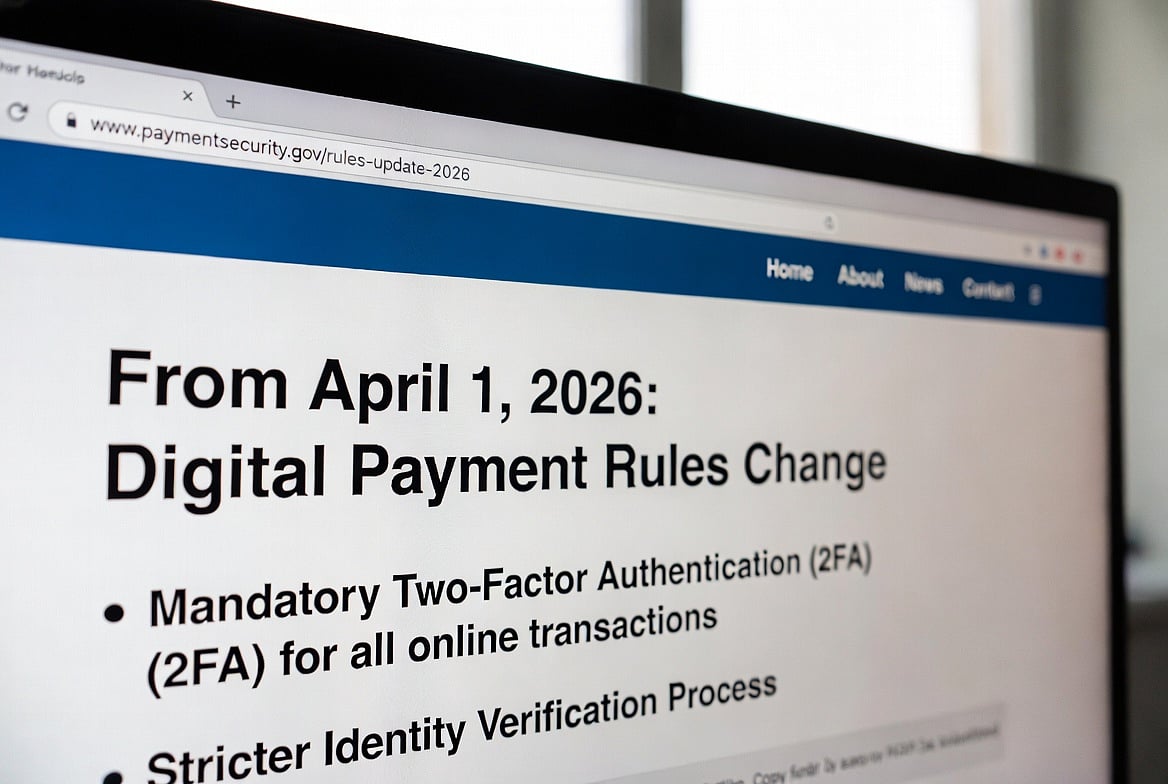
This is a step ahead of the current OTP-only system, which experts say is vulnerable to phishing and SIM-swap fraud.
Flexible Approach For Banks And Fintechs
The RBI has not mandated a specific technology. Instead, it focuses on outcomes—stronger security. This allows banks and fintech companies to use a mix of tools like biometrics, tokenisation, device-based banking, and risk-based authentication.
This flexibility helps companies design systems suited to their users while maintaining high security.
Why This Change Is Important?
Experts say the move comes at the right time as digital payments continue to grow rapidly. With higher transaction volumes, fraud attempts have also increased.
Industry leaders believe that layered authentication will reduce fraud risks and create a safer environment for users and merchants. While there may be slight delays in transactions, stronger security will build long-term trust.
Impact On Banks, Fintechs And Merchants
The new rules increase issuer liability. This means banks and payment providers will be responsible if they fail to follow the guidelines.
For merchants, especially small and medium businesses, the changes will reduce risks of disputes, financial losses, and reputational damage. It will also improve customer confidence in digital payments.
Balancing Security And User Experience
Higher security may add some friction to transactions. To manage this, companies will adopt risk-based authentication.
Low-risk transactions will be processed quickly, while high-risk ones will require additional checks. This ensures both safety and convenience.

