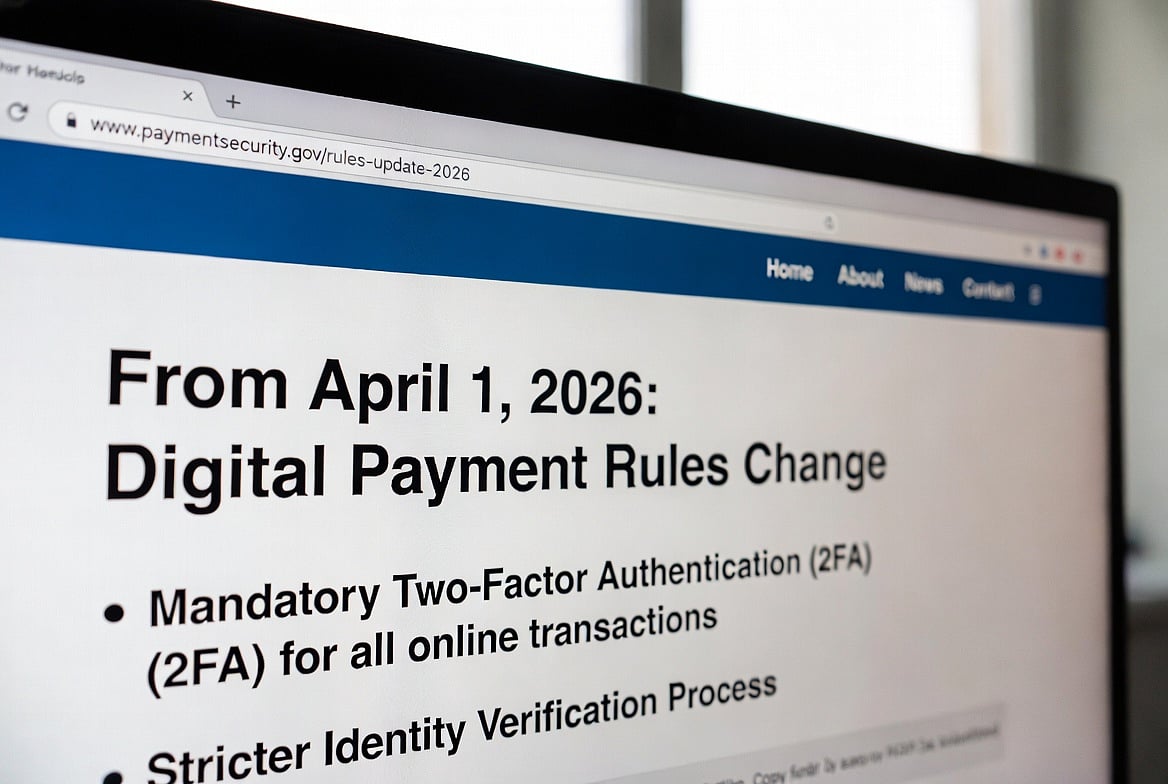
New Delhi: From April 1, 2026, digital payment rules in India will change significantly. The Reserve Bank of India (RBI) has decided to make online payments more secure by introducing stricter verification rules.
Under the new system, every digital transaction will require two-factor authentication (2FA). This means users will need to complete two levels of verification before making a payment.
What Is Two-Factor Authentication (2FA)?
2FA means that a transaction must include at least one dynamic factor, such as an OTP or real-time verification.
Earlier, many payments were completed using only OTP. Now, OTP alone may not be enough in all cases. Additional checks like device verification, biometrics, or token-based systems may also be used.
Why RBI Introduced These Rules?
India has seen rapid growth in digital payments in recent years. However, cases of fraud, phishing, and unauthorised transactions have also increased.
The RBI introduced these new rules to improve security and reduce financial risks. The aim is to protect users and make digital transactions more reliable.
Who Will Benefit?
Both customers and businesses will benefit from these changes.
Customers will get safer transactions and better protection against fraud. Small businesses and merchants will also face fewer disputes and losses due to unauthorised payments.
This could also increase trust in digital payments and encourage more people to use them.

Responsibility on Banks and Payment Companies
Another important change is accountability. If a bank or payment company fails to follow these rules and fraud occurs, the responsibility will lie with that institution.
This will push banks and companies to improve their security systems and stay more alert.
Flexibility and Technology Options
RBI has allowed companies to choose their own security methods. These may include biometrics, device checks, or tokenisation.
This flexibility will help companies adopt new technologies and improve user experience while maintaining safety.

Impact on Payment Experience
With stronger security, users may notice a few extra steps during payments. However, the system will be risk-based.
Small and low-risk transactions will be processed quickly, while large or suspicious transactions will undergo more checks.
Overall, RBI’s move is seen as a major step towards making digital payments safer and more trustworthy. It balances security with convenience and aims to build long-term confidence among users and businesses.

