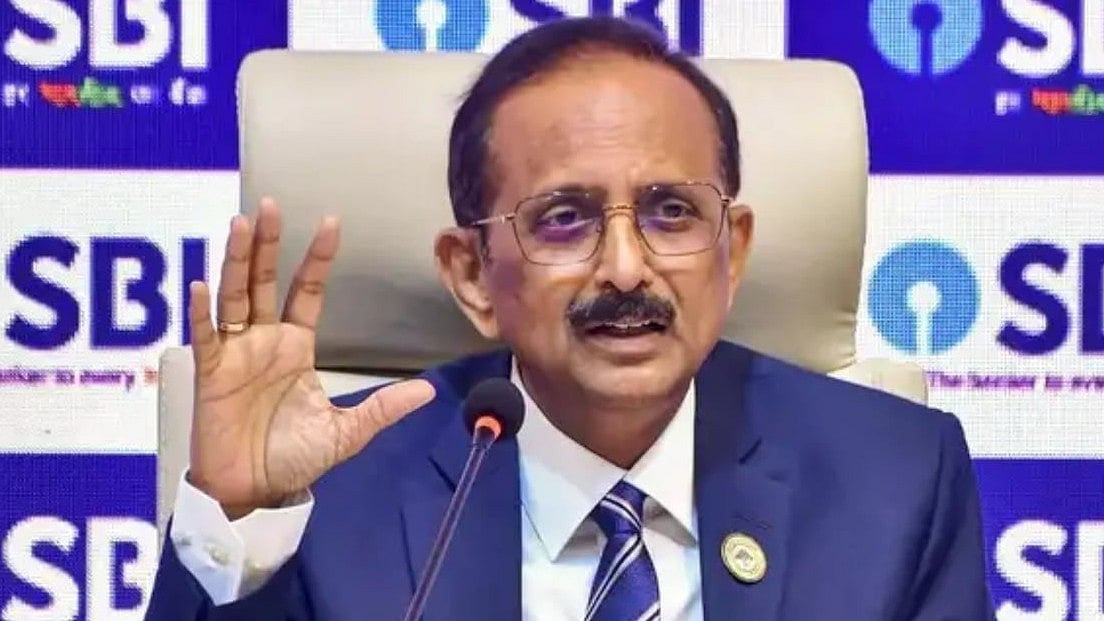
The Reserve Bank of India (RBI) could increase the repo rate by another 50 basis points in December before pausing further hikes until March 31, 2027, State Bank of India (SBI) Chairman CS Setty said on Monday.
Speaking at a media summit in Mumbai, Setty said higher interest rates would gradually influence borrowing patterns, particularly in sectors dependent on discretionary spending.
His remarks followed the RBI's decision to raise the repo rate by 25 basis points to 5.5% during its October monetary policy review.

Higher Interest Rates May Affect Consumer Credit Demand
Setty said the impact of rising borrowing costs would become clearer over time as households and businesses adjusted their financial decisions.
He cautioned that another rate increase in December could moderate demand for consumption-related loans and other interest-sensitive borrowing.
However, he remained optimistic about lending for productive economic activities.
According to Setty, India's projected economic growth of 7.1% and strong existing credit demand would help sustain lending despite monetary tightening.
He indicated that one or two additional rate increases could affect discretionary consumption without significantly weakening borrowing for investment and business expansion.
RBI Raises Inflation Forecast Amid Global Risks
The RBI's Monetary Policy Committee (MPC) unanimously approved the October rate increase and shifted its policy stance from neutral to calibrated tightening.
The central bank raised its FY27 consumer price index (CPI) inflation forecast to 5.2% from 5%, citing rising food, fuel and commodity prices.
A deficient monsoon, strong El Niño conditions and increasing underlying inflation also contributed to the revised outlook.
RBI Governor Sanjay Malhotra said future monetary policy decisions would depend on inflation trends, economic growth and the spread of price pressures.
Meanwhile, the RBI increased its FY27 real gross domestic product (GDP) growth forecast to 7.1% from 6.7%, supported by private consumption, investment and export performance.
Malhotra also highlighted risks from the ongoing West Asia conflict, particularly higher energy costs and supply chain disruptions.
Although weak rainfall could affect agriculture and rural demand, adequate foodgrain stocks and government interventions were expected to provide some relief.

