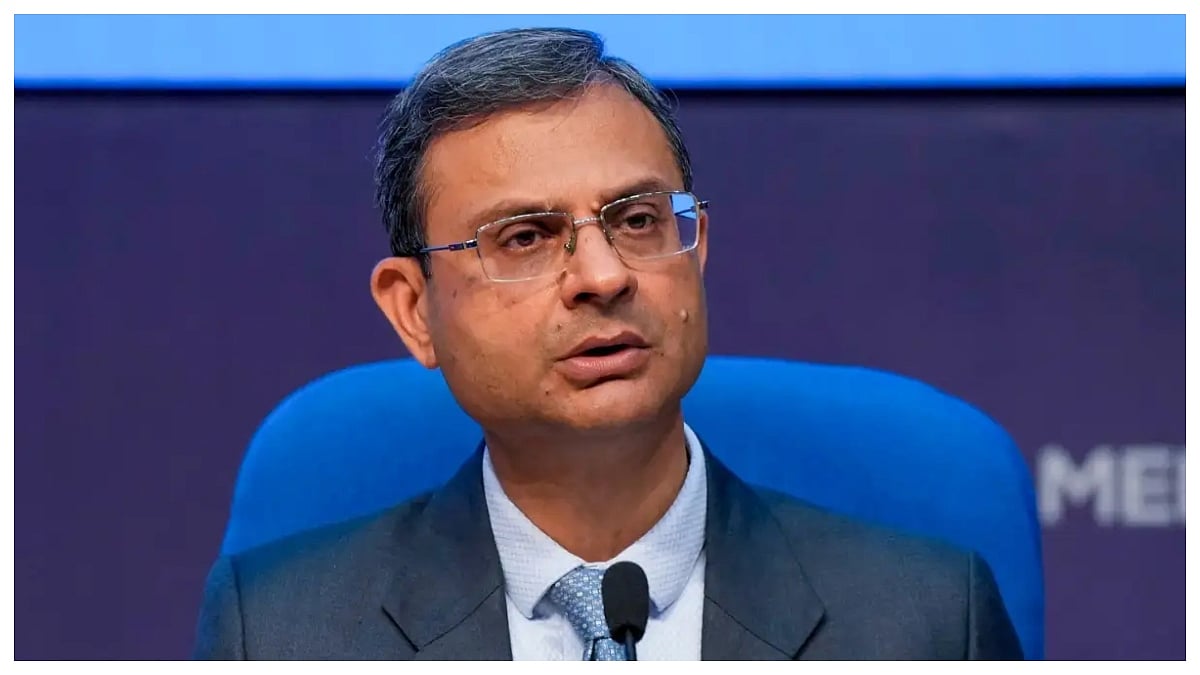
Reserve Bank of India (RBI) Governor Sanjay Malhotra said on Friday that core investment companies (CICs) accessing public funds, directly or indirectly, must register with the central bank, while upper-layer non-banking financial companies (NBFCs) are required to list on stock exchanges.
His comments at a media summit come amid uncertainty over the listing obligations of Tata Sons, the holding company of the Tata group.
Malhotra declined to comment on any specific regulated entity but explained that registration requirements address systemic risks arising from group-level financing arrangements.

Tata Sons Listing Debate And RBI Registration Rules
The Governor clarified that CICs without direct or indirect access to public funds could be exempted from registration.
However, companies classified as upper-layer NBFCs must comply with mandatory listing requirements.
The RBI designated Tata Sons an upper-layer NBFC in 2022, giving it until 2025 to list.
Instead, Tata Sons repaid outstanding debt and applied to surrender its CIC registration.
According to the report, the central bank rejected that request last month and directed the company to comply with upper-layer NBFC regulations.
Meanwhile, Tata Trusts, which controls Tata Sons, has proposed merging Tata Electronics Systems Solutions (TESS) and Tata Consulting Engineers (TCE) into the holding company.
The proposal seeks to change Tata Sons' business composition so that it would no longer qualify as an NBFC or CIC.
The restructuring requires approval from the Tata Sons board and a no-objection from the RBI.
RBI Prefers Macroprudential Measures For Financial Stability
Addressing monetary policy, Malhotra said the central bank generally relies on macroprudential measures rather than interest rates to manage financial stability risks.
However, he did not rule out using monetary policy in exceptional circumstances.
He explained that the appropriateness and effectiveness of such intervention would depend on prevailing conditions.
Any decision to use interest rates for financial stability purposes would be considered by the Monetary Policy Committee (MPC).
His remarks underscored the distinction between regulatory requirements governing financial institutions and the RBI's broader approach to maintaining financial stability.

