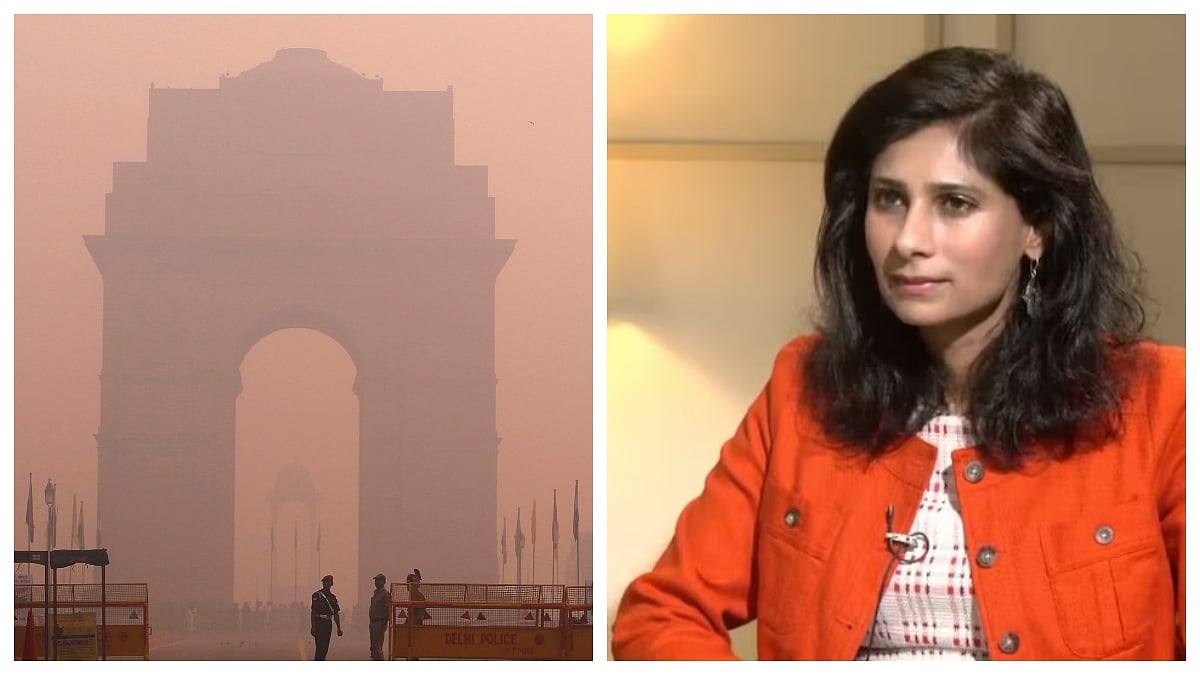
Davos: Pollution poses a much greater economic threat to India than trade tariffs or protectionist policies, Harvard professor and former IMF chief economist Gita Gopinath said at the World Economic Forum in Davos. She said environmental damage creates deeper and longer-lasting problems for the economy compared to tariffs, which are often temporary and negotiable.
Gopinath described pollution control as a “top mission” for India. She warned that ignoring environmental damage could weaken the country’s growth potential and reduce the benefits of economic expansion over time.

Health and productivity at risk
According to Gopinath, pollution directly affects people’s health, which in turn reduces labour productivity. Poor air and water quality lead to higher medical costs, more sick days and lower work efficiency. These effects are especially strong in large cities and industrial areas.
She said that when people are unhealthy, economic growth does not translate into better living standards. As a result, pollution slows down improvements in income and quality of life, even if overall GDP continues to rise.
Growth size is not enough
India is expected to become the world’s third-largest economy by 2028, supported by strong domestic demand, infrastructure spending and a young population. However, Gopinath cautioned that total economic size alone does not reflect real progress.
She stressed that raising per capita income remains India’s key challenge. Pollution, she said, makes this task harder by reducing the long-term gains from growth and increasing inequality, as poorer households suffer more from environmental damage.
Urbanisation adds pressure
Rapid urbanisation and industrial growth have increased pollution levels across India. Gopinath said this makes environmental protection not just a public health issue, but a core economic priority. Clean air, safe water and better urban planning are essential for sustainable growth.
A chance for cleaner growth
Gopinath also highlighted that fighting pollution can create economic opportunities. Investments in clean energy, public transport and waste management can generate jobs, boost productivity and support inclusive growth.
She concluded that India’s future success will depend on the quality of growth. As the country grows into a major global economy, balancing economic ambition with environmental sustainability will be crucial to ensure healthier lives and higher incomes for its people.

