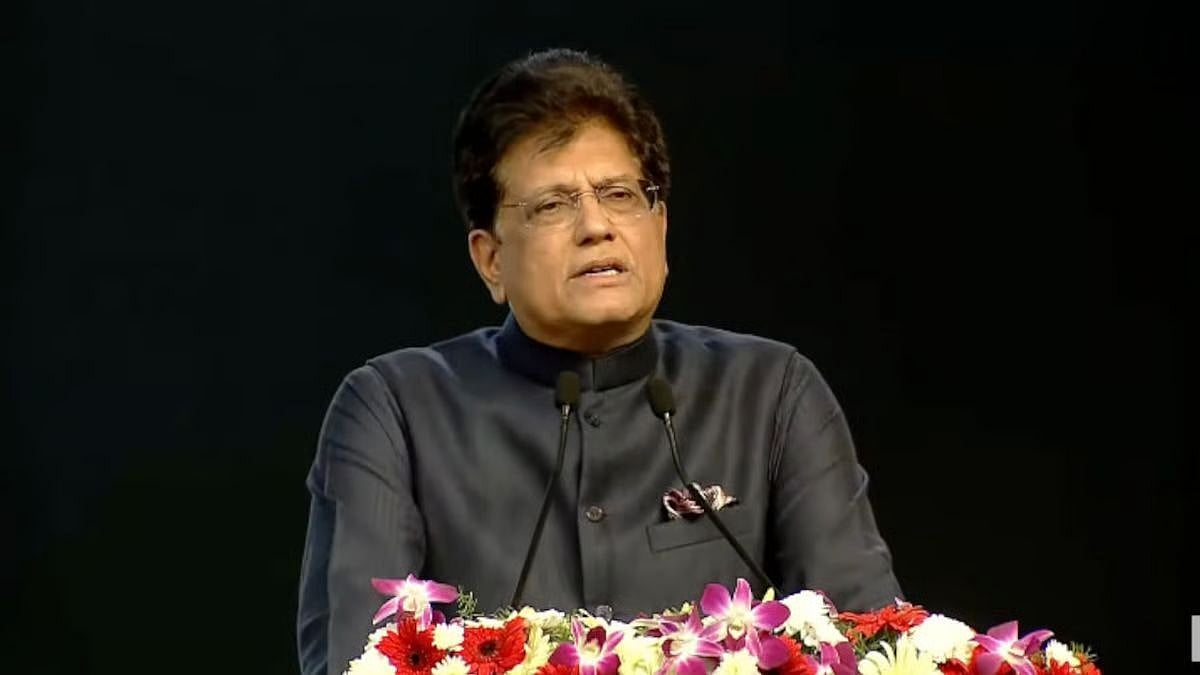
New Delhi: Union Commerce and Industry Minister Piyush Goyal strongly criticised Europe's climate policies on Friday, arguing that developed nations bear greater historical responsibility for global carbon emissions and climate change.
Speaking at the Berlin Global Dialogue 2026, Goyal warned that Europe's Carbon Border Adjustment Mechanism (CBAM) and high steel import duties could increase living costs and weaken industrial competitiveness.

Piyush Goyal Questions Europe's Climate Responsibility
During a panel discussion, Goyal questioned developed countries' historical contribution to the climate crisis. He argued that India supports approximately 17 per cent of the global population but contributes less than 3 per cent of carbon emissions.
In contrast, he said Europe's contribution to global emissions has been disproportionately high compared with its population. Goyal maintained that developed economies relied heavily on inexpensive fossil fuels during their industrial expansion.
CBAM And Steel Tariffs Could Raise Costs
The minister criticised Europe's carbon border tax and steel import restrictions, warning that such measures could affect businesses and consumers. He argued that imposing additional costs on imported products could make European industries less competitive while increasing household expenses. Goyal also highlighted India's growing renewable energy programme and commitment to sustainable development.

India Raises Climate Finance Concerns
Referring to the 2015 Paris Agreement, Goyal emphasised the principle of common but differentiated responsibilities. Under this framework, developed nations are expected to take greater responsibility for addressing climate change and supporting developing economies. He questioned the delivery of the promised USD 100 billion annual climate financing commitment, alleging that financial support remained inadequate.
Piyush Goyal's Germany Visit
Goyal is visiting Germany and the Netherlands from October 22 to 27, accompanied by approximately 100 Indian businesses and startups. His remarks highlight continuing differences between India and Europe over carbon emissions, climate financing and trade-related environmental regulations.

