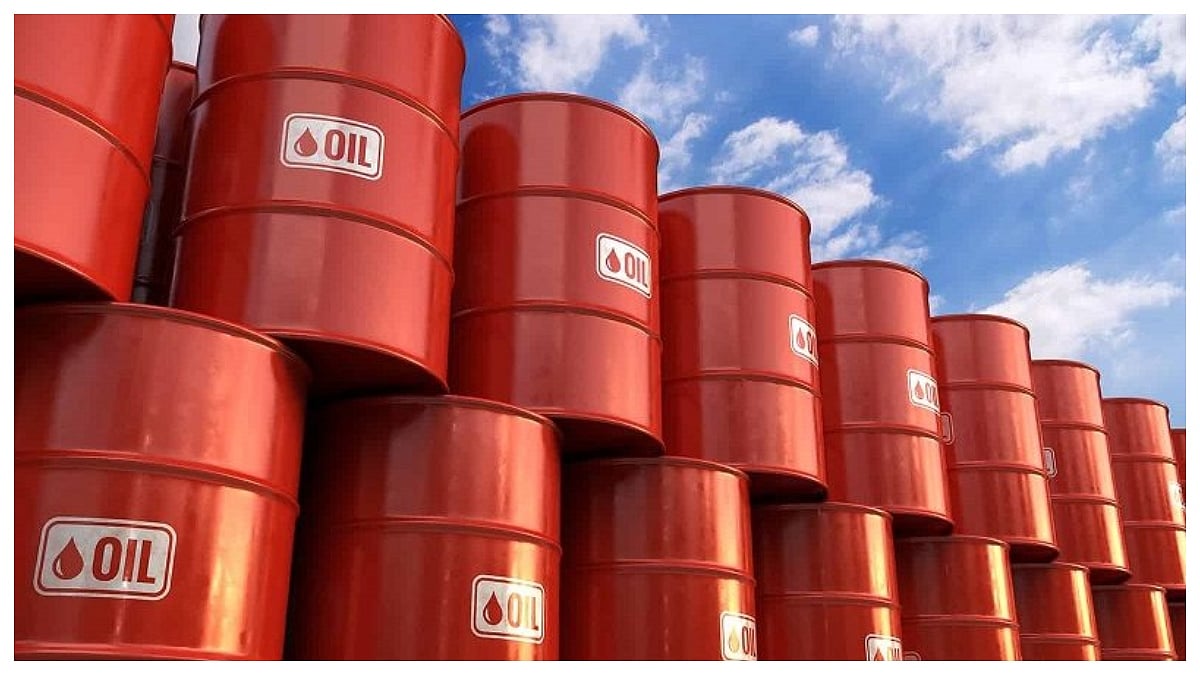
After two days of relief, oil prices again jumped on Thursday despite stakeholders pitching in to ease energy supply and end hostilities.
During Thursday’s trade, crude oil again jumped above the $100 per barrel mark, its second time since the United States-Israel-Iran war broke out in the Middle East.
Global benchmark Brent Crude went past the $101 per barrel mark while WTI Crude rose to over $95 per barrel.
Both the commodities were trading at a premium of close to 6 percent as of 1:31 AM CDT on March 12. While Brent was trading around $98 per barrel, WTI was close to $93 per barrel.

For the last two days, oil prices were on a decline, reaching as low as $83 per barrel after closing close to $120 per barrel on Monday. The easing in prices had come after US President Trump had indicated ending the war with Iran and the International Energy Agency deliberating on releasing strategic oil reserves.
While Thursday marked two positive developments for energy supplies. Trump again said that he could end the war any time he wanted while the 32-member energy alliance decided to release about 400 million barrels of crude from its oil reserves.
This will mark the largest release of oil reserves by the agency in its history. The last time it had taken such a step was during the Russia-Ukraine war in 2022 when it had released over 180 million barrels of oil from emergency reserves to stabilise energy markets.
The 30 member countries of the agency collectively hold about 1.2 billion barrels of strategic reserves.
Despite this, the commodity has risen to $100 per barrel as Iran indicated it will continue fighting. It has attacked two oil tankers, claiming the life of an Indian sailor, off the coast of Iraq.
Iran had earlier warned that oil prices could go as high as $200 per barrel in the coming days as it relents to back off.
It has also threatened to attack financial centres in West Asian countries after similar establishments were attacked in Tehran.
While the US has asked countries to ship oil through the Strait of Hormuz, trade through the narrow waterway is still far from normal.

