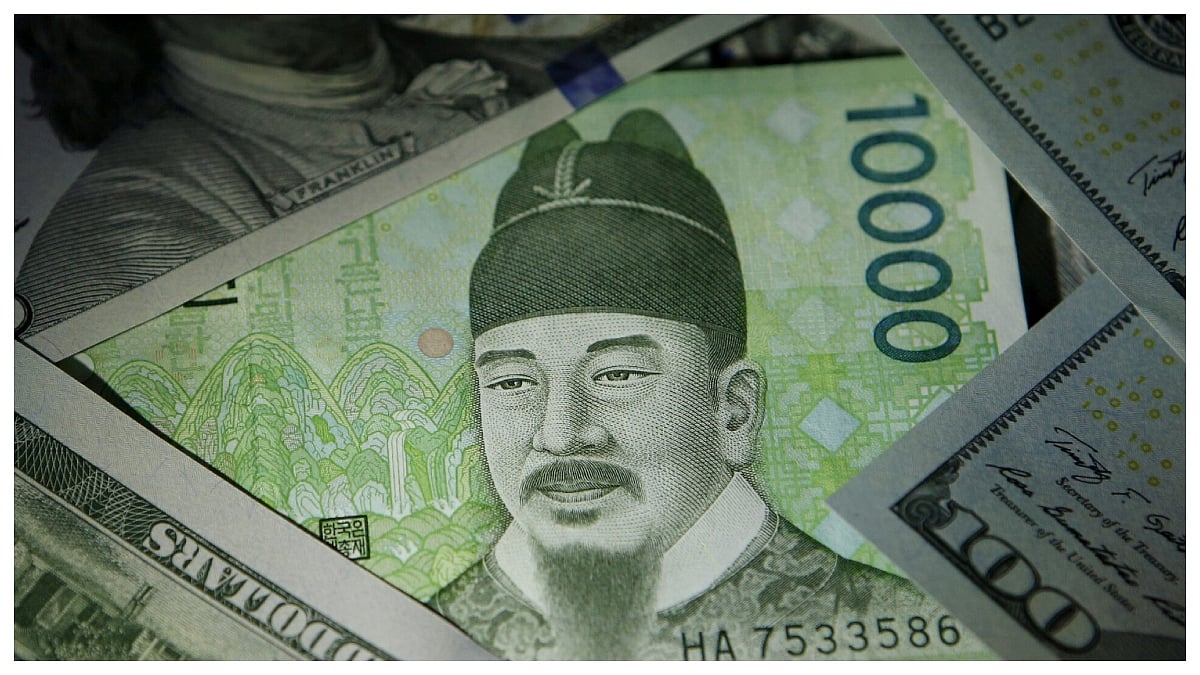
Seoul: The South Korean currency fell past the 1,500-won level against the US dollar on Monday for the first time in 17 years as global oil prices surged amid heightened tensions in the Middle East. The won opened at 1,501 per dollar, down 7.3 won from the previous session, breaching the 1,500-won mark for the first time in intraday trading since March 12, 2009, when the country was reeling from the global financial crisis. The won later trimmed its losses and was fluctuating in the mid-1,490 won range.
As of 9:30 a.m., the currency was quoted at 1,494.15 won per dollar, reports Yonhap news agency. The weakness came as global oil prices spiked again overnight as U.S. President Donald Trump suggested the war with Iran could last several more weeks and called on the international community to help reopen the Strait of Hormuz to oil tankers. Brent crude, the global benchmark, rose 2.9 percent to about $106.12 a barrel. U.S. oil also rose to over $100. The conflict has entered its third week, causing serious disruptions to global oil supplies.

The Strait of Hormuz, a key waterway controlled by Iran, has been effectively shut since the start of the U.S.-Israeli strikes on Iran earlier this month. The domestic foreign exchange and stock markets have shown high volatility since last week amid heightened geopolitical tensions. The benchmark Korea Composite Stock Price Index (KOSPI) rose 23.58 points, or 0.43 percent, to 5,510.82 at the opening bell following a sharp decline the previous session. South Korean stocks traded slightly lower late on Monday morning, as the ongoing conflict in the Middle East and a sharp rise in crude oil prices dampened investor sentiment.
Major stock indexes on Wall Street closed lower on Friday, as investors monitored the latest developments in the Middle East. The S&P 500 inched down 0.61 percent, and the tech-heavy Nasdaq retreated 0.93 percent. Brent crude, the international standard, was trading above US$100 per barrel, as the war in Iran continued to disrupt shipping and production of the commodity in the region. In Seoul, most large caps were trading lower, while semiconductor shares gathered ground.
Disclaimer: This story is from the syndicated feed. Nothing has been changed except the headline.

