Japan to offer incentives to companies shifting base from China to India: Nikkei

Japan to offer incentives to companies shifting base from China to India: Nikkei

By expanding the scope of the subsidy programme, Japan aims to reduce its dependence on a particular region and to build a system which is able to provide a stable supply of medical materials and electronic components even in an emergency, reports Nikkei.

ANIUpdated: Saturday, September 05, 2020, 12:04 AM IST
article-image
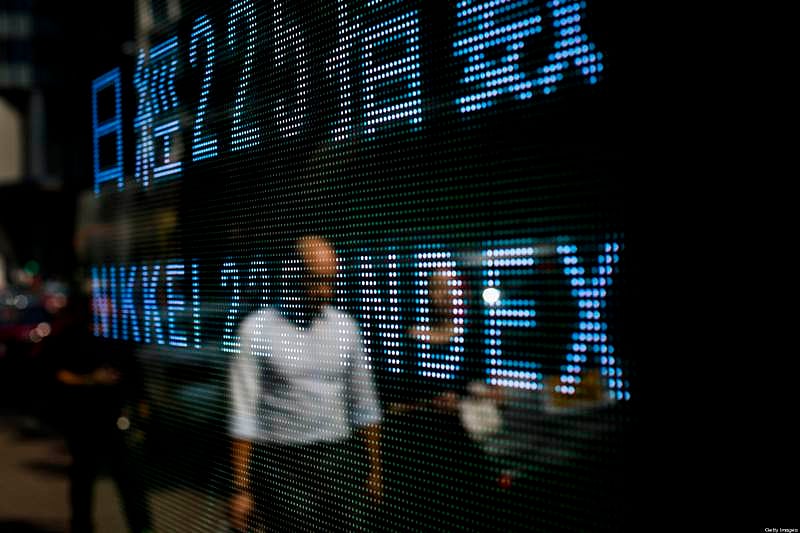
A pedestrian is reflected on an Nikkei ticker in Hong Kong, China, on Wednesday, Oct. 10, 2012. Hong Kong?s Gini coefficient, which measures income inequality, has gained from 0.43 in 1971 to 0.537 in 2011, according to government statistics. A reading of zero means income equality and one complete inequality. Photographer: Brent Lewin/Bloomberg via Getty Images |

Japan's Ministry of Economy, Trade and Industry (METI) has added India and Bangladesh to the list of relocation destinations for companies which shift their manufacturing sites from China to ASEAN countries.

By expanding the scope of the subsidy programme, Japan aims to reduce its dependence on a particular region and to build a system which is able to provide a stable supply of medical materials and electronic components even in an emergency, reports Nikkei.

The government has allocated 23.5 billion yen in 2020 supplemental budget for the subsidy to encourage companies to disperse their manufacturing sites across ASEAN region.

In conjunction with the second round of applications which began on September 3, projects that will contribute to the resilience of the ASEAN-Japan supply chain were added to the list, assuming relocation plans to India and Bangladesh.

The second round of application targets feasibility studies on decentralising manufacturing sites, the experimental introduction of facilities and implementation of model projects. The total amount of subsidies which will be provided is reported to reach several billion yen, said Nikkei.

The supply chain of Japanese companies currently heavily relies on China. During the COVID-19 pandemic, the supplies were cut off.

In the first round of application which closed in June, the Japanese government approved 30 manufacturing projects, including Hoya's manufacturing of electronic components project in Vietnam and Laos, and provided subsidies of 10 billion yen.


RECENT STORIES

Union Budget 2026 Boosts MSME Credit Access And Strengthens Cash Flow Ecosystem
IndiGo Market Share Plunges 4.7 Per Cent After December Operational Crisis, Impacts Passenger Growth...
Fractal Analytics Fixes ₹857-900 Price Band For ₹2,834 Crore IPO, Opens February 9
Infosys Plunges More Than 8%, Wipro Down 4% As Anthropic AI Threat Rattles IT Stocks
Bajaj Finserv Q3 Net Profit Climbs 32% YoY To ₹2,229 Crore, Revenue Surges To ₹39,708 Crore