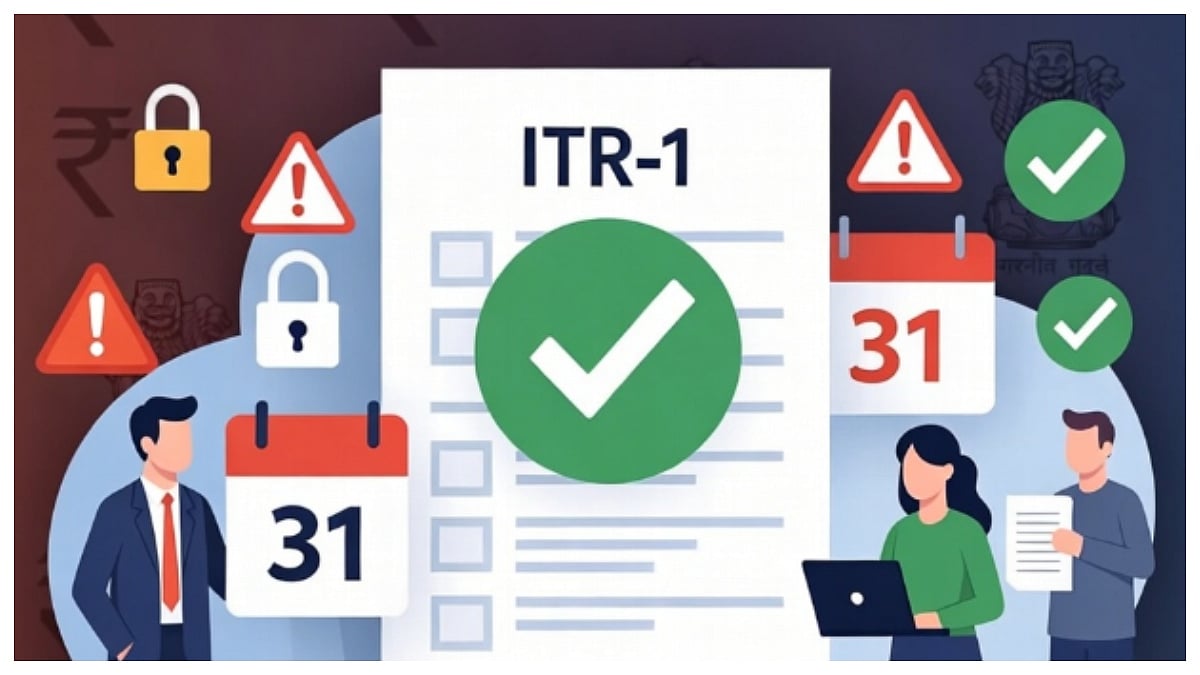
Mumbai: The Income Tax Department has released the Excel utility for filing income tax returns (ITR) for Assessment Year (AY) 2026-27. The online utility is already available on the income tax e-filing portal.
This means salaried employees, pensioners, students and other eligible individuals can now start filing their income tax returns.
Taxpayers who are not required to undergo tax audit must file their ITR on or before July 31, 2026.

Who Can File ITR-1?
ITR-1, also known as Sahaj form, can be used by resident individuals whose total annual income is up to Rs 50 lakh.
It is meant for people earning income from salary, pension, one house property and other simple sources such as savings account interest, fixed deposits and family pension.
Taxpayers can also report agricultural income up to Rs 5,000 and limited long-term capital gains under Section 112A up to Rs 1.25 lakh.
However, individuals having business income, short-term capital gains, more than one house property or higher capital gains cannot use ITR-1.

Common Mistakes To Avoid
First-time taxpayers should carefully check all details before submitting the return.
Aadhaar enrolment ID is no longer accepted and taxpayers must ensure their Aadhaar is properly verified.
Taxpayers should also carefully fill loan-related details such as loan amount, interest paid, bank name and account number wherever required.
Check Income Details Carefully
Experts have advised taxpayers to match all income details with Form 26AS and Annual Information Statement (AIS).
Any mismatch between actual income and reported income may lead to notices or delays in processing refunds.
Taxpayers should also disclose all active bank accounts except dormant accounts while filing returns.

Capital Gains And Deduction Reporting
While reporting long-term capital gains under Section 112A, taxpayers must ensure gains do not exceed Rs 1.25 lakh if they are filing ITR-1.
The updated deduction dropdowns under Chapter VI-A should also be filled correctly to avoid wrong deduction claims.
Tax experts also said Form 145 and Form 146 related to foreign remittances and tax compliance continue to remain important under the latest tax filing system.

